
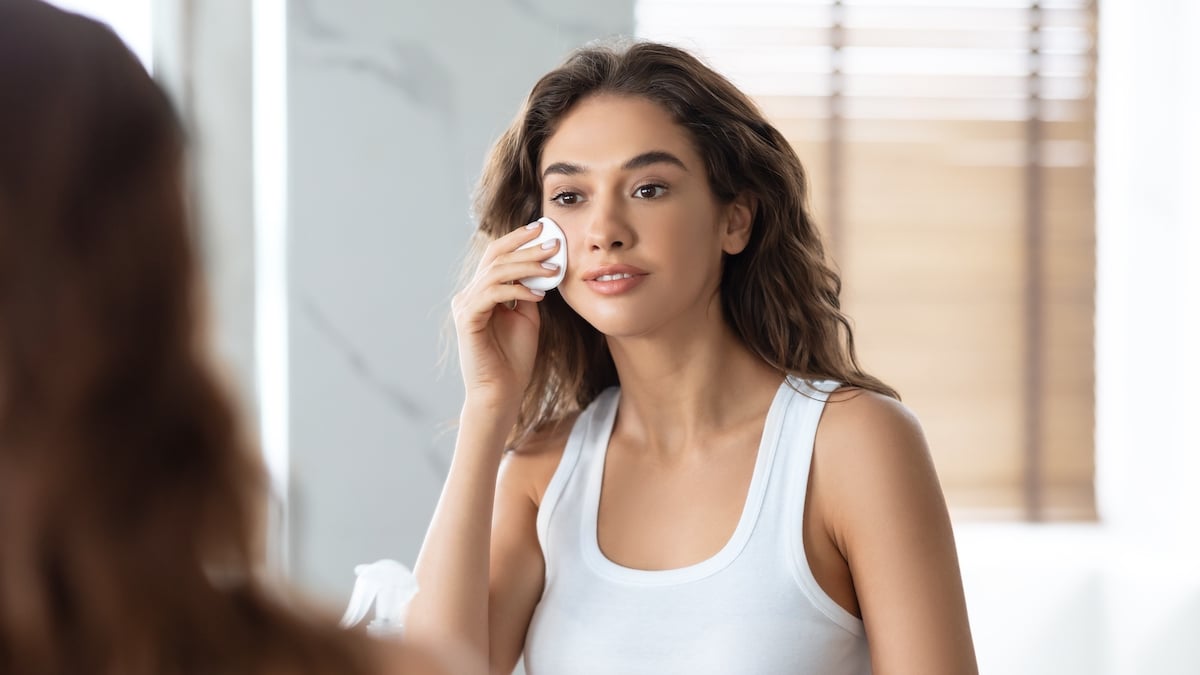
Originally designed to erase models’ beauty treatments in the blink of an eye between two fashion shows, micellar water has found its way into almost all bathrooms. A few cotton pads, no need for a sink, a promise of softness: ideal when the days go by and you dream of quick makeup removal. Then the testimonies flooded into the networks. Some accuse micellar water of being bad for the skin, others swear they can no longer do without it. In the midst of these very clear-cut opinions, a question comes up in the bathroom: who is right, your skin or the label on the bottle?
Micellar water: what it really does to the skin
Technically, this aqueous solution contains micelles, tiny droplets formed by surfactants. Like magnets, they grab makeup, sebum and pollution, then take them to the cotton. In the process, they also remove part of the natural fatty film which protects the skin: the famous hydrolipidic barrier.
If the formula is well dosed, micellar water cleanses gently and is suitable for many skin types, even combination or slightly sensitive skin. It removes light makeup, everyday sunscreen and the day’s impurities. The problem starts when we treat it like a quick fix, morning and night, without any other steps.
When it gets really bad for the skin…
It really all depends on the composition. Some micellar waters contain sulfated surfactants such as SLS or SLES, PEGs, alcohol or intense fragrances. Used often, these agents can strip protective lipids, weaken the skin barrier and leave the skin dry, tight or hot after removing makeup.
Dry skin, sensitive or reactive skin, but also atopic skin or skin undergoing anti-acne treatment are particularly bad at handling this cocktail. Add to this cotton pads rubbed insistently and the absence of rinsing: the residues of micelles remain on the surface, form an invisible film and can irritate or reveal small imperfections:
- Persistent tightness after cleaning;
-
Diffuse redness or dry patches;
- Tingling when passing the cotton;
- Unusual small pimples on the cheeks or around the mouth.
How to protect your sensitive skin?
The promise of no-rinse cleaning comes in handy, especially late at night or while traveling. On comfortable normal skin, used occasionally, this habit generally remains well tolerated. For sensitive, fragile or already dehydrated skin, it is better to at least lightly rinse the micellar water with a little lukewarm water, a thermal mist or a soothing lotion, by dabbing rather than rubbing.
To limit the dangers of micellar water, everything then depends on how you use it. Choosing a formula without strong alcohol or perfume, adapted to your skin type, reducing the number of cotton pads and completing in the evening with a double cleansing with a gentle gel or oil are good reflexes.
When makeup is very stubborn, reserving micellar water for local touch-ups is often enough.