
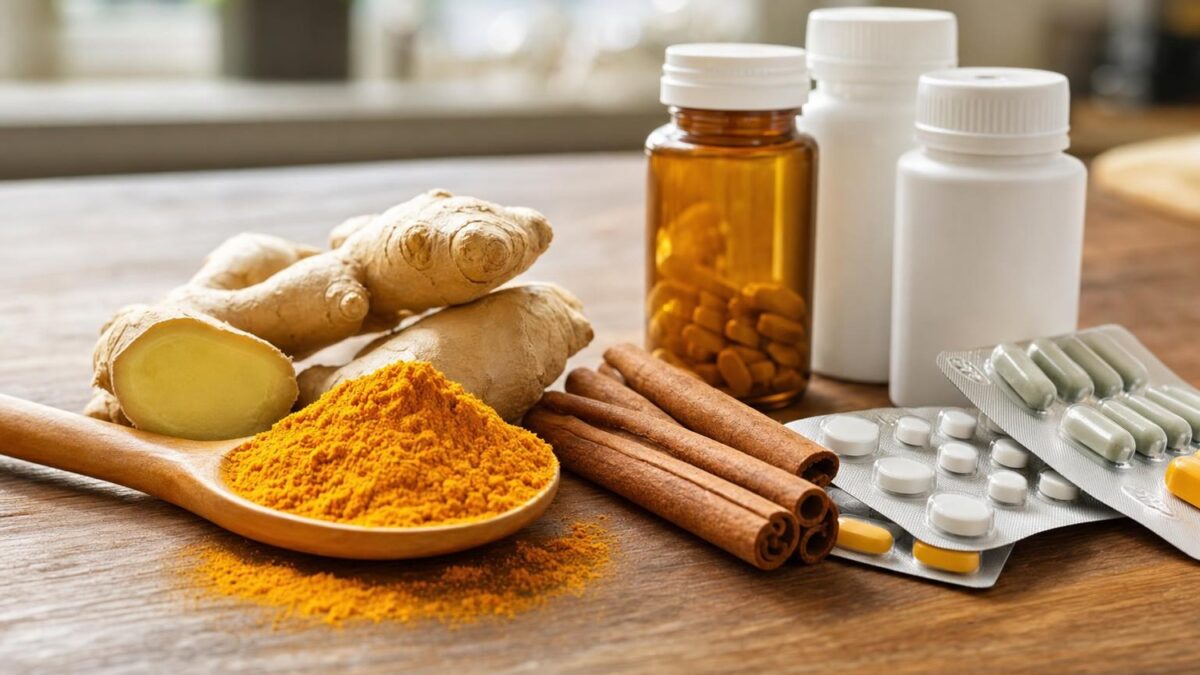
A pinch of cinnamon in porridge, a turmeric latte, a shot of ginger in the morning: these well-being gestures are increasing among many French people, often already under treatment. Natural, these spices seem harmless. However, pharmacological work shows that from a certain dose they act like real medicines and can modify the effect of current prescriptions.
Cinnamon, turmeric and ginger are now sold in capsules, extracts or “detox” herbal teas. A study from the University of Mississippi showed in the laboratory that cinnamaldehyde in cinnamon activated receptors that accelerate the elimination of certain medications, with a risk of less effectiveness. The drugs.com site also lists more than 60 potential interactions for ginger. The question is no longer theoretical: in high doses, a spoonful of spice can really interfere with a treatment.
How cinnamon, turmeric and ginger interfere with medications
With cinnamon, the focus is mainly on the Cassia variety, common in supermarkets and rich in coumarin. According to work cited by encyclo-nutrition, this molecule can damage the liver in high doses and has an anticoagulant effect. The University of Mississippi study shows that cinnamaldehyde could also accelerate the disappearance of certain painkillers, antidepressants or diabetes treatments, by making them less powerful.
Turmeric contains curcuminwidely studied for its anti-inflammatory effects. Data, still mainly from studies on cells or animals, indicate that curcumin interferes with liver enzymes such as CYP3A4 or CYP2C9, which metabolize many drugs. Works cited by The Practitioner’s Review mention a risk of interaction with antidepressants, antihypertensives, certain chemotherapies and antibiotics, but also a potentiation of anticoagulants and antidiabetics.
When a spoonful of spice really becomes a problem
Ginger is known to combat nausea, but it also interacts with medications. According to drugs.com, more than 60 interactions have also been recorded, mainly with anticoagulants, antidiabetics and blood pressure treatments. A case published in PubMed describes severe digestive bleeding in a patient who combined dabigatran, ginger and cinnamon supplements, proof that a “natural” cocktail can destabilize a fragile treatment.
These accidents mainly occur with pharmacological doses present in supplements, standardized extracts, essential oils or “shots”, much more concentrated than a homemade recipe. Cassia cinnamon, for example, is rich enough in coumarin that safety limits have been set in Europe. The National Medicines Safety Agency (ANSM) and ANSES point out that around a third of patients taking anticoagulants are unaware of the risk linked to supplements, even though they sometimes combine several.
Good reflexes for combining spices and treatments
For most people, using these spices in cooking once or twice a day is still considered safe by experts. Vigilance begins as soon as cinnamon, turmeric or ginger supplements appear in a person taking anticoagulants, antidiabetics, hypertension treatments or chemotherapy.
Before any new “natural” product, it is better to show the label to the doctor or pharmacist and consult in the event of unusual bleeding, numerous bruises, discomfort or hypoglycemia.