
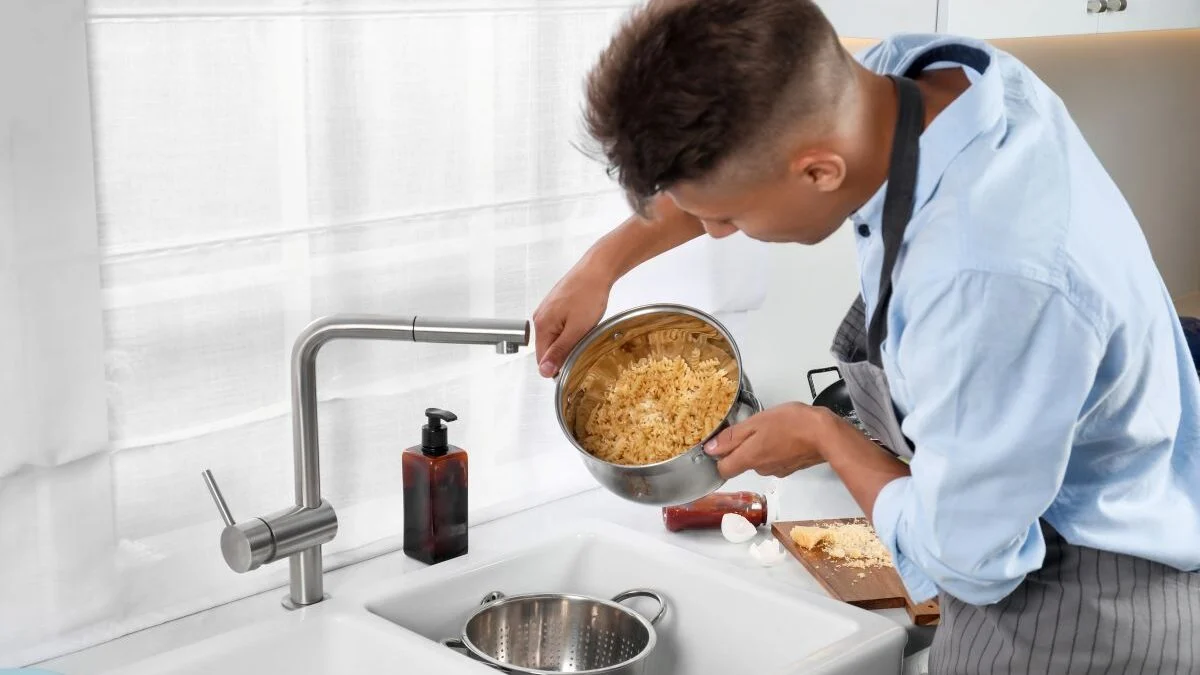
In many homes, the same gesture comes automatically to each preparation: pour a little oil to prevent the pasta from forming a compact block.
However, this habit absolutely does not fulfill its promise and above all leads to unnecessary waste. To obtain well-separated starchy foods on the plate, the solution actually relies on a simple ingredient from the cupboard.
This ingredient is white vinegar, combined with better management of water volume and agitation.
By acting directly on the starch released during cooking, this method radically changes the texture of the dish. And this, while preserving its nutritional qualities.
Why is oil ineffective and what is the role of white vinegar?
Pouring oil into boiling water simply doesn’t do any good. Since oil is hydrophobic and immiscible with water, it remains on the surface and never coats the pasta during cooking. Worse still, it can make them too slippery when serving, preventing sauces from adhering to them properly.
The real cause of the problem is the starch that the pasta releases when it heats. When concentrated in a small volume of water, this starch forms a sticky film which bonds foods together. Adding a few drops of white vinegar to the pan helps limit this effect thanks to its acidity, without ever altering the taste of the dish if the dose remains moderate.
The ideal method: large volume of water and good cooking timing
White vinegar is an excellent boost, but it must be accompanied by fundamental actions. The golden rule is based above all on the volume of water: you should provide approximately 1 liter of water for 100 g of pasta, in a container large enough so that it can move freely. It is in this large saucepan that a tablespoon of white vinegar comes into its own.
To avoid inconvenience, it is also essential to stir vigorously from the first minutes of cooking, at the precise moment when the starch begins to diffuse. Remember to salt the water and respect the time indicated for al dente cooking. Once drained, the pasta should be mixed directly with the sauce for one to two minutes, without ever rinsing it under cold water.
Keep pasta soft and optimize its nutritional value
A large part of the sticking also occurs after draining. If the pasta remains static in the colander, the starch present on the surface dries and acts like a real glue. To avoid this, it is better to immediately incorporate them into your hot preparation, adding a small ladle of starchy cooking water to bind everything together. If your pasta has to wait, be sure to keep it slightly damp in a large container, stirring it from time to time.
Beyond the culinary aspect, let’s remember that pasta plays a key role in a healthy lifestyle. Whether white, whole grain or made from legumes, they mainly provide complex carbohydrates. “These constitute our body’s primary source of energy: they nourish our muscles, our brain and help us stay active“, recalls Julie Boët, dietitian. Very widespread, white pasta is made from refined flour.
“Their disadvantage is that they contain little fiber and cause a faster rise in blood sugar, especially if overcooked.“. On the other hand, they have their place in a balanced meal: “Cooked al dente, accompanied by plenty of vegetables and a source of protein, they are satiating while avoiding blood sugar spikes.
By combining all these tips, you obtain a dish that is both tasty, digestible and perfectly balanced for your health.