
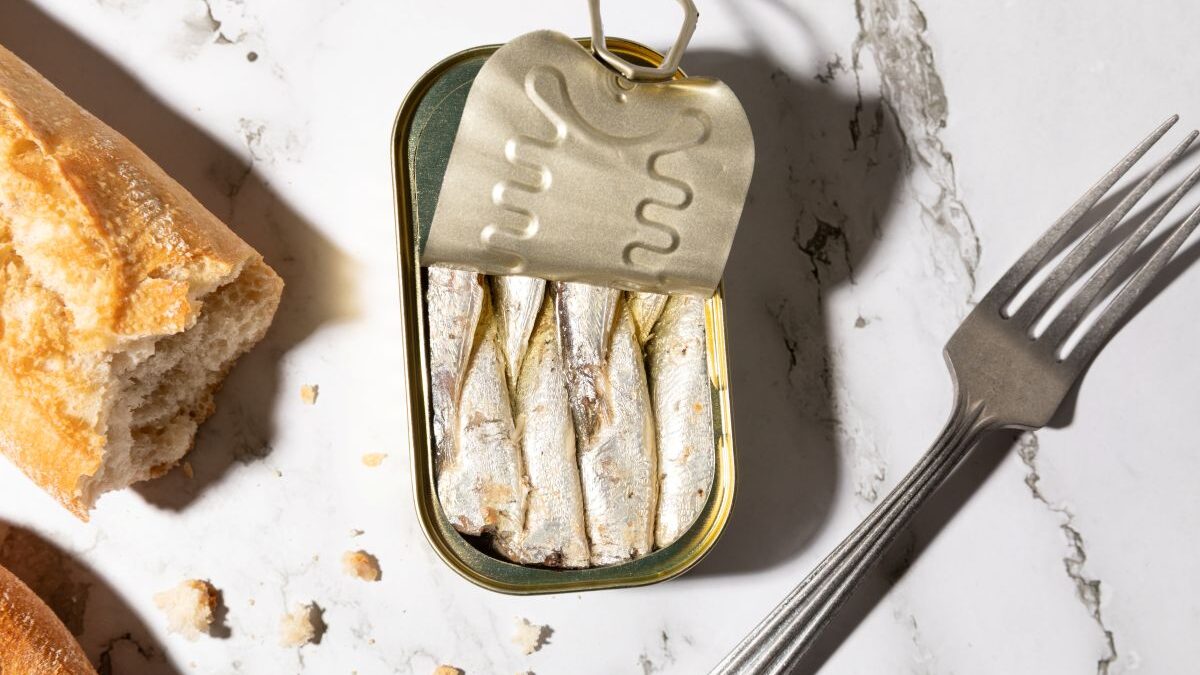
When returning from work or having a meal on the go, canned fish remains a practical, quick and particularly nutritious option. But what to do when you don’t finish your can of sardines, tuna or mackerel? Due to lack of time or habit, many of us return the opened metal can directly to the refrigerator.
Thinking we are doing the right thing, we are actually making a common mistake. This reflex not only alters the taste qualities of the fish, but also presents a health risk that should not be neglected.
Why you should never leave an open metal can in the fridge
Keeping an open metal box cool poses a double problem: taste and health. On the one hand, the direct contact between the metal, the air and the humidity of the refrigerator causes slight oxidation of the container. This phenomenon quickly gives the fish an unpleasant metallic scent and degrades its texture, even for sardines preserved in oil.
On the other hand, food safety is at stake. The cold of the refrigerator only slows down the multiplication of bacteria, it does not stop it. A poorly closed box allows air and ambient humidity to circulate, thus promoting bacterial contamination. Remember that you should never consume the contents of a damaged, bulging or rusty can, due to the risks linked to harmful bacteria such as Clostridium botulinum.
The ideal method for storing your leftover sardines
To preserve the freshness of your fish without taking any risks, the golden rule is simple: you must immediately transfer the contents of the can. Place the sardines, along with their oil, sauce or brine, in a clean airtight glass or plastic food container.
Remember to close the container tightly and, ideally, note the date of opening on it. Then store everything in the coldest area of your refrigerator (between 0 and 4°C), preferably at the back of a shelf rather than in the door, where temperature variations are more frequent. Under these conditions, leftovers can be safely consumed within 24 to 48 hours. Beyond that, especially for more fragile people, caution is required.
Anti-waste tips: what to do if you don’t eat them on time?
If you know in advance that you won’t eat the leftovers within two days, consider freezing. After transferring the fish into a suitable non-metallic container, you can keep it like this for several weeks. Then simply add your sardines to a stuffing, crush them into rillettes, or add them to a mixed salad, a pasta dish or a sandwich. However, be careful never to reheat the same leftover several times to avoid any microbiological risk.
In summary, although it is advisable to handle opened cans with care, it would be a shame to deprive yourself of the benefits of these little fish. As Pauline Pied, dietician, reminds us: “Sardines provide omega-3, but also vitamin D, calcium, iron, iodine and good quality proteins.. By adopting the right conservation reflex straight out of the cupboard, you can take full advantage of its nutritional benefits with complete peace of mind!