
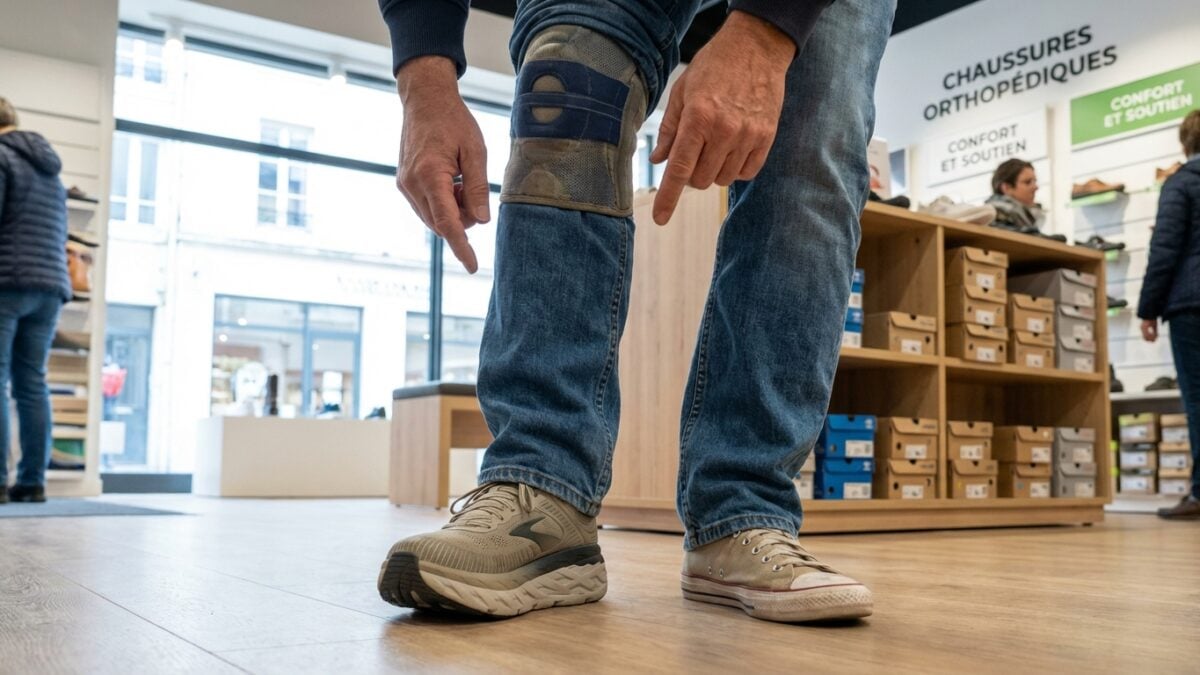
When the hips or knees are eaten away by osteoarthritis, many hear that they need “good shoes”. Some opt for ultra-cushioned sneakers, others on flat ballerinas. However, science shows that the ideal choice is not so intuitive.
Osteoarthritis damages the tissues around the joint, causes pain and stiffness and makes walking difficult, especially at the hip and knee. There is no definitive cure, so daily management matters a lot, and the type of
shoes for knee and hip osteoarthritis
is clearly part of the equation. The latest studies clarify what really helps. In The Conversationtwo specialists from the University of Melbourne, Kade Paterson, professor of musculoskeletal health and Rana Hinman, professor of physiotherapy, take stock.
Osteoarthritis of the knee or hip: what your shoes do with each step
With each stride, the shoes change the way forces travel up the leg. Six-centimeter heels increase knee forces by 23% on average compared to walking barefoot. Models with supportive features (stiffer sole or heel, arch support) can increase these knee forces by up to 15%, and insoles that support the arch add about 6%.
A biomechanical study carried out in 2017 in people with
osteoarthritis of the knee showed that
flat and flexible shoes reduced knee forces by an average of 9% compared to stable, supportive shoes. On paper, these flexible models therefore seem protective. But a reduction in load does not always mean less pain on a daily basis, hence the interest in clinical trials.
For knee osteoarthritis, stable and supportive shoes are the winner
A clinical trial carried out in 2021 in 164 people suffering from knee osteoarthritis compared stable and supportive shoes to flat, flexible shoes for six months. Result: the stable shoe group saw their knee pain when walking reduce by 63% on average compared to the flat shoe group. In this trial as in another, very flat and flexible models also caused more complications, for example foot pain.
Concretely, for an arthritic knee, science points towards sneakers or walking shoes with a rather firm sole, low heel, good support for the heel and midfoot. Among the elderly, these criteria are added to a safety imperative: avoiding high heels or narrow, both because they increase joint forces and because they increase the risk of falling.
For hip osteoarthritis, no miracle shoe but choices to be refined
A more recent randomized trial included 120 people with
hip osteoarthritis. They wore, depending on their group, either stable, supportive shoes or flat, flexible shoes for at least six hours a day for six months. The difference in change in hip pain when walking between the two groups was −0.5 points out of 10, therefore without clear superiority of one type of shoe. Flat and flexible shoes showed better improvement in certain symptom and quality of life scores, but caused more adverse effects: 31% of participants, compared to 12% with stable shoes, a relative risk of 0.39 in favor of stable shoes.
For the hip, the two families of shoes therefore remain possible. The choice is made mainly on overall comfort, the presence or absence of foot or ankle pain, and the fall risk profile. Whatever the model, experts point out the benefit of other non-surgical strategies such as exercise, weight management, nutrition and certain medications, to be discussed with a general practitioner, a podiatrist or a physiotherapist.