
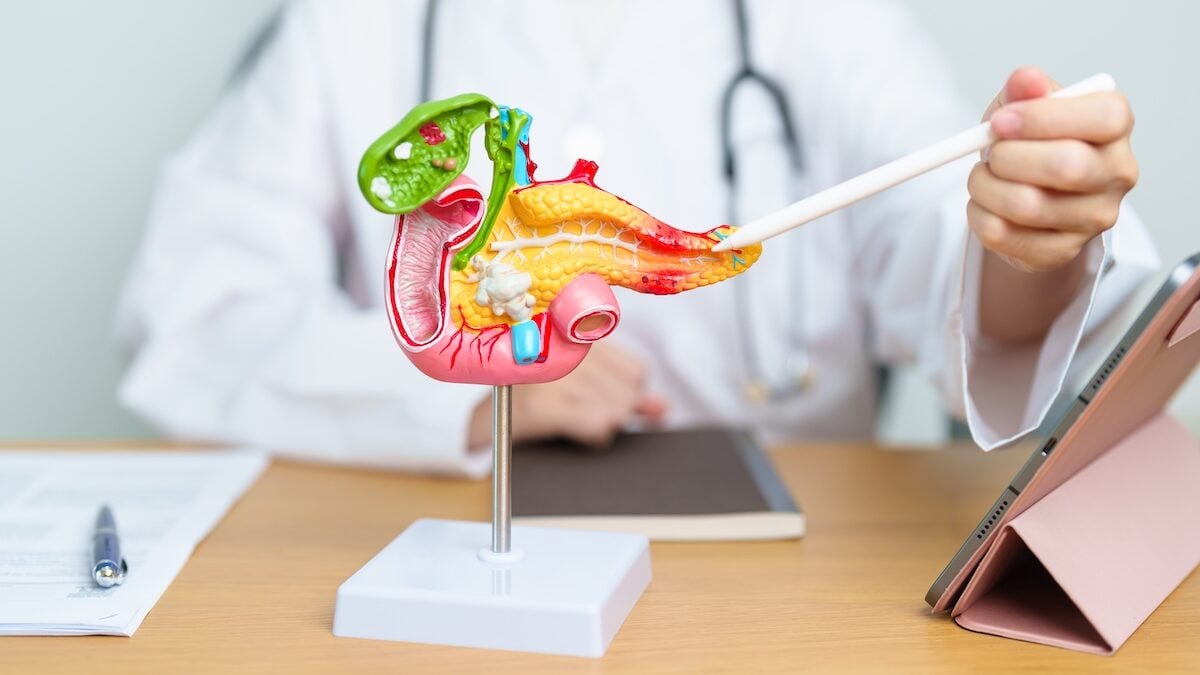
Pancreatic cancer remains one of the most feared by oncologists. In France, 16,000 new cases were diagnosed in 2023 and the disease continues to progress. Its survival rate remains limited to 10 to 12% five years after diagnosis, a situation largely linked to often late discovery of tumors.
In Suresnes, Foch Hospital chose to act before the appearance of advanced forms. Since the summer of 2025, the establishment has been deploying a program dedicated to the prevention and early detection of pancreatic cancer for people at high risk, as part of the Interception program led by Gustave Roussy. More than twenty patients have already joined this course.
Pancreatic cancer, a disease whose cases continue to increase
The figures illustrate the scale of the health challenge. The number of cases has tripled in twenty years. Since 2010, the increase has reached +1.6% among men and +2.1% among women.
The projections put forward for the next twenty years are even more worrying. Pancreatic cancer could see its incidence increase eightfold and become the second cause of cancer mortality behind lung cancer in Europe and the United States.
Today, it represents the 12th cancer in number of cases but already the 7th in mortality. A situation which is explained in particular by the absence of a national screening program and symptoms often appearing late.
Doctor Asmahane Benmaziane, oncologist at Foch Hospital and coordinator of the system, recalls the objective of the program: “CScreening makes it possible to fill a long-missing link in the management of pancreatic cancer: that of prevention and early diagnosis. Treatments are progressing, but the major challenge is to act upstream, to better understand the mechanisms at the origin of the disease and to intervene at the earliest stages. It is no longer a question of waiting until the cancer is advanced, but of identifying and supporting patients at risk early in order to improve screening and, ultimately, the prognosis.“.
A one-day course for high-risk patients
This program targets several patient profiles: people with genetic predispositions or a family history of pancreatic cancer, those with chronic pancreatitis or patients with pancreatic cystic lesions at risk of malignant transformation, called IPMN.
The process begins with a teleconsultation allowing doctors to assess the patient’s eligibility. A coordinating nurse then organizes the entire follow-up.
The care is concentrated over a full day welcoming between four and six patients. The program combines blood tests, consultations with oncologists and gastroenterologists, nutritional interviews, information on risk factors and assessment of quality of life.
At the end of this day, each participant receives a personalized monitoring program, which can be carried out in town or at Foch Hospital. In the event of a diagnosis, treatment can be initiated immediately.
The Interception program continues its deployment in France
Designed by Gustave Roussy four years ago, Interception is based on a personalized prevention strategy targeting people at increased risk of cancer.
Deployed in 7 to 8 French centers, this research program aims to reduce cancer-related mortality by 30% thanks to earlier detection and anticipated treatment.
Foch Hospital has become the second hospital in Île-de-France to offer this course dedicated to pancreatic cancer. The establishment is already planning a new program dedicated to the early detection of colon cancer before the end of 2026.