
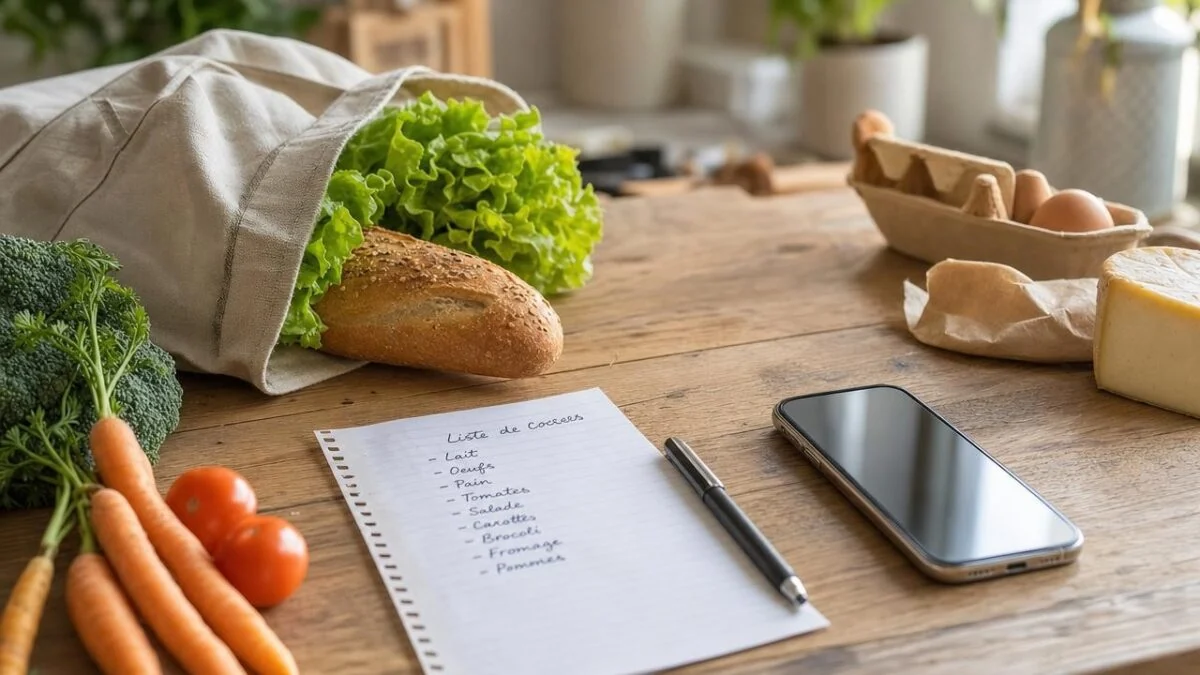
Supermarket aisles often divide shoppers into two camps without them realizing it. On the one hand, those who tap on their phone between two notifications; on the other, those who patiently check a crumpled sheet taken out of the bag. Behind this very banal scene hides a real subject for psychologists: our way of preparing for races would tell the way in which our brain encodes information, and certain habits would be linked to better cognitive performance.
Shopping list: why paper is ahead of the smartphone
People who write their shopping list on paper, by hand, would adopt a more effective strategy for their brain than those who type it on a smartphone.
In a 2021 study conducted by the University of Tokyo and published in the journal Frontiers in Behavioral Neurosciencevolunteers copied a schedule on paper, tablet or smartphone. The “paper” group completed the task on average in 11 minutes, compared to 14 minutes on tablet and 16 minutes on smartphone, or almost 25% faster. An hour later, brain activity related to language, mental imagery and the hippocampus was also stronger in those who had written on paper.
Researchers explain this discrepancy by the very nature of the support. On a screen, scrolling and menus look the same; “The layouts of digital tools are almost always identical“, recall the specialists cited by The Internet user. A sheet keeps the trace of a unique outline, of erasures, of margins. Even if “personalizing digital documents can also improve memory“, these visual and tactile cues remain richer on paper.
Handwriting and the brain: what the studies show
Writing a handwritten shopping list requires more than just the eyes. Mellissa Prunty, lecturer at Brunel University, recalls in the columns of Graziathat “holding a pen between your fingers is a complex cognitive-motor skill that requires a lot of attention“.
The gesture, the pressure on the paper and the movement of the hand create additional signals for the memory, while typing on a keyboard repeats the same micro-movement.
Smarter or better organized: what does this shopping list change on paper?
For neuropsychologist Audrey van der Meer, who published in 2024 a high-density electroencephalogram study in Frontiers in Psychology“the whole brain is active when writing by hand“, while the keyboard activates fewer zones. Say that these people are “smarter than average” essentially means that they use a more efficient encoding strategy.
By preparing a clear list by hand, grouped by department, they free up space in the working memory to compare prices or manage the budget during shopping.