
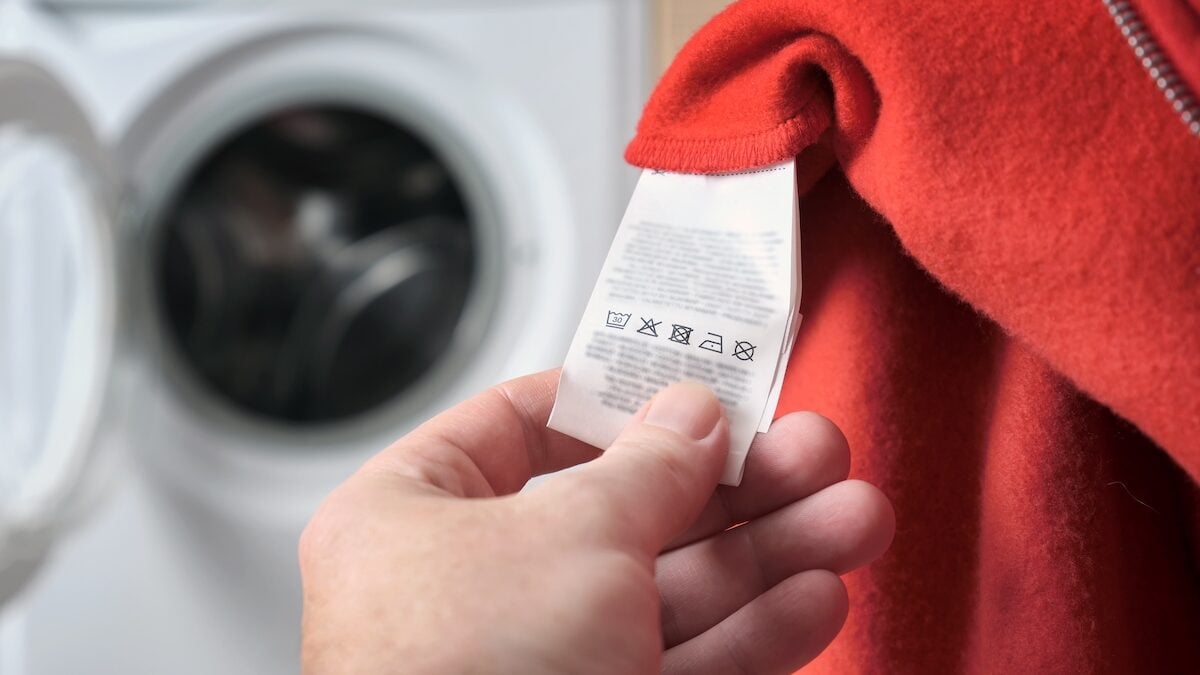
Sweating during periods of effort, nothing abnormal in that. What’s more annoying is when our t-shirts, sweatshirts, leggings retain a slight stale smell, session after session. While everything went through the machine. But why these persistent odors and how to find freshness?
Odors linked to bacteria, not sweat itself
As Dr. Gérald Kierzek reminds us, sweat itself is odorless. “It is actually the bacteria present on the skin, notably some such as corynebacteria, which break down sweat (composed of fatty acids and proteins) into malodorous volatile compounds.”
These micro-organisms find a particularly favorable environment in sports clothing, often made of synthetic fibers such as polyester or elastane. “Very porous, they retain humidity and organic residues, which allows bacteria to proliferate… even after conventional washing.
Result: the smell of perspiration persists, not because the clothing is dirty in the toxic sense of the term, but because the bacteria and odorous molecules remain trapped in the technical fibers.
Why does the smell persist despite being put in the washing machine?
Still according to our expert, several maintenance errors explain this resistance of odors.
- First, cold washing alone is not always enough to eliminate encrusted bacteria. “Conversely, too high heat can “fix” the odor in the fabric, particularly on technical textiles;
- Furthermore, conventional detergents do not destroy all bacteria and can leave residue in the fibers. These residues then attract moisture, creating an ideal environment for bad odors to reappear;
- Another aggravating factor: leaving your damp sports clothes in a bag after training. “This stagnant humidity promotes bacterial multiplication even before washing.”
To limit the build-up of odors, the first step is simple: act quickly. Dr. Gérald Kierzek advises rinsing clothes in cold water as soon as possible after sport to dilute sweat and prevent it from soaking into the fibers. It is also best to never leave a damp outfit balled up in a closed bag. Airing clothes immediately after use already helps curb bacterial proliferation and preserve the freshness of the fabric.
Vinegar pre-soaking, an effective ally
For stubborn odors, the doctor recommends a simple and accessible solution: pre-soaking with white vinegar.
Concretely, this involves letting the clothes soak for 15 to 30 minutes in cold water with a cup of white vinegar. “This acts as a natural antibacterial and neutralizes the acids responsible for bad odors.
After this soak, washing in lukewarm water (between 30 and 40°C) is ideal. This temperature makes it possible to eliminate residues without damaging technical fabrics or fixing the odor in the fiber.
Best practices for truly effective washing
Proper maintenance makes all the difference. Dr Gérald Kierzek recommends in particular:
- Favor a delicate cyclewithout overloading the machine, so that the water and detergent penetrate the fibers well;
- Use a gentle detergentpossibly supplemented with half a cup of bicarbonate to reinforce the deodorizing action;
- Avoid fabric softenerwhich coats the fibers and blocks the breathability of sports textiles, while trapping odors.
Drying also plays a key role. “Drying in the open air, flat or in the shade is best. The dryer, by strongly heating the fibers, can reactivate and fix persistent odors.
Finally, to prevent the problem in the long term, it is advisable to alternate between several sports outfits in order to give them time to dry completely, to systematically air the clothes after use and, if possible, to favor naturally antibacterial fabrics such as merino wool or certain textiles treated with silver or copper ions.