
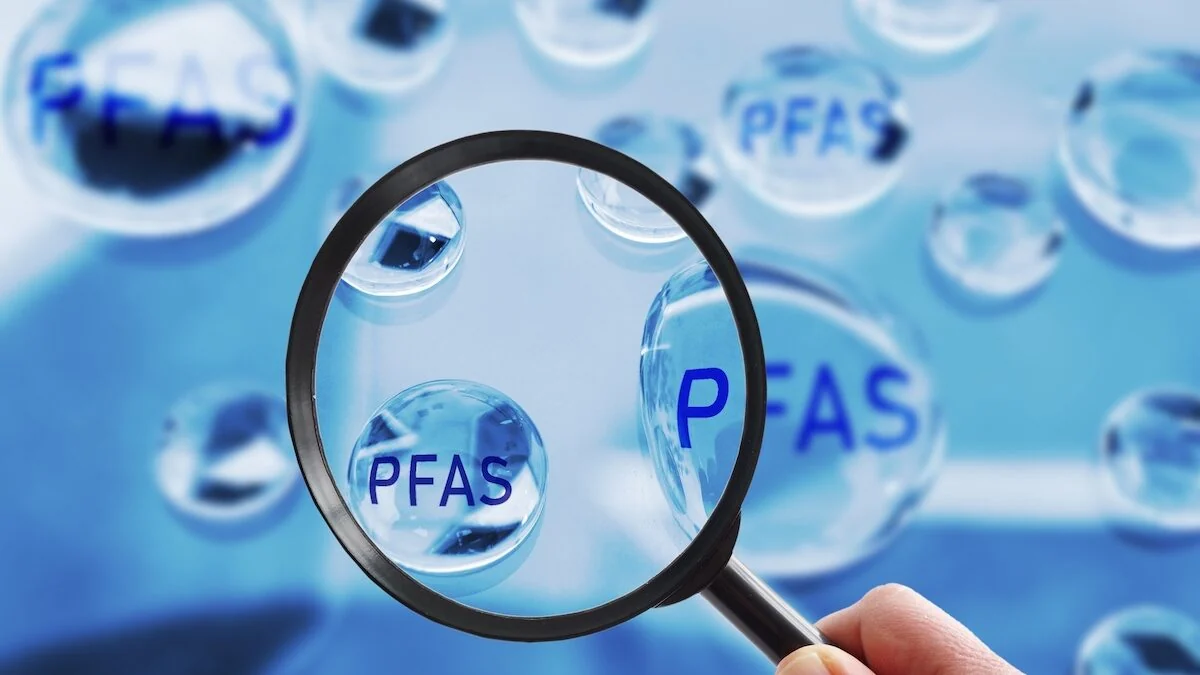
Fish, shellfish, eggs, infant formula… An analysis by Générations Futures reveals that 21% of food samples checked in France in 2024 contained at least one quantified PFAS. Persistent substances, some of which still escape regulation.
Persistent pollutants even in our food
They are invisible, but their presence is very real. PFAS, or per- and polyfluoroalkyl substances, include several thousand chemical compounds made by humans. Very resistant to heat, water and grease, they are difficult to degrade in the environment. Released into the air, water and soil, they contaminate ecosystems before going up the food chain.
According to the European Food Safety Authority (EFSA), food is the main source of exposure to PFAS for a large part of the population.
In a report published on November 26, 2026, Générations Futures analyzed official surveillance data collected in 2024 in France and ten other European countries. The observation is worrying: in France, 137 samples out of 652, or 21%, contained at least one quantified PFAS. This figure does not mean that 21% of all food sold is contaminated: it only concerns the products analyzed as part of this surveillance.
Fish, shellfish, eggs: the foods most affected
Some categories particularly stand out. In France, at least one PFAS has been quantified in 41% of fish, 39% of crustaceans and molluscs And 39% of eggs analyzed.
The report also notes the presence of PFOS in 24% of infant milk samples, or six out of twenty-five. A result to be taken with caution, given the low number of samples.
Eggs raise another difficulty: in 10% of the samples concerned, the substances detected were only PFAS which are not covered by the current regulatory thresholds. However, these compounds can also present health risks. The report cites in particular PFDA, classified as toxic for reproduction.
For families, these figures can legitimately cause concern. They do not mean giving up eggs, fish or products intended for infants. On the other hand, they raise an essential question: do the currently authorized thresholds really make it possible to protect consumers, particularly the youngest?
A single egg may be more than a child’s tolerable weekly dose
Beyond the presence of pollutants, it is their accumulation that is worrying. In 2020, the EFSA set a tolerable weekly intake (TWI) of 4.4 nanograms per kilogram of body weight for the sum of four PFAS: PFOS, PFOA, PFNA and PFHxS.
To establish this reference, EFSA relied in particular on work on the immune response of children. Researchers had observed an association between higher concentrations of these four substances in the blood and a reduction in antibodies produced after certain vaccinations, notably against diphtheria, tetanus and Haemophilus influenzae type b.
The issue is high: several PFAS are associated with potential effects on the immune system, fetal development, metabolism and thyroid function. PFOA is also classified as a human carcinogen by the International Agency for Research on Cancer (IARC), while PFOS is classified as a possible carcinogen.
But the Générations Futures report above all highlights a discrepancy between the European health reference and the maximum limits authorized in certain foods. According to the NGO, a single egg respecting the maximum authorized content could provide a child of around 4 years old with 142% of this weekly dose. For a 15 kilo child, DHT corresponds to 66 nanograms per week.
This is not a threshold for immediate intoxication: this reference concerns cumulative exposure, all food sources combined, including drinking water. It aims to prevent the potential effects of repeated exposure over time, in particular on the immune system.
Regulations still limited to four PFAS
Another difficulty: the European thresholds only concern four substances, PFOS, PFOA, PFNA and PFHxS, and certain categories of food. However, the report shows that other PFAS are regularly detected. In fish, for example, PFDA appears in 20% of samples and PFUnDA in 29%.
Surveillance also remains incomplete. There is too little data available for certain food families, particularly fruits and vegetables. TFA, a degradation product of certain PFAS, is even absent from the food analyzes identified by the authors of the report, even though the European Chemicals Agency (ECHA) recognizes it as very persistent and toxic for reproduction.
For Générations Futures, these gaps prevent a correct assessment of consumer exposure. The association is calling in particular for food surveillance extended to more substances and food categories, as well as a risk assessment covering all PFAS present in our food.
Act at the source to protect consumers
The association also asks France to support as broad a European restriction as possible on the manufacturing, placing on the market and use of PFAS, within the framework of the REACH regulation. It also calls for strengthening the control of industrial discharges.
“Our work confirms the extent of contamination of our food by PFAS, and shows how regulations do not meet the health challenges.”alerts Manon Lenormand, scientific and regulatory mission manager at Générations Futures.
The message is clear: consumers cannot, on their own, control contamination which occurs well before the purchase of food, in water, soil and ecosystems. It is also not a question of systematically arousing worry at every meal. The available results do not make it possible to precisely measure each person’s individual exposure or to predict the health consequences of a particular consumption.
On the other hand, they recall the urgency of more complete surveillance and action at the source. Protecting our food from PFAS first requires preventing these substances from permanently contaminating the environment. A public health challenge that goes far beyond the contents of our plates.