
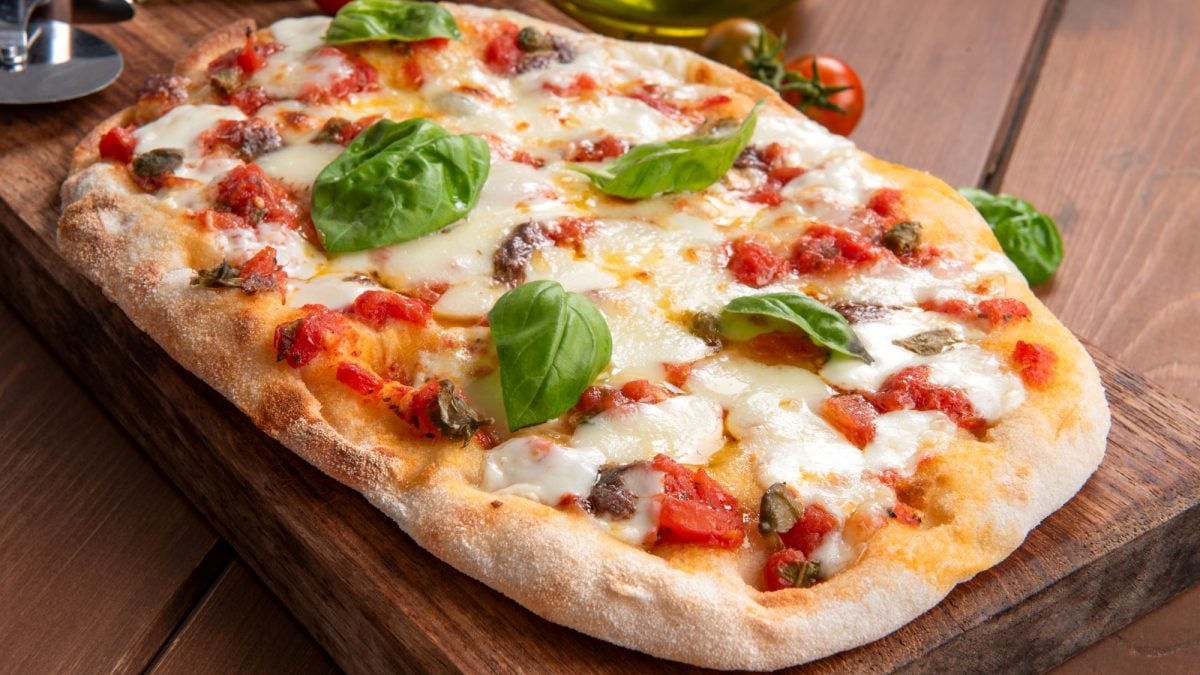
If you have Italian origins, you have probably known her for a long time. In France, pinsa is the culinary phenomenon of recent months, widely popularized by social networks.
Pinsa, a cousin of pizza
This dish has Roman origins and is distinguished from pizza by the ingredients used.
“Pinsa is made from three different flours: wheat flour, rice flour and soy flour” says our expert. “It’s an interesting alternative to pizza from this point of view: it will be more protein-rich and therefore more interesting for satiety.”
Mixing these flours also reduces the gluten in the dough.
“By mixing three flours, two of which do not contain gluten, the pinsa will also be better digested than pizza dough” assures Alexandra Murcier. A virtue underlined by fans of this dish, who also think that the long maturation time of the dough, during its preparation, can also contribute to it.
A healthier dish than pizza?
Alexandra Murcier recalls that pinsa also has a lower glycemic index, due to its composition. “It will increase our blood sugar levels less. On the other hand, from a caloric point of view, the difference is not necessarily very significant, compared to pizza.. Those who imagined pinsa as a healthy alternative to the traditional Neapolitan pizza will be disappointed. “You can make a pinsa much more caloric than a pizza, it all depends on the topping in reality” reminds the dietitian.
How to properly compose your pinsa?
If you are tempted by the idea of preparing a homemade pinsa, you can prepare the dough yourself, by purchasing the aforementioned flours, or buy a ready-made one from a supermarket.
“The idea is then to balance the garnish, by adding vegetables, favoring white ham rather than pepperoni and keeping a light hand with the cheese”. Without forgetting “accompany it with a green salad to balance your meal and listen to your satiety, without forcing yourself to finish it”. A bit like pizza, ultimately.