
Diagnosing breast cancer in a pregnant or postpartum woman remains a blind spot in medicine: in the general population, the disease affects approximately 1 in 3,000 pregnanciesand until 1 in 50 in women at high risk such as BRCA gene carriers. Tumors are often spotted late, when they have already spread, and mammography works poorly on pregnant or lactating breasts. To get around this blockage, British researchers are looking at a fluid that young mothers produce every day.
In Manchester, the study BRACELET‑BMled by theUniversity of Manchesteranalyzes the
breast milk as a tool for early detection of breast cancer. Its objective is to track down fragments ofCirculating tumor DNA (ctDNA)as close as possible to the breast, where a simple blood test could miss the signal. Between 35 and 50% of breast cancers in women under 55 years old occur within 10 years after pregnancy, and 5% of cancers in those under 45 years old in the year following childbirth: this peak in risk gives full meaning to this scientific bet.
Uses breast milk to screen for breast cancer
Oncologist Dr Niki Flaum, who is leading the trial at The Christie NHS Foundation Trust, sums up the issue: “There is an urgent need to find more effective and reliable methods to screen women for breast cancer during and after pregnancy. We think breast milk could offer a unique, non-invasive insight into what’s happening inside the breast. Our knowledge of genetic modifications in breast milk is surprisingly limited, as this biofluid has been remarkably little studied to date.“Concretely, 40 breastfeeding women will be recruited, 25 at “classic” risk and 15 at high family risk, to donate milk and blood.
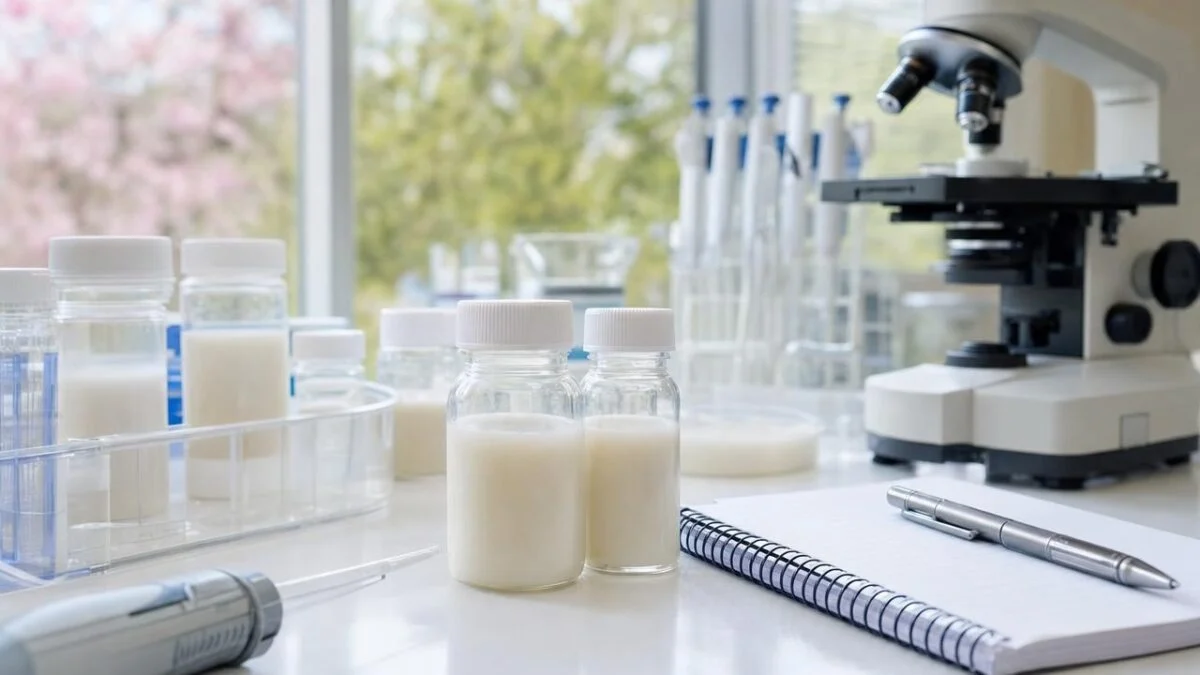
These samples will populate the Manchester Breast Biofluid Biobank, with more than 200 tubes planned for future work. At the CRUK National Biomarker Centre, researcher Dr Florent Mouliere explains that “Scientists in our laboratories identified tiny fragments of genetic material released by cells in some breast milk samples donated for this study.”. He adds that “The structure of DNA is unique in breast milk, and we now understand what that DNA looks like, representing a major advance“.
Pregnancy, postpartum and breast cancer: a protocol to be clarified
Manchester’s bet is also based on a study by the Vall d’Hebron Oncology Institute (VHIO) from September 2023 which has already shown that ctDNA could be detected in breast milk, without the best collection or conservation methods being defined.
© Vall d’Hebron Institute of Oncology
The British team wants to answer these very concrete questions: what time of day to choose, how much milk to collect, should it be taken from a specific breast, and how to prevent infections in the mother or baby from confusing the results.
The protocol goes so far as to test whether the milk can be stored in a simple home freezer, which would make it much easier for young mothers to participate. The researchers are also planning questionnaires and interviews to measure the extent to which this approach is acceptable on a daily basis. The idea is simple: screening will only really be useful if it is biologically reliable, but also compatible with the already busy lives of postpartum women.
What could this breast milk screening change for women at high risk?
For women at high risk, including BRCA gene carriers, the director of The Christie Charity, Louise Hadley, sees a double hope: this test.could improve early detection in high-risk women, including BRCA carriers, enable specific screening for pregnancy-related breast cancer, and help predict postpartum breast cancer risk“. She also insists on a concrete point: he would offer “a source of reassurance for high-risk women wishing to breastfeed, who today are often advised to stop early to resume MRI“.
For the moment, BRACELET-BM remains a feasibility study, but it already outlines a future where a simple bottle pumped at home could also serve as an early alarm.