
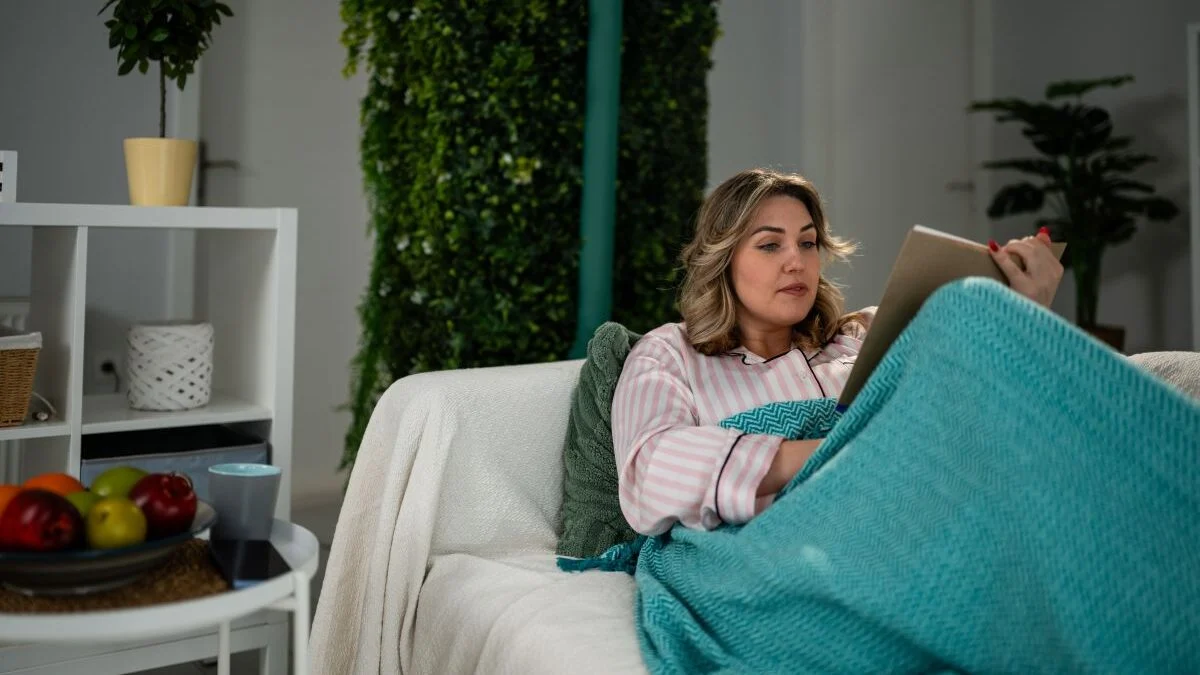
Refusing an evening with friends to enjoy your sofa is a choice that many of us make.
But what does this desire to stay at home really mean? Between the need for introspection, the fatigue of everyday life and the limits that must not be crossed so as not to isolate ourselves, psychology helps us to decode this phenomenon and to understand what is at stake behind our desire for calm.
Chosen solitude, a real bubble of well-being
Taking time for yourself doesn’t necessarily mean sadness or disconnection from the world.
Psychologists speak of “positive solitude” when this alone time is fully voluntary and sought after. It is a state deeply associated with well-being, which allows you to recharge your batteries in full awareness.
A study carried out with nearly 200 adults revealed that the ideal balance resided in alternation: we generally feel better when our days combine times of social interactions and moments of calm. Home then becomes a haven of peace where we have no role to play, no effort to adapt.
Even social networks, used in moderation, allow you to maintain a “tailor-made” link, the intensity of which you control from your living room.
Social fatigue or anxiety: learning to listen to your motivations
To know if your desire to stay at home is beneficial, you need to identify the main cause. Very often, the primary driver is simply social fatigue.
After an intense week of work, group discussions or noisy places require real effort, particularly for introverted people. In this context, declining an invitation is a healthy reflex to preserve your mental health and recharge your batteries.
On the other hand, the situation differs if it is fear that motivates your decision. When avoidance is dictated by social anxiety – the fear of being judged, the feeling of being displaced or the fear of how others will look – the home is no longer a protective cocoon but a refuge of avoidance. Ultimately, this type of behavior risks fueling a harmful spiral of isolation.
Maintain balance so as not to fall into isolation
If occasional solitude is regenerating, sustained or chronic solitude carries documented risks for physical and mental health.
To ensure that time spent at home remains a pleasure and a source of well-being, specialists recommend investing these moments in fulfilling and constructive activities, such as reading, gardening, creation or meditation, rather than leaving room for ruminations.
To maintain a good relational balance without being violent, the trick is to adjust the cursor to your rhythm: favor a one-on-one coffee rather than a large noisy party, or agree to participate in shorter outings. The main thing is to ensure that staying at home remains a real positive choice, and not a constraint.