
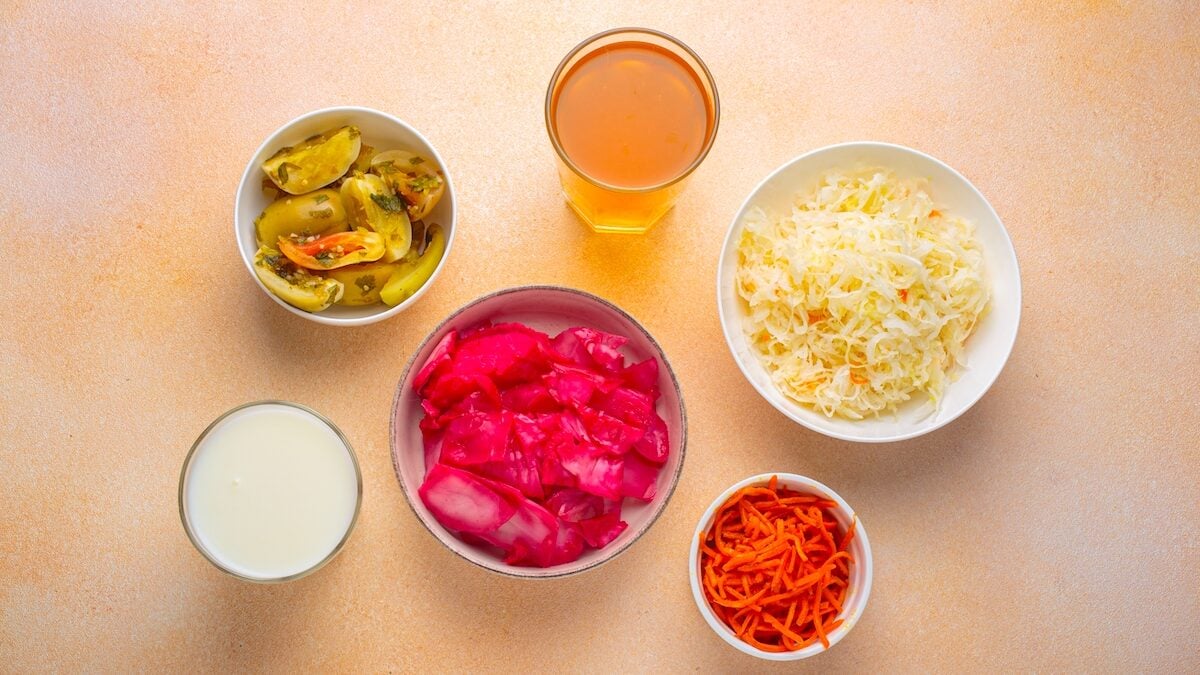
On a daily basis, probiotics play an essential role in supporting our good health. But to meet our needs, many of us only consider consuming yogurt. This is wrong! Other foods, easy to find today, can also fulfill this role. Focus on these fermented foods which enrich the microbiota with incomparable microbial diversity.
Probiotics: key mediators in the link between diet and health
Much more than just “good bacteria”, probiotics act as invisible bridges between what we eat and how our body reacts. They support the intestinal barrier, modify inflammation, and participate in the production of neurotransmitters. They also participate in the synthesis of certain vitamins and even influence appetite…
“When they come from naturally fermented foods, they offer a microbial richness that yogurt doesn’t always match.”admits Julie Boët, dietitian-nutritionist. She blows us 5 for complete menus.
Raw sauerkraut: the queen of probiotics
Well beyond its reputation as a winter dish, raw unpasteurized sauerkraut is one of the foods richest in lactobacilli. Its natural fermentation creates a real microbial effervescence beneficial to the microbiota.
“But be careful: only the unpasteurized version, kept in the fresh section, contains live bacteria” alert the pro. A tablespoon before a meal may be enough to stimulate digestion. And gently awaken the natural acidity of the stomach.
Kimchi: a Korean concentrate of micro-ecosystems
Sauerkraut’s spicy cousin, kimchi combines vegetables, garlic and chili peppers, each serving as a support for a different microbial flora. Result: a unique fermented product for each preparation.
“To take full advantage of its richness in probiotics, it is better to choose kimchi without additives or thickeners, with a short list of ingredients”advises the expert. Combined with a meal rich in fiber, it deploys a dual prebiotic and probiotic effect, ideal for sustainably nourishing the microbiota.
Kefir: a living drink with multiple ferments
Whether made from milk or fruit, kefir far surpasses yogurt in terms of microbial diversity. Its “grains”, a mixture of yeasts and bacteria, continue to evolve over the course of the preparations.
The artisanal versions are the most active: industrial products are often filtered or stabilized. “Regular consumption, even in small quantities, is enough to improve digestive tolerance and strengthen the vitality of the microbiota”underlines the nutritionist.
Miso: deep and enzymatic fermentation
This fermented soy or cereal paste, which we love in Japanese dishes, made with koji, contains not only probiotics, but also digestive enzymes capable of supporting the liver and improving protein assimilation.
“To preserve its micro-organisms, miso should not be boiled: added at the end of cooking in a lukewarm soup, the unpasteurized version remains a wonderful ally for nourishing the intestine… and enhancing flavors”.
Tempeh: a fermented matrix favorable to the microbiota
Less known but very interesting, tempeh is produced through solid fermentation of soybeans. Even if cooking reduces some of its microorganisms, its fermented structure improves digestibility and provides bioactive compounds which indirectly support the microbiota.
A traditional tempeh, without additives, cooked slowly or marinated for a long time, allows you to fully benefit from the benefits of its fermentation.
The key: vary, listen to your feelings and move forward gradually
Finally, as Julie Boët reminds us, no fermentation is like any other: each food, each place, each season gives rise to a unique microbial ecosystem.
“To fully benefit from probiotics, the challenge is not to consume a lot of them, but to consume them regularly, varying the sources.”
It is this diversity, and this alone, that nourishes a more resilient, more adaptable microbiota… and deeply linked to our well-being.
Last point however: these foods are not suitable for everyone. In case of SIBO, digestive inflammatory flare-up or just after surgery, the introduction must be gradual to avoid bloating or discomfort. Also during pregnancy, certain fermented products require more precaution due to microbiological risks linked to their artisanal manufacture.
But outside of these situations, don’t hesitate to turn to fermented foods!