
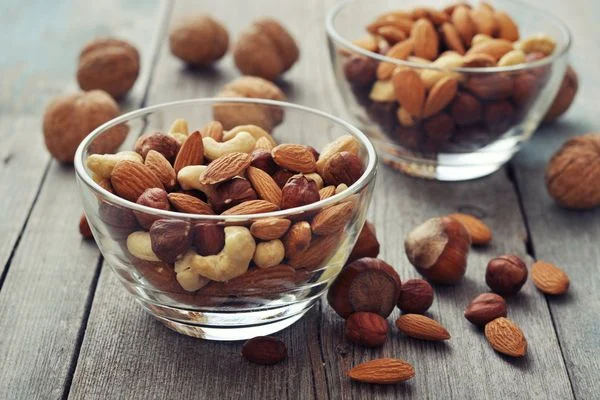
When looking to increase your protein intake, many spontaneously opt for eggs, which are quick to cook and full of nutrients. But a nutritionist interviewed by the American magazine EatingWell affirms that three daily snacks are better, in a comparable portion and without cooking.
The 3 snacks that stand out are…
In the famous interview, Novella Lui details their composition:
- A 28 g portion of peanuts provides more than 7 g of protein and around 2 g of fiber;
- As for almonds, around twenty of them provide 6 g of protein and 3.5 g of fiber;
- Same observation for shelled pistachios: 28 g provide around 6 g of protein.
Each time, we therefore achieve at least the protein intake of an average egg, or even slightly more.
However, the interest of these nuts is not limited to their protein content. In small quantities, they also provide fiber, unsaturated lipids, vitamins, minerals and various antioxidant compounds.
“Almonds are a real source of energy, offering a range of nutrients, including fiber and antioxidants, both of which contribute to good heart health,” specifies Novella Lui.
Another very concrete advantage: they are easy to transport and require no preparation. A small handful can therefore easily find its place in a bag for a snack at the office, on the go or after physical activity.
Eggs obviously remain interesting and have their place in a balanced diet. But when it comes to satisfying a little hunger between two meals, peanuts, almonds and pistachios offer a simple and practical alternative.
Simple snack ideas
For peanuts, the specialist is very clear:
“Enjoy peanuts by the handful as a hearty snack, or add them to savory dishes,” recommends Novella Lui. The Marmiton website points out that they can also be put in a wok or in a satay-type sauce.
The good reflex, however, remains to choose them plain and unsalted, in order to benefit from their proteins without unnecessarily increasing your salt or sugar consumption.
As for almonds, they can be eaten alone, but also added to cottage cheese, yogurt, salad or a homemade preparation.
Pistachios, often confined to an aperitif, can also find their place in cooking. “Use a food processor to blend the pistachios and breadcrumbs to a chopped or fine grind and dip your fish fillets or chicken breasts with the coating before cooking,”
advises Novella Lui.
How to integrate these 3 foods without completely replacing eggs?
A reasonable portion is a small handful of seeds, or around 28 to 30 g of nuts. You can eat them alone when you feel hungry, add them to yogurt or cottage cheese, or even incorporate them into a meal. In all cases, choose plain or simply grilled versions as much as possible, rather than salty, caramelized or highly processed ones.
Be careful, however, not to only compare grams of protein. In equal quantities, nuts are also much richer in energy than eggs. The objective is therefore not to systematically replace eggs with almonds, peanuts or pistachios, but to vary the sources of protein throughout the day.
“These are very interesting foods nutritionally – like all
oilseeds – because they are rich in omega 3, fiber and magnesium. On the other hand, they have a high energy density, that is to say they provide a large quantity of calories in relation to their volume. You should therefore consume them in small quantities (a handful per day) if you pay attention to your weight. The advantage is that these foods do not increase blood sugar and their richness in
fibers creates satiety so they represent an interesting snack, much more than sweet products”, concludes Alexandra Murcier, dietitian-nutritionist.