
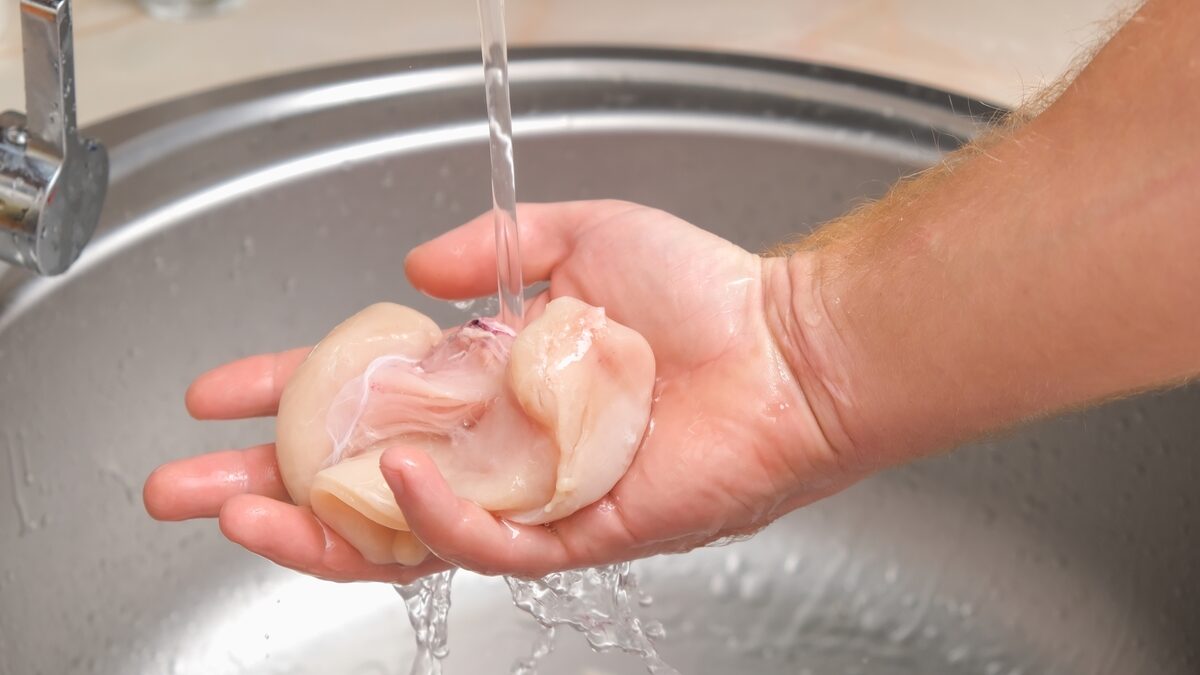
In many kitchens, the process is automatic: you unwrap the raw chicken, run it under cold water, drain it over the sink then start the recipe. A ritual that seems reassuring. However, American, British and French health authorities have recommended against this washing for years.
A chef specializing in poultry, Chris Moyer, interviewed by the American media EatingWell, confirms: this reflex can greatly increase the risk of food poisoning. Here are the actions to ban… and those to adopt.
Washing raw chicken, a habit from another era
Before the era of industrialization, almost everyone had their chicken killed on the farm: the feathers, soil and entrails then required careful washing. This logic has persisted in some families who still think it “healthy” to rinse said chicken. However, those sold today in France are already gutted, washed and checked in the slaughterhouse; going under water therefore removes nothing more.
The real subject, however, plays out on a microscopic scale: the authorities point out that raw chicken can harbor dangerous bacteria – Salmonella, Campylobacter or Clostridium perfringens, which can be dispersed almost everywhere due to water. A European report also mentions a high contamination rate – around 75% of carcasses are contaminated by Campylobacter bacteria. In France, there are nearly 1.5 million cases of food poisoning per year, from all causes. The problem therefore does not come from well-cooked chicken, but above all from what happens before.
Why washing raw chicken increases the risk of poisoning
When you rinse a raw chicken, the drops of water and juice projected can reach the work surface, the sponge, or even the salad placed next to it: this is the famous cross-contamination. “We know it’s tempting to wash raw chicken, but don’t. You risk juices splashing onto your counter and other surfaces and causing cross-contamination” says Chris Moyer, executive chef at Perdue Farms, in EatingWell.
A study with the USDA showed that washing chicken increased the risk of cross-contamination in the kitchen by about 60%. In another experiment on 300 volunteers, those who washed chicken more often found traces of E. coli in their salad. Water therefore does not eliminate Salmonella or Campylobacter bacteria; she disperses them. Hence the repeated warnings from the USDA, the CDC and the British FSA agency.
Raw chicken: the right actions to adopt
Concretely, experts recommend keeping raw chicken apart from other foods, cutting it on a specific board, then washing your hands with soap after each contact. Utensils, sink and work surface should also be cleaned with hot, soapy water. The gesture that makes the difference, however, remains cooking thoroughly, to at least 74°C. Then, it should be stored in the refrigerator at 4°C, without leaving the raw or cooked chicken for more than two hours in the danger zone (4–60°C).