
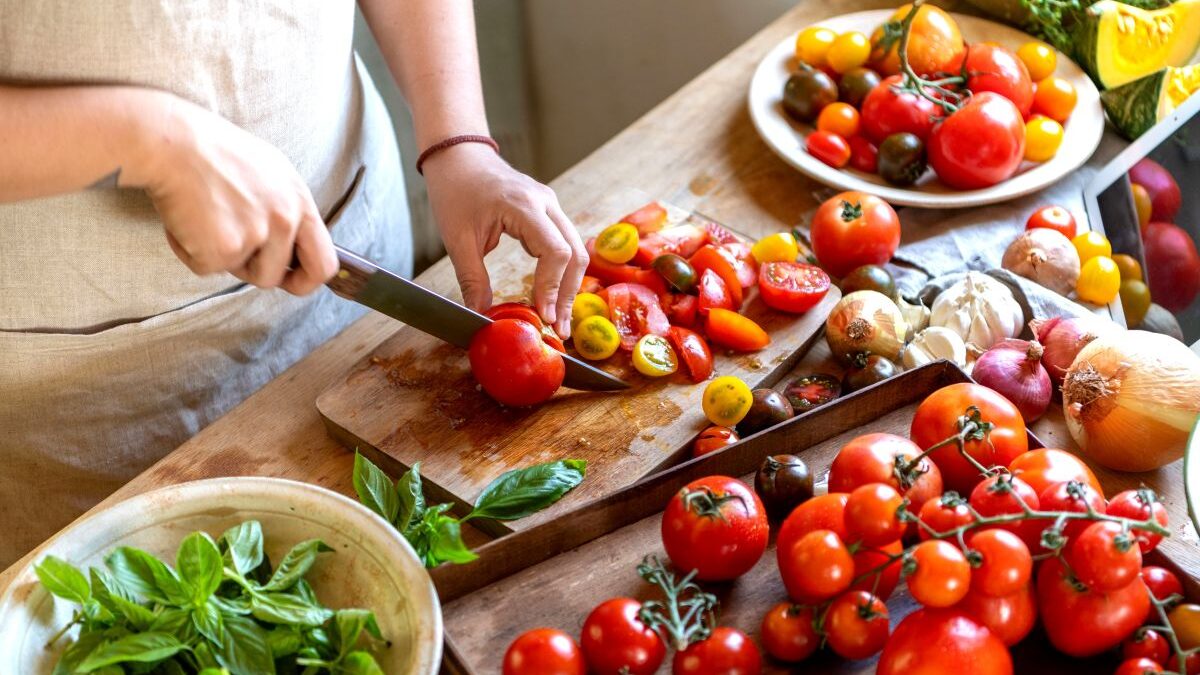
Whether enjoyed as a carpaccio in the summer or simmered in a comforting dish in the winter, the tomato is one of the most consumed vegetables (or rather fruits!) on a daily basis. Although it is known for its lightness and its richness in micronutrients, its nutritional profile changes considerably depending on how it is prepared.
Should we ban cooking or, on the contrary, favor it? The answer really depends on what nutrients you’re looking to target.
Raw tomatoes: the perfect reflex to stock up on vitamin C
If you are looking to boost your tone, the raw version remains your best ally. The main reason lies in its vitamin C content, a valuable but particularly fragile nutrient.
“Raw tomatoes have certain advantages, particularly due to their vitamin C content. This vitamin is particularly sensitive to light and heat, so it will inevitably be degraded a little when cooked” explains dietician Claire Trommenschlager.
Consuming fresh tomatoes allows you to preserve all of this anti-fatigue and immune system-stimulating vitamin.
Cooked tomato: the champion of lycopene and antioxidants
Conversely, putting the tomato under heat is not a bad thing, quite the contrary! Cooking releases a major plant compound: lycopene, the pigment that gives tomatoes their beautiful red color.
“The advantage of cooking is that it will increase the bioavailability of an antioxidant called lycopene. Tomatoes are very rich in it. There is a real advantage to cooking for the formation of antioxidants, because these elements fight against oxidative stress, protect our cells from oxidation and eliminate free radicals”specifies Claire Trommenschlager.
Even if raw tomatoes also contain it, Claire Trommenschlager recalls that it is “less bioavailable”. Under the effect of heat, the cell walls of the fruit rupture, making the lycopene much easier to assimilate by the body.
The secret to maximum absorption: combine it with a fat
Whether you prefer freshly cut tomatoes or reduced to coulis, one culinary detail changes the whole situation: the presence of lipids on the plate. Lycopene is in fact a fat-soluble molecule, which means that it dissolves in fats and needs them to be properly absorbed by the digestive tract.
To optimize its benefits, Claire Trommenschlager advises systematically accompanying your tomatoes with a fatty substance.
“Lycopene will be better absorbed with a source of fat, cooked or raw.“. A drizzle of olive oil on your tomato slices or a dash of oil in your homemade sauce is enough to increase the assimilation of its antioxidants tenfold.
Raw or cooked? Don’t choose anymore, vary the pleasures!
In the end, do we have to decide between raw and cooked? No way ! Each method of preparation brings its own nutritional benefits: raw tomatoes provide you with fresh vitamin C, while cooked tomatoes offer you a concentrate of assimilable antioxidants.
As Claire Trommenschlager sums it up very well: “The best is to vary and consume both. There’s no arguing against it, especially when it comes to healthy foods.”