
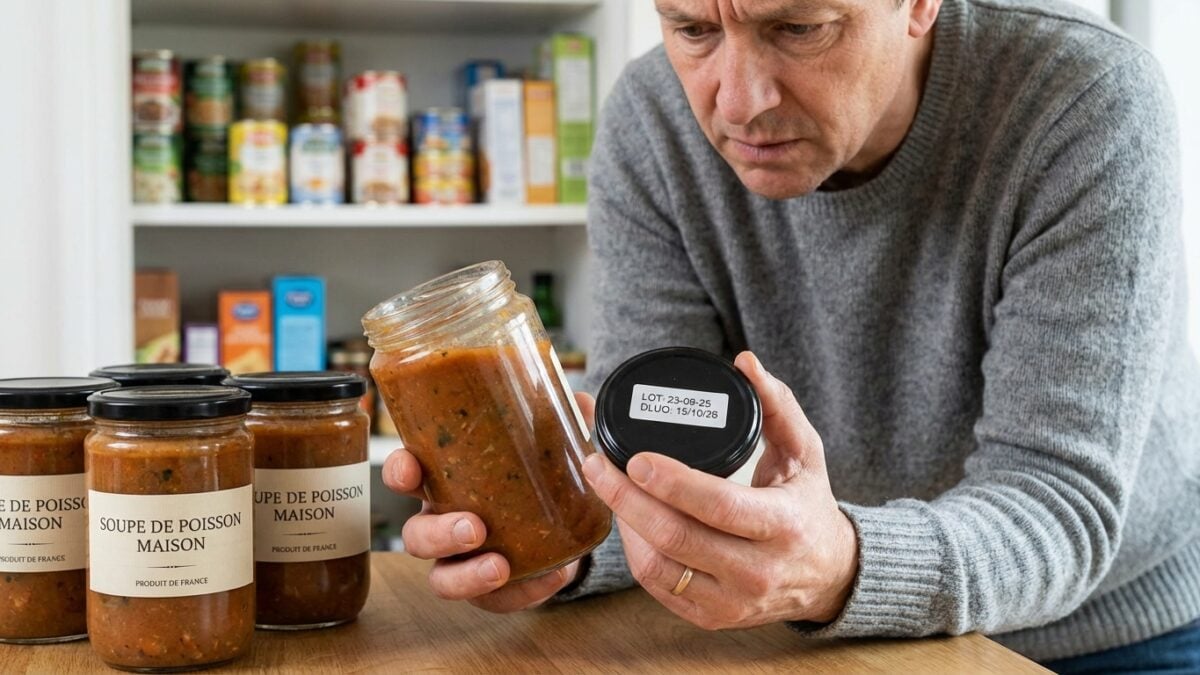
A food safety alert targets several soups and bisques from the La Granvillaise Canneryinstalled in the fishing port of Granville in Normandy. According to the official sheet “SOUPE CONSERVERIE LA GRANVILLAISE” published on February 9, 2026 on the platform ReminderConsothese products may expose consumers to a risk of
botulism linked to bacteria Clostridium botulinum. This recall follows that of jars of mackerel in white wine, mackerel in escabeche and American-style cuttlefish in 850 ml glass jars, black cap, from the same establishment for the same reason.
Artisanal and known for its seafood recipes, La Granvillaise sees several of its jars recalled throughout France. Fish soup, crab soup, moussette soup, lobster bisque, langoustine bisque or curry soup: the list is long and the reason displayed is a non-compliance which could allow the formation of botulinum toxin. It is therefore better to check your cupboards quickly.
Recall of La Granvillaise soups: which jars are affected?
The recall concerns canned goods sold in 425 ml and 850 ml glass jars, closed with a black cap bearing the logo
LA GRANVILLAISE. Affected batches, such as BH190225, BH011024, BL190225, MVB040225, SP150125 or VE160925, have a minimum durability date of 09/16/2028. They were marketed between March 29, 2025 and February 6, 2026, throughout France, via the cannery and its usual resellers.
Lot codes are usually found on the lid or label, next to the MDD. The recall information specifies that it is indeed canned goods that are targeted: fresh soups produced by the house are not mentioned in the current procedure. The same company had already experienced, in October 2025, recalls of curry velouté, American-style cuttlefish and red mullet rillettes for non-compliant pH, with the same risk of Clostridium botulinum.
Botulism and La Granvillaise soups: understanding the risk of Clostridium botulinum
Foodborne botulism remains a rare but very serious disease. It most often results from the consumption of contaminated food containing a toxin produced by Clostridium botulinum. This toxin develops especially in canned goods when the sterilization process is poorly controlled or when the cold chain has not been respected. This is exactly the scenario that the authorities want to avoid with this recall La Granvillaise soup.
Botulism manifests itself by neurological symptoms, sometimes accompanied by digestive disorders. Signs generally appear between 12 and 72 hours after consumption, but can appear up to 10 days later: blurred or double vision, drooping eyelids, speech difficulties, swallowing problems, dry mouth, and progressive muscle weakness. Botulism is a rare but serious poisoning caused by the bacteria Clostridium botulinum. Although uncommon, cases are regularly reported.
Dr Gérald Kierzek, emergency doctor, underlines the seriousness of this disease: “Botulism is caused by a neurotoxin that, if left untreated, can cause progressive, potentially fatal muscle paralysis“Fortunately, a treatment is available: botulinum antitoxin.”It is effective if administered within 24 hours of the first symptoms appearing. It helps neutralize the toxin present in the body“, specifies Dr. Kierzek. Severe cases often require hospitalization in intensive care with respiratory assistance. Antibiotics, for their part, have no effect on the toxin itself, but can be used in certain cases, such as infant botulism.
What to do in the event of a recall of La Granvillaise soups?
The instructions are clear: no longer consume the jars concerned and above all do not taste them “to see”. Products can be returned to the store for a
refund. The recall procedure runs until December 31, 2026. For any questions, a number is made available by the cannery: 02 33 90 46 76. In general, it is recommended to never consume a can whose appearance, smell or lid seems abnormal.
People who have previously eaten soup from a recalled batch should monitor for symptoms for 10 days after the last consumption. In the event of neurological disorders mentioned above, you are asked to consult your doctor without delay, noting the product consumed, the place and date of purchase. In the absence of symptoms after 10 days, no particular follow-up is recommended, while keeping in mind the importance of scrupulously respecting the conservation instructions for artisanal preserves.