
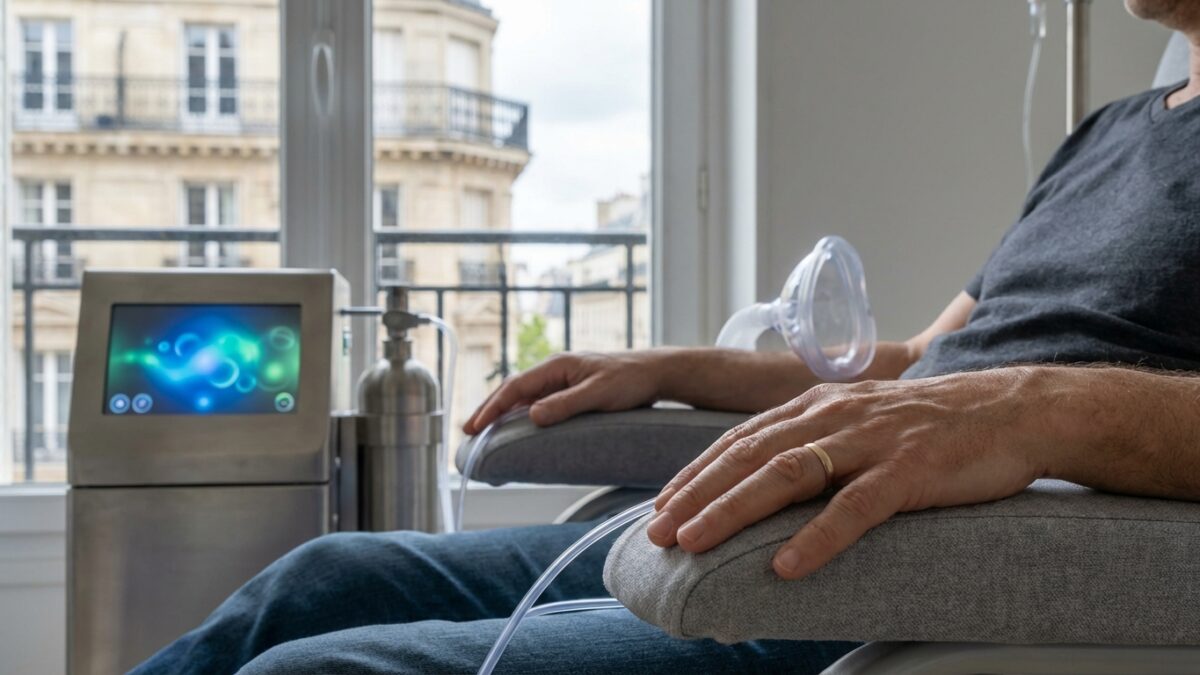
Could a gas associated with laughter in the evening alleviate, in a few hours, a depression that resists everything? This is the path, as surprising as it is very structured, opened by a vast international analysis on nitrous oxide resistant depression, carried out by the University of Birmingham and published in the journal eBioMedicine.
The researchers compiled seven clinical trials and four protocols involving adults with major depressive disorder, treatment-resistant depression, and bipolar depression, totaling 247 participants. Their observation: used in a medical setting, laughing gas could offer rapid, but short-term, relief to patients for whom traditional antidepressants have no effect, which raises new questions on how to integrate it into treatment.
Nitrous oxide: an ancient gas for a pressing need
Nitrous oxide, or laughing gas, is a well-known analgesic in surgery, obstetrics or dentistry, often administered at 25 or 50% mixed with oxygen. In depression, the stakes are high: first-line antidepressants do not provide relief in 30 to 50% of patients, and in those with resistant depression, two or more medications have not brought significant improvement. In the United Kingdom, previous work by the same team estimates that this situation concerns around 48% of people treated.
Biologically, nitrous oxide mainly acts on NMDA glutamate receptors, a brain communication system involved in mood regulation. The cited studies also describe a modification of the default mode network, linked to rumination, and an action on the dopaminergic and opioid systems, which participate in motivation and pleasure. This profile brings it closer to ketamine, another fast-acting antidepressant, while appearing to cause less marked side effects at clinical doses.
Relief in a few hours, but fades quickly
In three trials, a single session of 50% nitrous oxide inhalation led to “rapid and significant” reductions in symptoms: depression scores already decreased two hours after administration and this improvement remained visible at 24 hours, before generally fading after a week. Protocols testing repeated doses over several weeks showed more durable effects, suggesting that treatment in successive sessions would be necessary to maintain the clinical benefit. The trials comparing 25% and 50% indicate effectiveness of the two concentrations, with a more favorable tolerance/effect compromise for 25%.
For the first author, the issue goes beyond simple pharmacological curiosity. “Our analyzes show that nitrous oxide could be part of a new generation of fast-acting treatments for depression. Importantly, they provide a basis for future trials to investigate carefully managed, repeated administration strategies, which will better determine how to use this treatment in clinical practice in patients unresponsive to conventional interventions.“, commented Kiranpreet Gill, one of the authors of the study. Psychiatrist Steven Marwaha shares this cautious view, speaking of a turning point: “This is an important step in understanding the potential of nitrous oxide as an additional option for patients who current treatments do not help.”
Side effects, festive use and upcoming clinical trials
The collected studies describe a rather reassuring short-term tolerance profile in controlled medical use. The most common side effects are nausea, dizziness and headache, more common in 50% than 25%, but which disappear quickly after stopping inhalation, without particular intervention. No worrying signals of acute toxicity have been reported. The authors, however, insist on the lack of follow-up for repeated long-term exposures and on the still modest size of the trials, which limits the capacity to detect rare complications.
The researchers also point out that these data should not be confused with the recreational use of laughing gas, which is associated, when repeated and in high doses, with vitamin B12 deficiencies and sometimes serious neurological damage. Here, nitrous oxide is administered in a hospital environment, at precise doses, with monitoring and, if necessary, consideration of biological risks. The Birmingham team is now preparing the first British National Health Service trial to test the feasibility and acceptability of this treatment in major depressive disorder, while other protocols continue to explore the right dosage, the ideal frequency of sessions and the exact place of this approach in people with severe or resistant depression.