
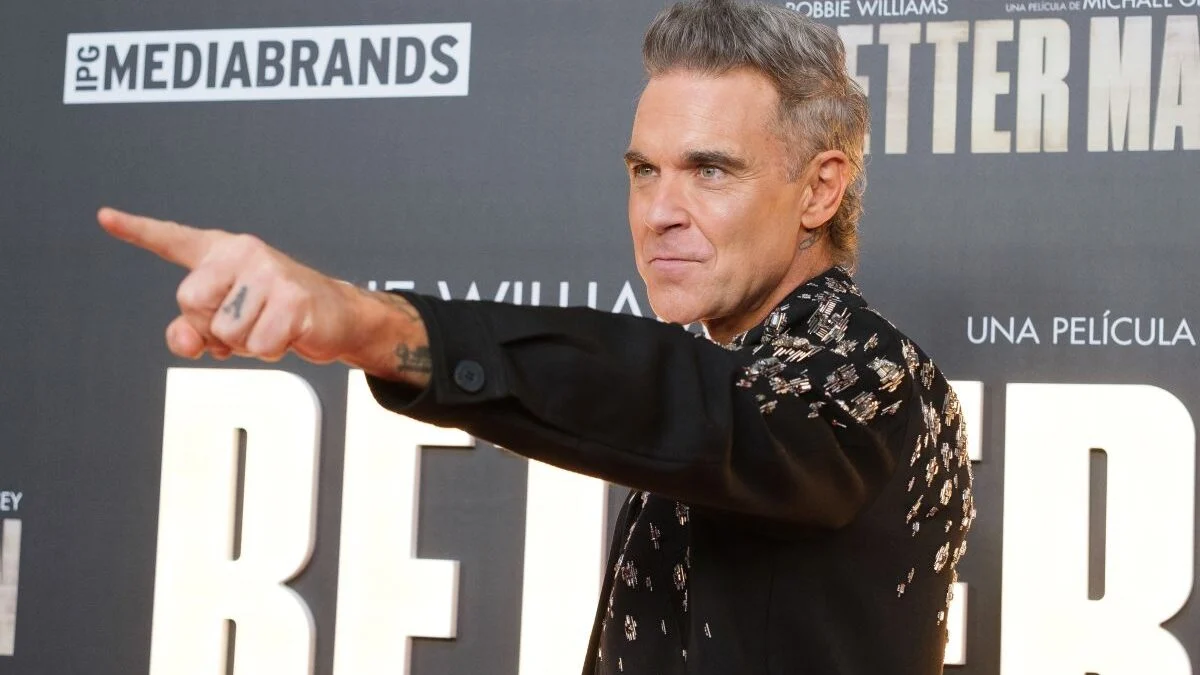
On the occasion of the launch of the collection of his clothing brand Hopium, Robbie Williams surprised his fans by publicly addressing his mental health. Already diagnosed three times with attention deficit disorder with or without hyperactivity (ADHD) and subject to mental tics which he associates with Gilles de la Tourette syndrome, the interpreter of Feel revealed having learned that he also had “a little bit of autism”.
A discovery welcomed as a relief: “It’s my get out of jail free card now, and every weird thing I do, I just say, ‘Sorry, I’m autistic.'”. For the artist, putting words to this particular brain functioning explains his creative obsessions, his hyperfocus, but also his difficulties paying attention to his children or his daily intrusive thoughts.
Social camouflage: the art of hiding your differences
Robbie Williams’ story illustrates an increasingly common trend: the discovery of autism spectrum disorder (ASD) after the age of 40 or 50. Long associated with severe intellectual or language deficiencies, the spectrum has been broadened by medicine in recent years. However, the journey remains strewn with pitfalls, notably due to persistent stereotypes from childhood.
For the former member of Take Thatappearing comfortable on stage was an acting job. Robbie Williams admits to having learned to “mask” his anxiety with an exuberant and pompous appearance. This adaptation strategy, extremely common among neuroatypical adults, would delay the establishment of an official assessment.
“As adults, some autistic people also develop “compensatory strategies” important, mobilizing a strong mental load to adapt socially. This makes, again here, their difficulties less visible.
says Dr Bruno Falissard, child psychiatrist.
A person preferring solitude may, for example, be forced to socialize in order to conform to the group’s expectations, at the cost of immense psychological fatigue.
Neurodiversity and labels: where is the border?
Faced with the proliferation of self-diagnoses and celebrity speaking engagements, experts call for nuance. If the concept of neurodiversity reminds us that not all brains work in the same way, not all singular behavior is necessarily a pathology.
“We all have singularities. Some people are hyperactive, others have difficulty moving or adjusting“, recalls the specialist. However, few individuals actually enter the medical field of ASD.
“The broadening of the notion of autism must also raise questions for us.”confides the expert, while recalling that the spectrum includes both completely autonomous profiles and people deprived of speech.
What signs should encourage you to consult?
To speak of disorder, disruptions to daily life are generally significant. “Neurodiversity becomes particularly sensitive when it affects socialization. This is where differences can become visible or problematic“, explains Dr Bruno Falissard. Among the evocative clues are:
- Avoidance or difficulty maintaining eye contact;
- Atypical or exhausting social skills to maintain;
- Sensory hypersensitivity or hyposensitivity (noises, smells, textures).
“But having certain autistic traits does not mean being autistic. These traits can exist in isolation, without constituting a disorder. calls the doctor again. “Recognizing oneself in autism without actually being autistic is not necessarily problematic if it allows one to give meaning to one’s life. We live in a society marked by a strong injunction towards normativity: we must be efficient, present on the networks, and conform to high standards. In this context, being “a little different” can be difficult to live with.he concludes.
In the event of suffering or persistent doubt, only an assessment by a mental health professional can provide rigorous medical clarification.