
Schizophrenia: why does it still take 7 years to make a diagnosis? The weight of a silence that shatters lives.
In France, nearly 600,000 people live with schizophrenia. However, it takes on average seven years to make a diagnosis. Behind this delay, a stubborn silence – fueled by preconceived ideas, shame and isolation – that society is still struggling to break.
The weight of silence: when speaking becomes a risk
The first signs often appear early, between 15 and 25 years old. A period of construction, of fragility too. But to say that something is wrong – that thoughts are confusing, that voices arise, that reality is wavering – remains, for many, unthinkable.
This silence is not a coincidence. It is shaped by decades of erroneous representations: confusion with the split personality, irrational fear of dangerousness, social exclusion. So many stereotypes that confine you.
Self-stigma then acts like an invisible lock. Being silent becomes a survival strategy. Speaking, a leap into the unknown.
Because revealing your illness is exposing yourself. To incomprehension. Rejection sometimes. “Coming out” psychiatric, in certain contexts, remains socially risky — or even impossible.
And yet, when this unveiling is chosen, accompanied, respected, it can change everything. It becomes a point of support: regain control of one’s history, expand the circle of support, begin a course of care.
It is precisely this paradox that Schizophrenia Days 2026 highlights: the challenge is not only to encourage speech, but to prepare society to welcome it.
Learning to listen: a society still in transition
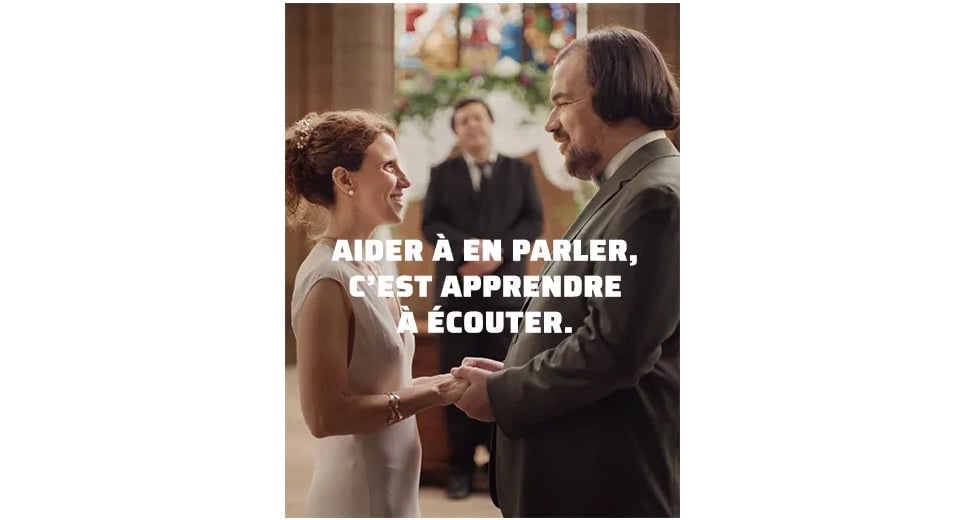
To shake up representations, the PositiveMinders association has chosen an unexpected path: humor. Its national campaign, entitled “The right moment”, depicts, in an offbeat tone, the worst moments to announce one’s illness.
A laugh, first. Then a message that resonates: “Helping people talk about it means learning to listen.”
Because listening is not easy. This requires deconstructing your own fears, suspending your judgment, accepting that you don’t understand everything.
The figures show an encouraging movement. According to an OpinionWay survey carried out in June 2025 after an awareness campaign:
- 77% of French people associated schizophrenia with dangerousness before the campaign, compared to 48% afterward (–29 points);
- 82% now say they are ready to have a coffee with a person concerned.
A shift in the gaze, still fragile, but real. The fact remains that this collective progress is not always enough to remove individual barriers. For many young people, the first step remains too difficult to take in front of a loved one, a doctor, a psychologist. So they look elsewhere.
Entrusting an AI: a first step, between relief and excesses
This is one of the most disturbing lessons of this 2026 edition: some young people choose to speak first to an artificial intelligence. In the privacy of a screen, at any time, without fear of being judged, they share their anxieties. They describe symptoms, formulate questions that they would not otherwise dare to ask. For some, it’s an immediate relief. Put words, finally. Structuring a confusing experience. Create awareness.
But this new form of disclosure raises major questions. Because a machine, however sophisticated it may be, is not a caregiver. It can misinterpret, trivialize or, conversely, wrongly worry. She does not make a diagnosis. It does not support over time. And above all, it can delay the crucial moment: that of meeting a professional.
The risks are well identified: absence of a medical framework, errors of interpretation, data confidentiality issues.
So should we be wary of it? Not necessarily.
For PositiveMinders, the challenge lies elsewhere: not to oppose artificial intelligence and humans, but to think about their complementarity. Make these first digital exchanges a gateway to care, rather than a dead end.
A path is emerging: train these tools so that they provide better guidance, detect weak signals, and encourage consultation. In short, transforming a digital confidence into a public health lever.
At the end of the silence, a collective responsibility
What this development reveals goes beyond the technological question alone. It acts like a mirror. If young people prefer to speak to a machine, it is perhaps because we have not yet known how to create the conditions for sufficiently safe, sufficiently caring listening.
Schizophrenia is not just an illness. It is a complex human experience, often solitary, always crossed by the gaze of others. Reducing the diagnostic delay – currently an average of seven years – will not only be achieved through tools or campaigns. But through a deeper transformation: that of our capacity to hear the unspeakable.
Learn to listen, really. Without fear. Without judgment. So that, tomorrow, the first word will no longer be addressed to a machine — but to another human.