
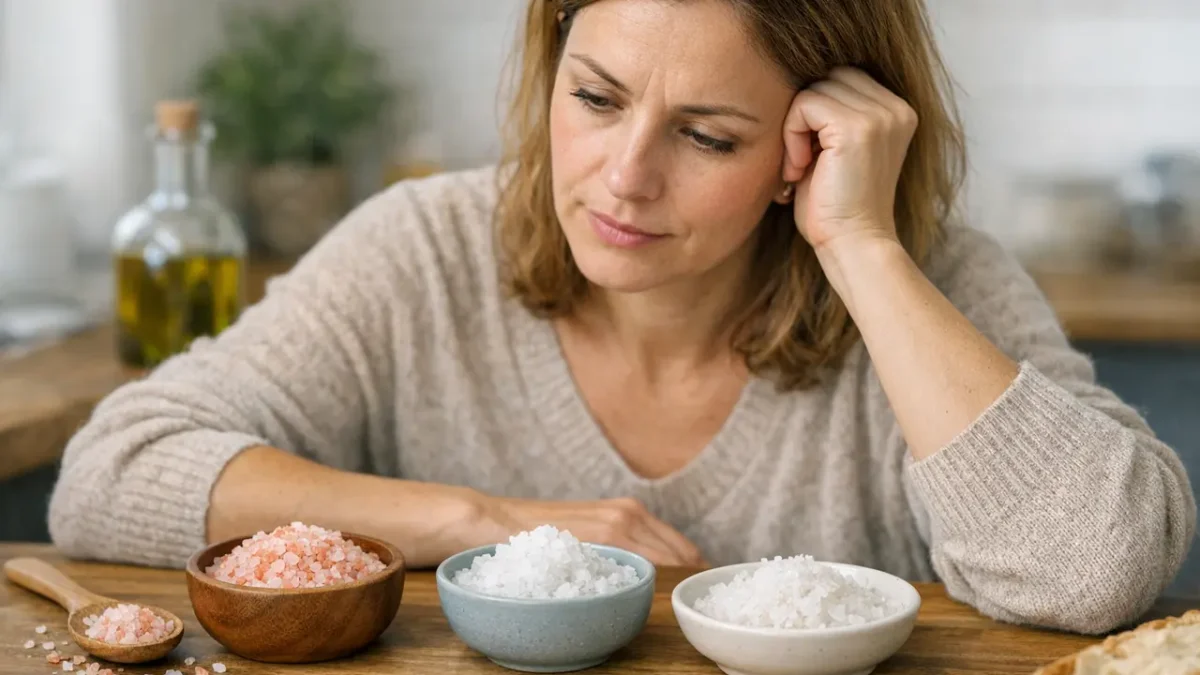
On Instagram, Dr Jean-Michel Cohen takes stock of pink salt, sea salt, fleur de sel and even low-fat salts. The answer is simple: there is no salt that is clearly better for your health. The real criterion remains the total quantity of salt consumed.
Pink salt, sea salt, fleur de sel: differences mainly in taste
Table salt, coarse gray salt, fleur de sel, pink Himalayan salt, black salt or smoked salt: their names and prices vary a lot. But, as the nutritionist doctor reminds us,
all these salts provide above all sodium chloride. The differences are mainly due to texture, humidity, taste, origin, the possible presence of additives or iodine, and some mineral traces.
Pink salt, for example, owes its color to traces of iron. This does not mean that it “detoxifies”, “rebalances” or protects health. These promises are not demonstrated.
Same logic for unrefined sea salts, often presented as richer in magnesium, calcium or potassium:
these minerals are present in quantities too small to make them a useful sourceunless you consume too much salt.
Fleur de sel can be useful in cooking: its crunchy crystals, added at the last moment, give a lot of flavor. A pinch can also provide a little less sodium depending on its volume and the size of the crystals. But pound for pound, it’s still salt. Its advantage is therefore mainly gustatory, not medical.
The most useful choice: less salt, and more iodized if you add salt
The central message is there: the best healthy choice is to first limit the quantities. The WHO sets a benchmark of around 5 g of salt per day for adults. Excess salt is a well-established risk factor for high blood pressure, which is associated with more strokes, heart attacks and cardiovascular disease.
Another often forgotten point, highlighted in the video: the salt shaker is only part of the problem. A significant part of the salt comes from already salted foods: bread, cold meats, cheeses, prepared meals, industrial soups, sauces, aperitif biscuits. Buying a high-end fleur de sel therefore does not compensate for an overall very salty diet.
If you use salt at home, choosing iodized salt can have real nutritional benefits. Iodine contributes to the normal functioning of the thyroid and plays an important role during pregnancy, a period when the situation must be assessed as part of medical monitoring. This does not mean that you need to add more salt: iodized salt or not, moderation remains essential.
To reduce your daily salt consumption, the most effective advice is simple:
- Taste before adding salt, instead of adding salt reflexively;
- Avoid systematically leaving the salt shaker at the table;
- Add flavor with herbs, spices, garlic, lemon or vinegar;
- Read labels, especially for processed products and everyday salty foods.
In the event of hypertension, the link between salt and hypertension warrants particular vigilance, without modifying treatment or medical monitoring without professional advice.
What about low-potassium salts? Caution depending on the situation
So-called light salts replace part of the sodium chloride with potassium chloride. They can help some adults reduce their sodium intake. But they are not suitable for everyone.
In case of kidney disease, heart disease, diabetes, treated hypertension or chronic treatment that can influence potassium, you should seek medical advice before using this type of salt. Excess potassium can be dangerous in certain people at risk.
When choosing, keep a simple rule: pink salt, sea salt, fleur de sel or smoked salt can be chosen for culinary pleasure. For health, the most solid reflex remains to salt less, to identify hidden salt and, if you add salt, to favor iodized salt in reasonable quantities.