
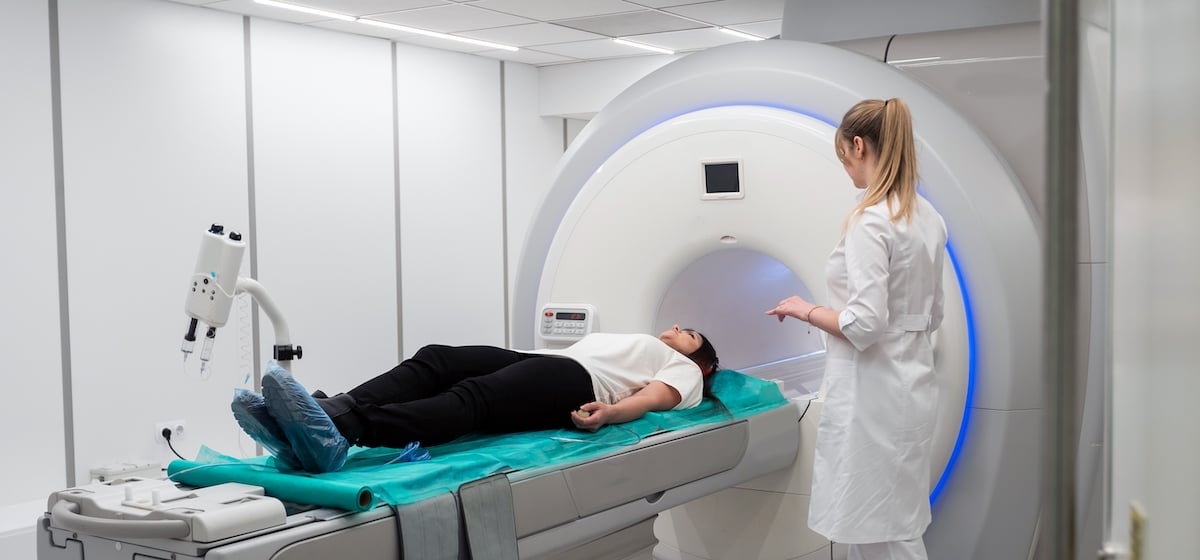
A rare and spectacular incident almost cost the life of a 22 -year -old American, after she spent an MRI by omitting a crucial detail: she still wore a sex toy. The object, however in silicone, contained a metallic piece and was literally sucked inside its body under the effect of the magnetic field. This unusual news item recalls the importance of never introducing or carrying a metal object before magnetic resonance imaging.
An error fraught with consequences
When one goes to an MRI examination, it is formally requested to remove all the metallic objects, whether visible – such as jewelry or piercings – or internal. This recommendation was not followed by the young American patient, who presented herself at her appointment by keeping an anal plug without informing the medical staff. A forgetfulness that has had immediate and violent repercussions.
The object crosses its abdomen
The report of the Food and Drug Administrationdated February 28, as well as images relayed online, testify to the seriousness of the accident.
“She went to pass the MRI and when the exam was finished and the technician withdrew the table, the patient began to shout,” said the health agency.
Suffering intensely, taking nausea and on the verge of the loss of consciousness, the patient was taken care of. The analysis revealed the presence of a sex toy inserted in its rectum which, under the effect of the magnetic field, had violently moved towards the rib cage. Although the silicone slope, the object concealed a metallic nucleus, responsible for this dangerous reaction.
This component was sucked with extreme force by the device, causing significant internal injuries. The exact medical details have not been revealed, but the patient seems to have survived this critical event.
The invisible power of the magnetic field
This type of accident, although not very common, underlines the real danger that metallic objects represent in an MRI room. These machines work thanks to powerful magnetic fields capable of moving metallic masses at very high speed.
“It is therefore necessary to remove jewelry, piercings, belts, watches, glasses, zippers, hearing or dental prostheses, etc.”, recalls the Vidal.
Questioned by the Daily Mailthe teacher Adam Taylorspecialist in anatomy at the University of Lancaster, specifies:
“”The speed at which ferromagnetic materials move in an MRI field is proportional to the mass of the object and its distance from the magnetic field. Things like paper clips or hair pins would easily reach 60 km/h if they entered the field“.
As for the sex toy concerned, its metal nucleus would have been projected “at a speed close to sound speed“, He adds. Such a velocity, in a medical context, can obviously have dramatic consequences.
Objects prohibited in MRI: not just sextoys
Certain medical devices implanted or carried by patients are also sensitive to magnetic fields. This is particularly the case:
- Of the heart stimulators;
- Of the defibrillators;
- Of the cochlear implants;
- Or old Metallic cardiac valves.
These elements can either stop working or moving, endangering the life of the patient. Fortunately, many modern devices are now designed to be compatible with MRIs.
“”Some medical devices do not pose a problem in the event of MRI, in particular the most frequent dental implants, artificial hips and metal stems used to straighten the column“reassures an expert quoted in the report.
Common sense above all: no sex toys in the hospital
This extremely rare case also illustrates a simple truth: some objects must remain in the private sphere.
“”It is not recommended to insert sex or other toys into the body, as this can lead to complications during the procedure and if medical staff are not aware, this may delay treatment. Placing sex toys or other objects in the body during an imaging procedure can cause artefacts on the image, which can mean that the person looking at the scanner can miss something important“Explains the professor.
In addition to a physical risk, such an oversight can lead to an embarrassing situation, or even the drafting of an official report difficult to assume. A good reminder that transparency with healthcare professionals and compliance with instructions before an examination is essential to everyone’s safety.