
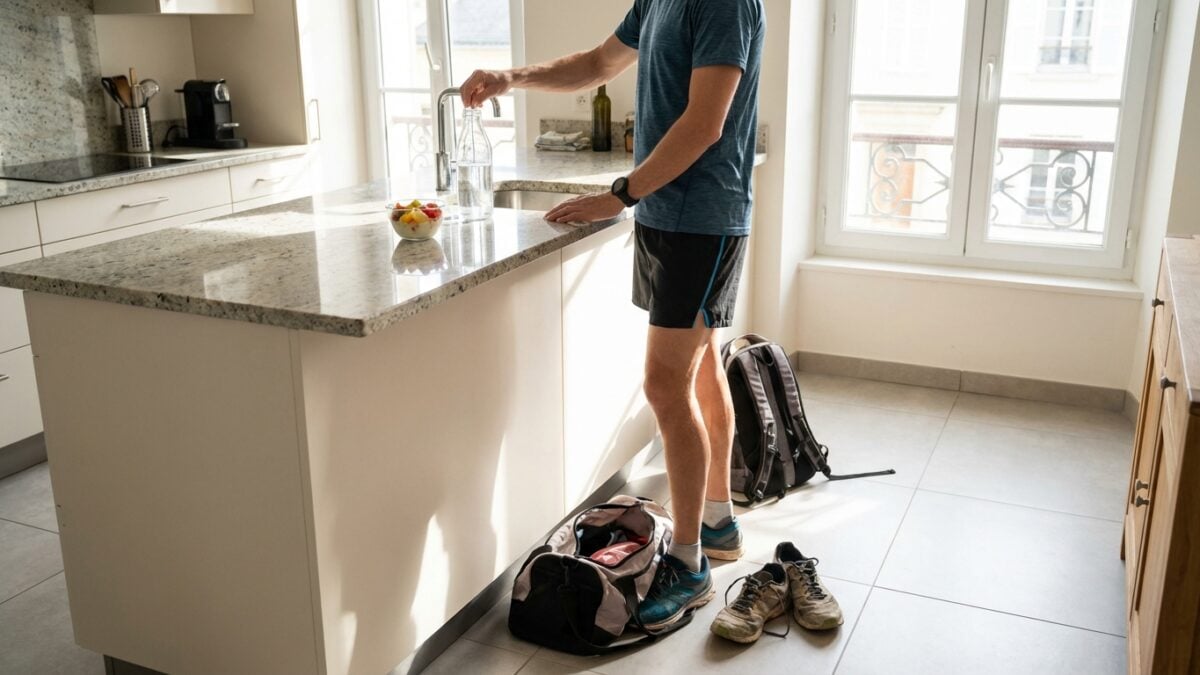
You go for a run with just a coffee in your stomach, or you arrive at HIIT class after a big plate of pasta hastily swallowed. Result: sometimes everything works, sometimes the legs cut or cramps occur. Many people wonder if it is better to eat before sport, immediately after, or even snack during exercise. The time you eat influences the energy available, digestion during the session and the speed of recovery afterwards. So the real question is when your body really needs fuel.
How to find the right timing?
For a complete meal, the recommendations converge towards a delay of approximately three hours before exercise, the time for digestion to complete. If the session falls later, a light snack one to two hours before helps maintain muscle glycogen: yogurt and fruit, whole-wheat toast, handful of oilseeds.
When the gap is longer, a small intake of easily digestible carbohydrates 30 to 60 minutes before is often sufficient, for example a banana or compote.
Just before putting on your sneakers, it is better to focus on carbohydrates with a moderate glycemic index – wholemeal bread, oatmeal, fruit – with a little protein and a little fat or fiber to avoid heaviness.
Sports on an empty stomach may be suitable for gentle cardio of less than an hour for a healthy person who knows themselves well.
Eating during sport: is water really enough?
For the vast majority of sessions lasting less than 60 to 90 minutes, there is no need to eat during sport. A little water every 10 to 15 minutes is enough, especially indoors or in temperate weather. When it’s very hot, for people prone to overindulgence, a lightly sweetened drink can help maintain hydration and electrolytes, without the need for high-protein bars or the like.
As soon as the effort exceeds 90 minutes, especially in continuous endurance such as long running, cycling or hiking, regular refueling becomes useful. Every 30 to 45 minutes, small amounts of easy-to-chew carbohydrates – half a banana, dried fruit, a simple cereal bar or a drink containing sugar and electrolytes – maintain reserves without upsetting the stomach.
It’s best to test these options during training to find what your stomach tolerates best.
The real key to better recovery
After training, the body replenishes its reserves and repairs muscle fibers. During the next two hours, he uses a mixture of carbohydrates and proteins particularly well. A meal or snack in this window accelerates glycogen replenishment and muscle tissue repair.
A bowl of rice and vegetables with chicken, an omelette with bread or a yogurt thickened with cereals already covers these needs.