
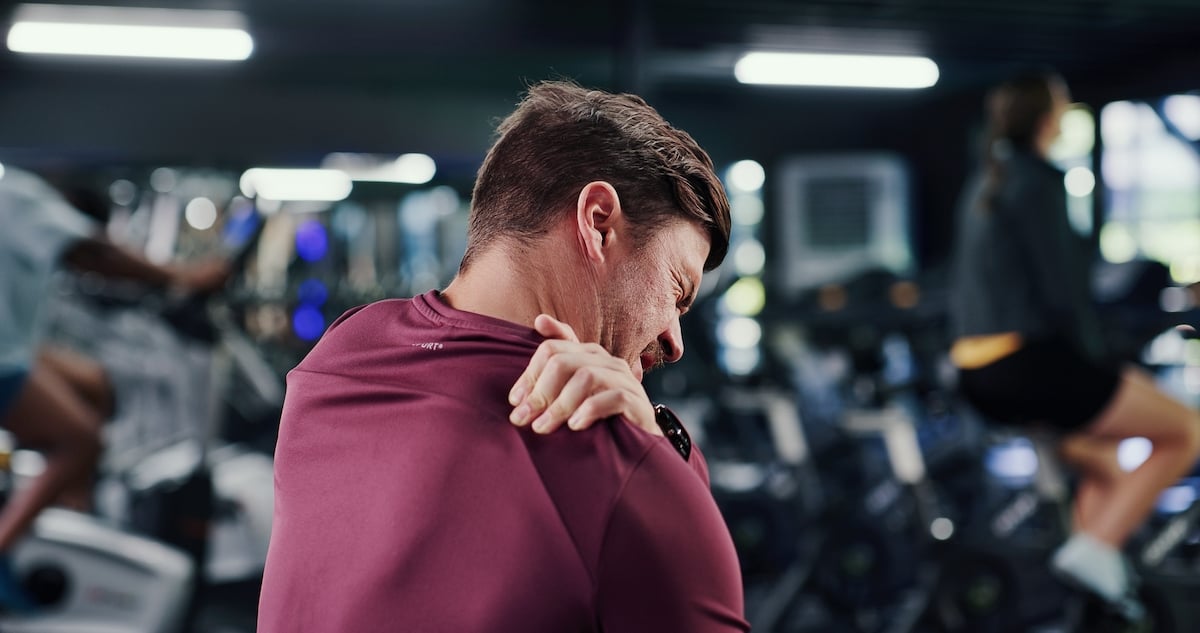
The slightest everyday gesture, from a bag carried at arm’s length to a jacket quickly put on, puts strain on the shoulder. Behind this mobility, however, lies a precise mechanism: the rotator cuff, a muscular assembly responsible for stabilizing the joint between the humerus and the scapula.
This set includes in particular the subscapularis, the infraspinatus and the supraspinatus. Their mission is to ensure fluid movements while keeping the shoulder stable. Hemrick Verwaerde, physiotherapist and sports osteopath, recalls in a video posted on Instagram: “When you raise your arm, the deltoid muscle works in coordination with the rotator cuff to prevent too much sliding of the humeral head.“.
Why the rotator cuff is essential for the shoulder
The rotator cuff does not only concern athletes or people who practice bodybuilding. Its proper functioning directly contributes to the biomechanics of the shoulder and the prevention of pain.
When these muscles lack strength or coordination, certain movements can become less homogeneous and generate additional constraints. The specialist also insists on this point: “Specifically strengthening the rotator cuff allows homogeneous movement between the humerus and scapula and reduces possible pain“.
For people already suffering from discomfort or pain, the objective is not to multiply the exercises but to precisely adapt the muscular work to the sensitivity of the shoulder.
What exercises to strengthen the rotator cuff?
Reinforcement must remain progressive and controlled. The most frequently proposed exercises are based on simple movements performed with elastics or light loads. External rotations particularly target the infraspinatus while internal rotations place more emphasis on the subscapularis.
- External rotations with elastic band;
- Internal rotations of the shoulder;
- Mild arm raises;
- Isometric exercises against a wall.
The idea is never to force. A gradual increase in loads and training volume helps limit irritation while improving joint stability. Current recommendations also emphasize the importance of avoiding painful exercises.
Rotator cuff and pain, the importance of the right dosage
When pain is already present, reinforcement requires even more precision. Support from a physiotherapist allows movements to be adapted according to the situation and to avoid worsening.
The expert in the video sums up this approach with a simple recommendation: “Finding the right exercise and dosage“.
The goal remains the same for everyone: to find a shoulder that is stable, mobile and capable of carrying out everyday movements without discomfort.