
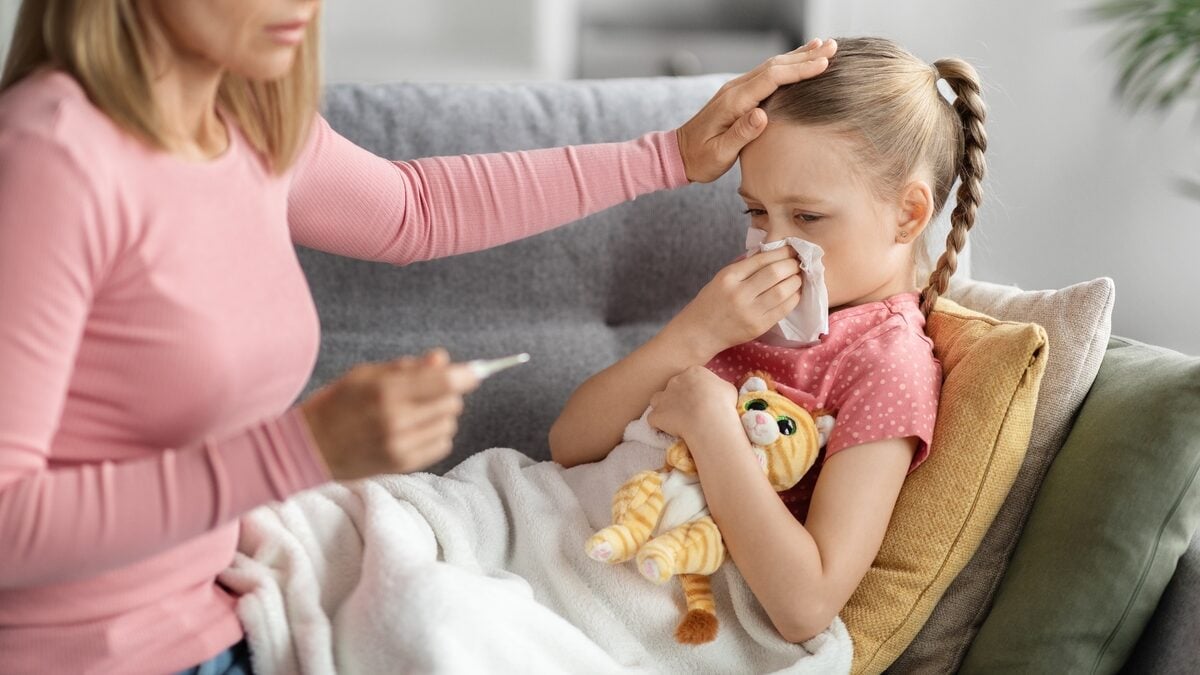
When a child gets sick, it’s often the whole house that holds its breath… and siblings are never far from the next sneeze. How can we limit the risks of contamination without turning everyday life into an obstacle course? Simple gestures, good habits and preconceived ideas: Dr. Gérald Kierzek helps us see clearly to best protect brothers and sisters, while maintaining a peaceful family atmosphere.
Keeping the sick child away from the rest of the siblings can help
If the idea is never to leave a child sick”alone or in distress”, a reasonable and reasoned separation can sometimes avoid transforming the house into a cluster. To do this, avoid close contact, sharing objects or even close-packed meals. “are all actions that help limit the transmission of microbes”, confirms Dr Gérald Kierzek.
Then, this strategy must be refined depending on the virus contracted:
- For Covid: “if possible, the sick child must have a separate room, with a single parent parent. Siblings should not come to play, and the adult in close contact should wear a mask” ;
- For the flu: “we avoid close hugs, we limit prolonged face-to-face interactions, but we do not necessarily put the child in strict “quarantine” if their age does not allow it;
- For gastroenteritis: “We especially try to isolate the “at risk” places (toilets, bathroom, changing table), and if possible we assign a priority toilet or bathroom area to the patient.”
Then, other good reflexes can help limit the transmission of microbes within the home.
Good daily actions to adopt
Although they are now known to everyone, these good reflexes are not lacking in effectiveness.
- Routine hand washing (for you and your children): “after going to the toilet, after a diaper change, after any contact with vomit or stools, and before meals or bottle feeding” ;
- Separate personal items: “glasses, cutlery, water bottles, toothbrushes, towels, comforters, lollipops, lip balm… everyone must use their own equipment to limit the spread of microbes”;
- Respiratory hygiene: “in case of flu or Covid, cough or sneeze into a tissue or the crook of your elbow. Immediately throw disposable tissues in the trash”;
- Ventilation: “open the windows several times a day for a few minutes to renew the air and reduce the viral concentration, especially if one of your children is sick”;
- Vaccination : “Vaccination against influenza (and against Covid according to recommendations) for your children at risk and for yourself greatly reduces the risk of serious forms and transmission.”
Targeted cleaning and disinfection
To limit the spread of infections at home, focus on areas and objects exposed to germs”is essential“, assures the emergency doctor. To do this, a few cleaning habits make a big difference.
Gastroenteritis (rotavirus and others)
It’s a fact: the viruses responsible for gastroenteritis are transmitted very easily by direct contact. Consequently, the various surfaces touched (door handles, work surface, dining table, etc.) quickly become “contaminated”. To reduce the presence of viruses and avoid contamination of other members of the household, consider:
- Quickly clean and disinfect all surfaces that have been in contact with vomit or stools: toilets, bowls, bathtubs, changing tables, floors;
- After each episode, wash your hands thoroughly and change gloves or paper towels if they have been used.
Flu/Covid-19
These infections are spread primarily through respiratory droplets. Regular disinfection of objects is therefore necessary to reduce the risk of transmission.
- Regularly clean frequently touched surfaces: door handles, faucets, switches, remote controls, tables, shared toys;
- Avoid leaving used tissues lying around and throw them away immediately.
What is best to avoid
Certain practices, although intuitive, can worsen transmission or harm the child’s health. Letting children share personal objects, for example (cutlery, glasses, water bottles, bibs, towels, toothbrushes, pacifiers or cuddly toys) is anything but recommended, recalls Dr Gérald Kierzek. Then, several “false good gestures” must be banned:
- Increase the use of very aggressive products on a daily basis (bleach, irritating sprays) without particular indication, “at the risk of irritating your respiratory tract and your skin”;
- Put a mask on a toddler who cannot tolerate it: favor the mask for the adult in charge and good ventilation of the room;
- Minimize the illness: send a child who is still very symptomatic (fever, diarrhea, active vomiting, severe cough) to school or daycare. “This maintains the chains of transmission and exposes the child himself to complications. concludes the doctor.