
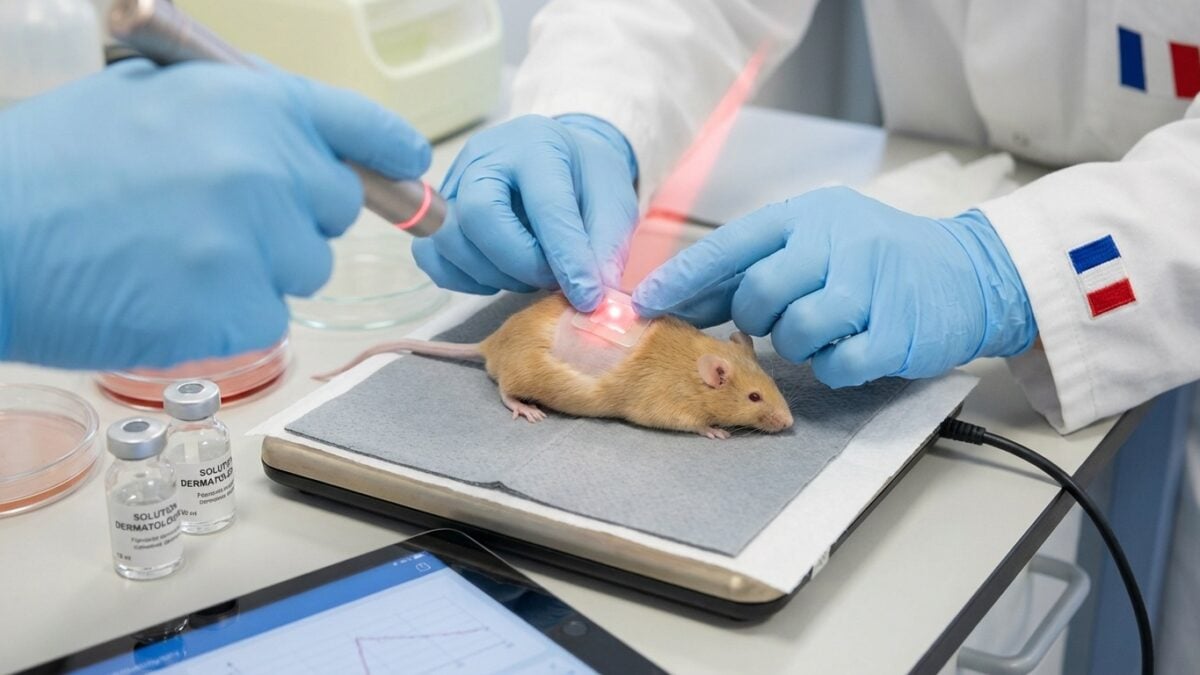
Being announced a melanoma often rhymes with surgery, scars and fear of recurrence. Faced with this skin cancer responsible for more than 80% of deaths linked to skin cancer, doctors still have the scalpel at their disposal.
However, a team of researchers has just described in the journal
ACS Nano A heat activated skin patchflexible like a bandage, capable of destroying melanoma cells in mice without surgical intervention and with a reduction of lesions of 97%. Could a simple heating bandage one day replace the scalpel?
A heating patch designed as a local alternative to melanoma surgery
Melanoma begins in the superficial layers of the skin, but its aggressive cells can then spread. The challenge is therefore to target the tumor very precisely while sparing the healthy tissues surrounding it, which surgery achieves well, at the cost of an invasive procedure.
But recent advances in nanotechnology could offer a more delicate and precise therapeutic alternative for treating skin cancer. An example of these innovations is laser-etched graphene, a porous carbon material. Researchers Xin Li, Shi Chen, Meijia Gu and Ruquan Ye exploited this material, filling its pores with copper(II) oxide and incorporating it into a flexible silicone polymer. The goal is to design a skin patch that is transparent, stretchable, breathable and chemically inert until heated, but capable of specifically targeting melanoma above a certain temperature.
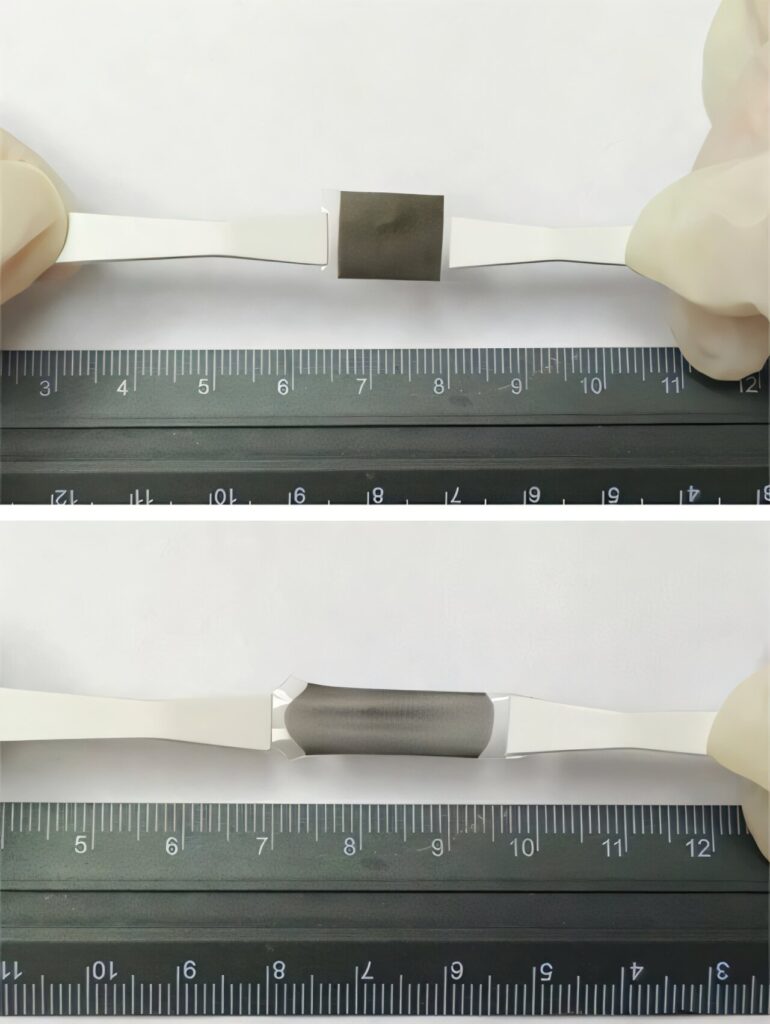 © Credit: ACS Nano (2026). DOI: 10.1021/acsnano.5c21102
How heat activates the graphene and copper ion patch on the tumor
When idle, the device does nothing. Once placed on the skin, researchers gently warm it to 42°C (108°F) with a low-power laser. At this moderate temperature, the patch releases copper ions (Cu²⁺) directly into the melanoma cells underneath, without burning the surrounding skin.
These ions cause significant oxidative stress: they generate reactive oxygen species which damage DNA and membranes, leading to the death of tumor cells by several pathways at the same time, including apoptosis, cuproptosis and ferroptosis. This cocktail of danger signals also stimulates the local immune response, which limits the migration of malignant cells to other areas of the body (metastases).
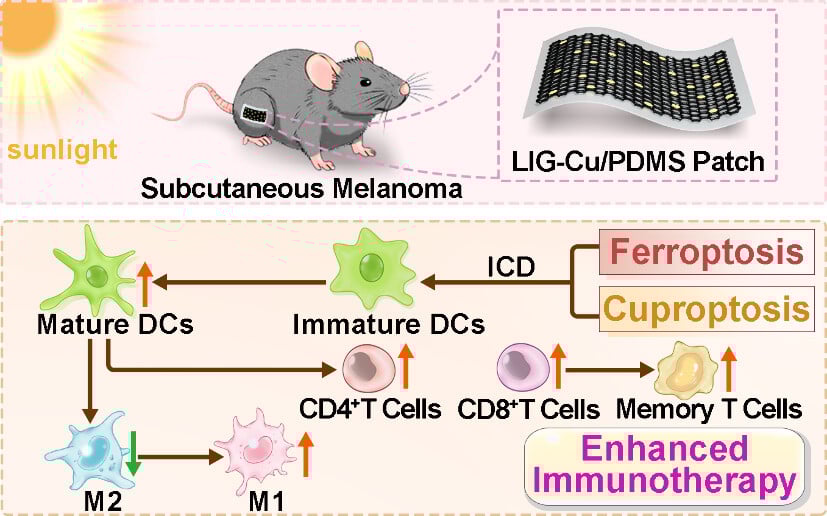 © ACS Nano 2026, 20, 10, 8671-8690
Spectacular results in mice, for a treatment that is still experimental
On melanoma cells cultured in the laboratory, the patch heated to 42°C using a low-power laser destroyed the majority of cells directly located under it and significantly slowed down their ability to move. The team found that these copper ions destroyed most of the cultured melanoma cells and slowed their migration.
In a ten-day preclinical study in mice, scientists applied the patch to the tumor and activated it for an hour on days 1 and 5: melanoma lesions then decreased by 97%, without visible damage to neighboring tissues. Analyzes showed that the cancer cells did not extend beyond the edges of the tumor and that no accumulation of copper was detected in the blood or organs, while the patch remained reusable and energy efficient.
For the moment, however, this technology remains limited to animal models, and the treatment of melanoma still relies on surgery and clinically validated treatments. Additional tests will have to confirm whether this heating patch will one day be able to complement, or even alleviate, these approaches.