
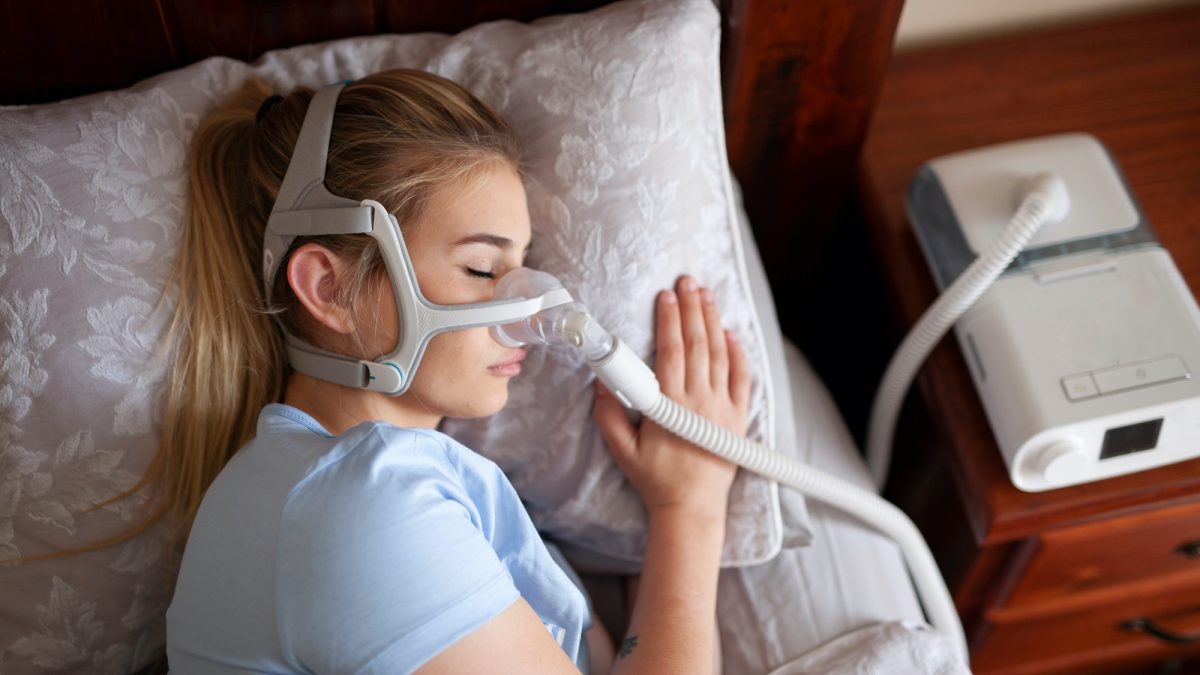
Sleep apnea affects 5 out of 100 adults over the age of 45. This serious sleep disorder is defined by a cessation of breathing during the night, of varying duration and on several occasions. A problem often raised by the person sharing the room, the sleeper rarely being aware of it. Far from being harmless, this sleep apnea can have serious health consequences and should not be ignored.
Why do we have sleep apnea?
Definition of obstructive apnea–hypopnea syndrome
sleep (SAHOS)
THE sleep apnea syndrome Or
obstructive sleep apnea syndrome (OSAS)
is caused by a physical blockage of air in the upper airway. This syndrome is also called OSAHS for
obstructive sleep apnea–hypopnea syndrome.
Causes in adults
OSA is multifactorial the main causes of which are:
- Age and male gender;
- Obesity: excess adipose tissue prevents the proper passage of air;
- Excessive consumption of alcohol or consumption of certain medications such as sleeping pills: the muscles are too relaxed or poorly coordinated. Moreover, sleep apnea is a common illness among depressed people;
- Smoking;
- Respiratory diseases such as asthma;
- Structural anomalies: retroprognatism, prognathism, macroglossia.
Causes in childhood
Sleep apnea can affect the young child
aged between 2 and 6 years old. The main causes are hypertrophy of the adenoids or tonsils, a malformation of the jaw (maxillae) or anatomical malformation of the face.
What are the
4 types sleep apnea (central, mixed, etc.)?
There are generally 4 main types of sleep apnea:
- OSA or obstructive sleep apnea: this is the most common type;
- ACS or central sleep apnea;
- Mixed apnea: obstructive and central;
- Sleep hypopnea, which is the mildest form.
What are the symptoms of sleep apnea (snoring, paused breathing, etc.)?
Nocturnal symptoms (occurring at night) are loud snoring, pauses in breathing noticed by the partner, frequent awakenings, excessive sweating and restless sleep. Other symptoms may be associated, such as decreased libido and/or nocturia, which manifests as a need to urinate several times during the night.
During the day, the patient dozes. He is tired and his sleep is not restorative. He may also feel tired as soon as he wakes up. Headaches may occur upon waking, as well as dry mouth, difficulty concentrating and mood changes.
Diagnosis of obstructive sleep apnea syndrome (OSAS): tests
Often, it is the parent or spouse who becomes aware of the apnea and/or snoring occurring during the patient’s sleep. In the event of daytime drowsiness or disturbed sleep, the patient himself may need to consult his doctor. The latter will certainly offer him a test, such as the Epworth test. Faced with suggestive symptoms or factors in favor of OSA, such as obesity, overweight, an abnormality of the mandibles or even high blood pressure, the attending physician will request an examination to confirm the apnea-hypopnea syndrome. : polysomnography or polygraphy. These painless exams record heart rate and oxygen saturation during several hours of sleep. During drops in oxygen saturation, detected using sensors placed in strategic locations, theThe examination gives the number of apneas and hypopneas per hour. Thus, an appropriate treatment can be put in place.
Consequences: what are the after-effects of OSA on health (brain, heart)?
Obstructive sleep apnea is a health problem that primarily affects the quality of sleep and rest, and the person’s recovery. SAS impacts the patient’s overall well-being in the long term. In fact, the patient who suffers from it is often tired upon waking up, with periods of drowsiness during the day.
A state of affairs which not only can be dangerous on a daily basis (because of lack of vigilance for example) but which also aggravates other pathologies in adults. According to recent studies relayed in True Medical, sleep apnea aggravates cardiovascular disorders, hypertension, diabetes and even the occurrence of Alzheimer’s disease. Effective support is therefore essential.
The others consequences Possible causes of obstructive sleep apnea are:
- Daytime sleepiness, leading to a reduction in alertness and increasing the risk of road accidents;
- Heart rhythm disorders;
- Stroke;
- Myocardial infarction;
- Reduction in life expectancy.
A link with a higher risk of depression is likely in women suffering from obstructive sleep apnea syndrome.
Does sleep apnea last a lifetime?
The answer is not universal. Sleep apnea can be caused by chronic conditions or structural abnormalities. If these disorders are not treated, sleep apnea can persist.
Furthermore, SAS (sleep apnea syndrome) results from several factors. For example, it is possible to act on obesity, and therefore, reduce the symptoms of sleep apnea. From the moment the patient manages to reduce their BMI, the pathology does not last throughout life.
This is also the case if the patient suffers from prognathism, that is to say a lower jaw placed too far forward, which obstructs the upper respiratory tract. To treat prognathism, jaw surgery is proposed in certain cases: the jaw is repositioned, allowing it to regain normal functions and unblock the airways concerned and no longer suffer from OSA.
Diaphragmatic or neurological disorders, such as central apnea, are more difficult to treat.
However, the effects can be controlled with appropriate treatment, such as a continuous pressure device (PPC) or a mandibular advancement orthosis (MAO).
Can we die from these respiratory arrests?
Is sleep apnea a serious condition?
If lack of sleep promotes comorbidities, are respiratory arrests caused by sleep apnea fatal? And should your spouse be concerned when listening to these irregularities?
The answer is no for Dr. Gérald Kierzek, medical director of True Medical. “It is not apnea that causes death, but cardiovascular risk factors that patients accumulate. They are therefore more at risk of heart attack for example or cardiac arrest during sleep. On the other hand, we do not die from lack of oxygen, because “the regulatory centers of the brain always re-trigger breathing”.
Can sleep apnea get worse?
For Dr Jonathan Taieb, consulted sleep doctor, the question above all serves as a reminder of a worrying reality:
“Severe apnea that is left untreated can have a significant impact on health and risk of developing more or less serious illnesses
such as high blood pressure, cardiovascular disease, stroke, type 2 diabetes and therefore as a doctor, I have a duty to prevent these complications. THE
sleep has this role in preserving the cardiovascular system and apnea disrupts this function. And we know that there is an emergence of cardio-metabolic pathologies linked to sleep, when it is poor.”
For the doctor, it is therefore important to carry out a diagnosis of this sleep apnea with the implementation of sometimes early treatment, to prevent potential complications and increase the patient’s quality of life during their lifetime.
What treatment should be implemented (device, orthosis, etc.)?
Treating sleep apnea, on the other hand, can give you years of quality of life.
“Treatment depends on the severity, because there are mainly two reasons for sleep apnea, either significant weight gain with fatty infiltration, or apnea linked to morphology. If it is very severe, we tend to treat with continuous positive airway pressure. When the apnea is moderate, we can also put on a mandibular advancement orthosis, encourage weight loss, or resort to mandibular advancement surgery. With appropriate treatment, we observe a better quality of life and better health: patients with resistant hypertension, treated with 2 or 3 medications at the same time, can be treated for apnea and sleep and then see their treatment for hypertension be reduced!”
Symptoms of sleep apnea to know
To avoid these inconveniences, it is better to take into account any sleep abnormalities that you may encounter. THE
nocturnal symptoms to monitor and know are:
- Severe, daily snoring, which often bothers those close to you. It is present in 95% of cases;
- Breathing pauses during sleep, noted by those around you;
- Episodes of heavy breathing during sleep;
- Repeated waking up with a start, with a feeling of asphyxiation or suffocation;
- Restless sleep, interspersed with repeated micro-awakenings;
- Nightmares about asphyxiation, falling or imminent death;
- Unrefreshing and restless sleep, with particularly loose sheets;
- A need to urinate more than once during the night.
During the daytime also :
- Excessive sleepiness not explained by other factors
- Chronic fatigue;
- Difficulty concentrating and memorizing;
- Mood disorders, some irritability;
- Headaches in the morning;
- Libido and erection disorders.
If you notice several of these signs in you or your partner, do not hesitate to go to your doctor or a sleep center to evaluate it and determine if you are affected by sleep apnea.