
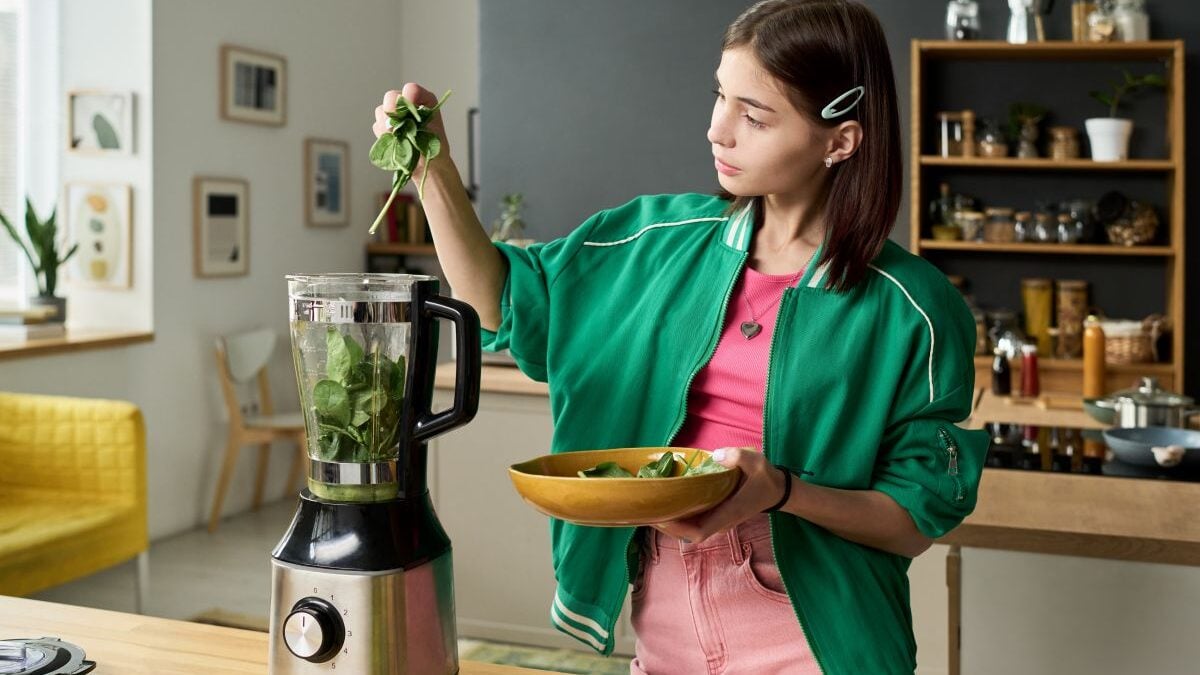
Spinach is often surrounded by myths, particularly about its iron content. While it remains an excellent plant-based source, the way we prepare it directly influences the way our body assimilates its benefits.
So, should we favor the crunchiness of the sprouts or the tenderness of the stir-fry? Dietitian Julie Boët gives us her verdict.
The benefits of raw spinach: a concentrate of fragile vitamins
Consuming spinach in its natural state is the best way to stock up on heat-sensitive nutrients. As Julie Boët points out, “Raw spinach has several nutritional benefits. They are particularly rich in vitamin C, a heat-sensitive vitamin which decreases during cooking.
This vitamin C is the pillar of our immunity and collagen synthesis. In addition to this protection, fresh leaves provide:
- Folate (vitamin B9) and vitamin K;
- A wide variety of antioxidants preserved from heat;
- Optimal hydration, their high water content promoting satiety for a paltry calorie intake.
Why is cooking a game changer?
If raw food preserves the vitamins, cooking “releases” the minerals. The main obstacle in the raw state is called oxalate. These natural compounds bind to minerals and slow down their absorption.
“Under the effect of heat, some of the oxalates degrade and the cell walls of the leaves soften.” adds the dietitian.
This phenomenon makes iron, calcium and certain antioxidants much more accessible to the body. In addition, as the leaves drastically reduce in volume when cooked, a portion of cooked spinach mechanically concentrates more minerals than a simple salad.
Focus on iron: how to boost its assimilation?
The iron in spinach is called “non-heme”, a form less well absorbed than animal iron. To counter this weak point, the strategy is simple: association.
“Combining it with a source of vitamin C is one of the most effective strategies to improve its bioavailability” assures Julie Boët.
- The right reflex: Pour lemon juice over your sautéed spinach or add citrus wedges, kiwi or raw pepper to your salads;
- The trap to avoid: Tea and coffee slow down iron absorption. It is therefore advisable to space out their consumption by approximately one hour from the meal.
Preferred cooking methods
To benefit from the benefits of heat without destroying everything, gentleness is essential. Prolonged cooking in water is the enemy of water-soluble vitamins.
To limit losses, choose:
- Gentle steam: to preserve maximum folate;
- Quick pan stir-fry: ideal with a drizzle of olive oil;
- Adding at the end of cooking: integrate your sprouts at the last moment into your hot dishes (pasta, risottos).
Note that carotenoids (beta-carotene, lutein) essential for vision are better assimilated with a little fat.
At the end of the day, “opposing raw spinach and cooked spinach doesn’t really make sense” concludes the dietitian. The secret to balanced nutrition lies in alternation. By varying between green smoothies, crunchy salads and spinach wilts with olive oil, you benefit from the best of both worlds: the intact vitamin C of the raw and the mineral richness of the cooked version.