
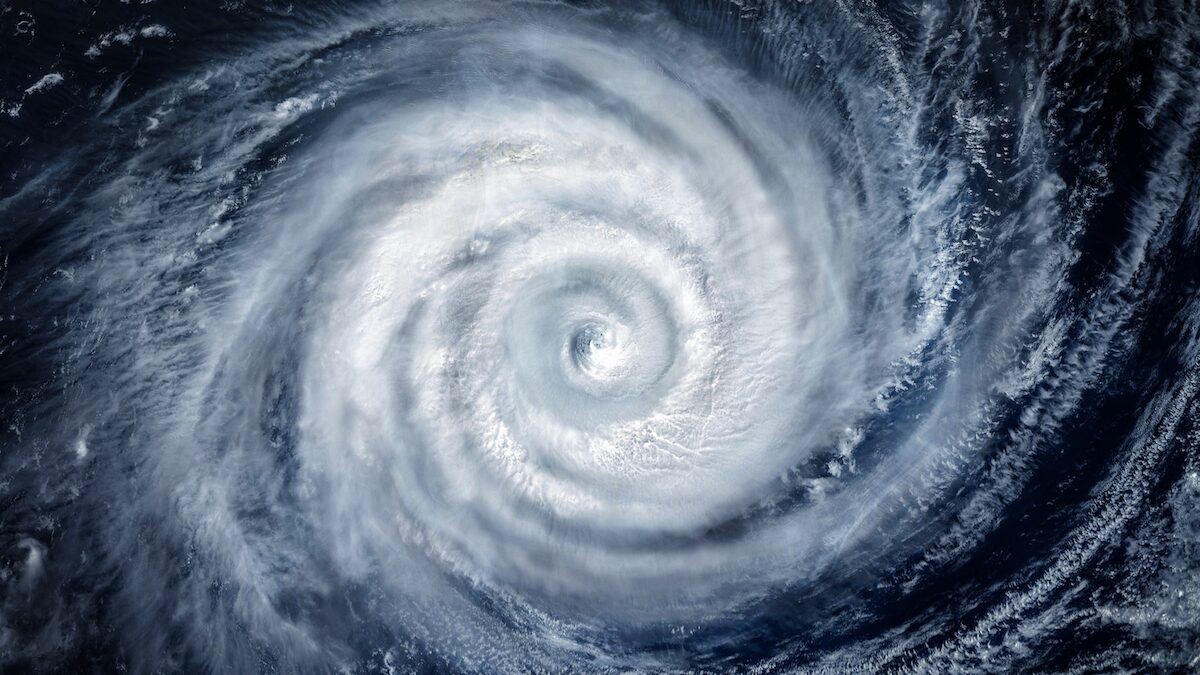
Amélie, Gloria, Hervé, Ciara… Behind these first names which seem to come from a birth diary, there are sometimes particularly violent storms. Their attribution, however, is not a coincidence. As the book explains The Official Names
(2025 edition, First Editions), this tradition meets a very concrete objective: to make weather warnings more effective and better understood by the public.
Why do storms have first names?
Giving a first name to a meteorological phenomenon is above all a question of safety. Scientists have in fact observed that populations react more to instructions when a threat is clearly identified and named.
A storm named with a common first name attracts attention more easily than a simple number or technical designation. For example, a typhoon crossing Japan might be called Noru or Usagi, while a hurricane in Australia might have a first name like Kate or Jack. The objective is simple: to make the alert more memorable and encourage residents to follow the recommendations of the authorities.
Very supervised international lists
At the global level, it is the World Meteorological Organization (WMO) which establishes the lists of first names. They respect several strict rules: an alphabetical order and an alternation between male and female first names.
Six lists are used in rotation, which means that the one from 2025 will be reused in 2031. But certain first names disappear permanently after having made history. When a cyclone causes major damage, its name is removed to prevent it from bringing back painful memories. This is how Martin and Owen replaced Matthew and Otto, two particularly devastating storms in 2016 between Cuba and Costa Rica.
In Europe, a shared organization… and sometimes original
Since 2017, Europe has worked differently: the lists are established by national meteorological agencies grouped into two groups. On one side Ireland, the United Kingdom and the Netherlands; on the other France, Spain, Portugal and Belgium.
The first storm of the season is given a name starting with the letter A, and then the alphabet unfolds through the disturbances. The country that experiences the storm first even has the privilege of naming it. In October 2023, it was the meteorological services who gave the name Ciarán to a violent storm of Irish origin.
To add an unusual touch, the Berlin Meteorological Institute even allows the general public to purchase the name of a future depression or anticyclone via the “Adopt a Vortex” program. Allow around 260 euros for a depression and 390 euros for an anticyclone. An original gift idea… provided you accept that the chosen first name is associated with some atmospheric turbulence.