
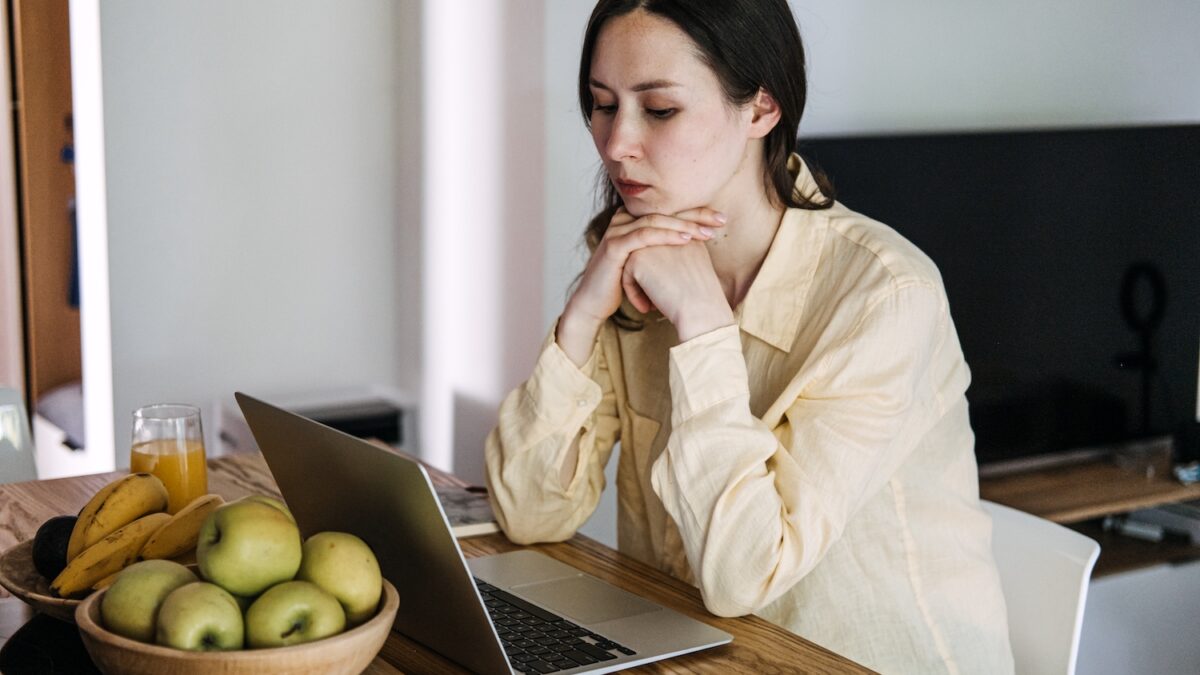
Unbalanced diet, chronic stress, persistent mental load: based on data from more than 1,300 women, Vipali’s 2026 barometer highlights invisible, but very real, fragilities that take hold in everyday life.
A health that is crumbling quietly
They are between 18 and 81 years old. More than 1,300 women agreed to share, via the Vipali application — scientifically validated by the Pasteur Institute in Lille — a part of their daily lives. Anonymized data, collected between October 2024 and February 2026, which today make up the first edition of the women’s health barometer. What these figures tell us is nothing spectacular. And that is precisely what is worrying.
Because the deterioration of women’s health does not arise suddenly. It settles, slowly, into the interstices of everyday life. Persistent fatigue, sleep disorders, metabolic imbalances: so many weak signals which, taken together, create a worrying reality.
In France, women live on average more than 85 years old. But they also spend more years in poorer health. A paradoxical longevity, which questions contemporary lifestyles and the invisible decisions of everyday life.
Eating quickly, living under pressure: the trap of daily constraints
At the heart of the barometer, one observation stands out: women’s diet is largely dictated by lack of time and constant pressure.
The figures are clear:
- 43% of women under 30 regularly consume processed meals;
- 70% say they eat too much salt;
- 49% consume sweet products at least 4 to 6 times a week;
- 46% snack between meals;
- 2 out of 3 women consider their diet poorly or moderately balanced
Behind these data, a reality well known to health professionals: meals become functional, almost mechanical. We eat to survive, not to nourish. Vipali experts sum it up this way: these eating habits are “often linked to lack of time and stress”. A simple sentence, but which says everything about a daily life where priorities collide. Because these behaviors are not trivial. In the long term, they increase the risk of chronic pathologies: high blood pressure, metabolic disorders, muscle loss or even persistent fatigue.
Nutrition, far from being a simple individual choice, then becomes the reflection of a broader system of constraints.
Mental load: this invisible weight that exhausts
But diet is only one piece of the puzzle. The other, even more diffuse, has a now familiar name: mental load.
Today, many women combine professional responsibilities and management of daily family life. A double, sometimes triple day, which leaves little room for rest, listening to oneself, or simply recovering.
This imbalance is not without consequences. It acts directly on stress levels, but also on concentration and, more generally, well-being.
The barometer thus highlights a vicious circle: stress promotes unbalanced eating behaviors, which themselves accentuate fatigue and weaken mental health.
In this context, prevention appears to be a central issue. Not only for public health, but also for the world of work. Integrating women’s health into quality of life policies is no longer an option: it is a concrete lever to preserve the commitment and lasting health of teams.
Caring for those who care for others
What this first barometer reveals, basically, goes beyond the numbers. It tells of a form of self-forgetting, deeply rooted in social roles.
Women take care of others — children, loved ones, colleagues — often before taking care of themselves. And this erasure, discreet but constant, ends up leaving traces.
The challenge now is to make this reality visible. To name it, to better prevent it.
A next meeting has already been set in a year. Future editions will expand the analysis to other essential dimensions, such as sleep or physical activity. So many additional pieces to finally understand what shapes women’s health today. Because behind every statistic, there is a life. And behind each life, an urgency: that of rebalancing, sustainably, the care we take for ourselves.