
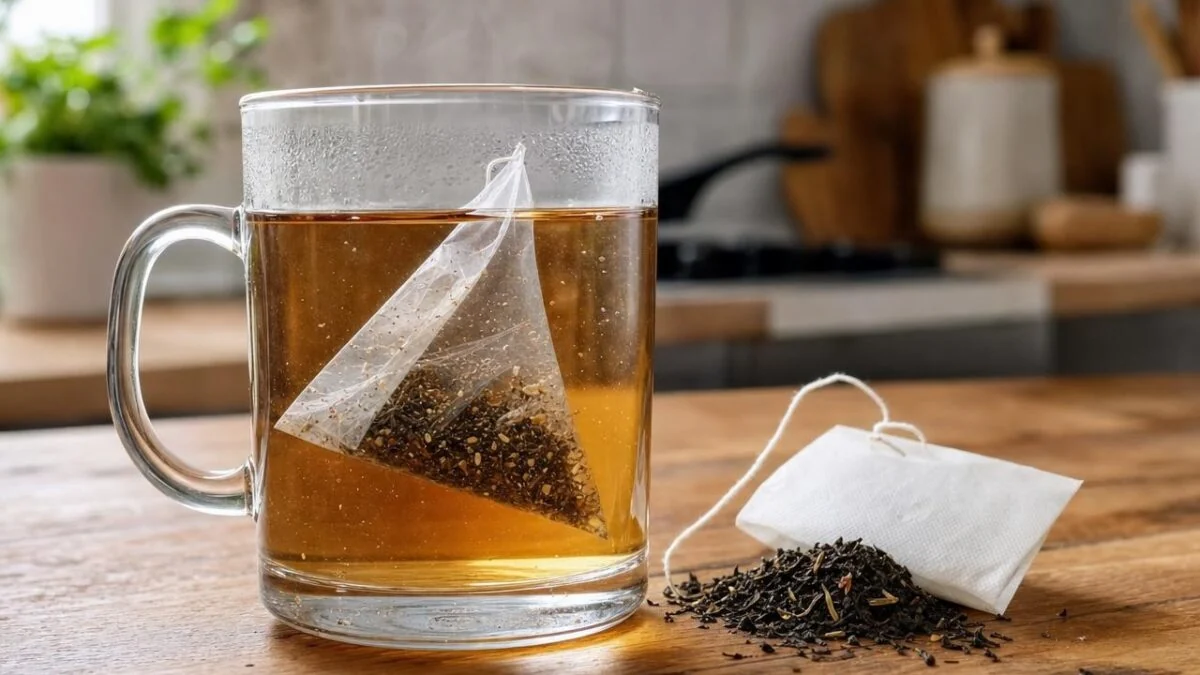
In almost boiling water, the sachets release thousands of particles
To measure what ends up in the cup, Necla Pehlivan and Kenan Gedik, researchers at Recep Tayyip Erdoğan University, in Turkey, studied the migration of microplastics and chemical substances from different types of tea, via a standardized preparation: an infusion in water heated to 95°C for three minutes. In particular, the researchers examined four brands of polymeric sachets. The result is striking: depending on the brand, each cup released between 555 and 2,498 microplastic particles.
A figure which, however, deserves significant clarification: the scientists only counted particles measuring more than 100 micrometers. Smaller items, including smaller microplastics and nanoplastics, are therefore not included in these results.
The analysis also made it possible to identify the nature of these particles. They were made exclusively of polyamide fibers, a plastic material from the nylon family, used in the manufacture of certain tea bags. When heated, these materials can release fragments into the water.
But particles are not the only substances to migrate into the drink. The researchers also detected bisphenol A (BPA) and phthalate esters, compounds used in particular as plasticizers to give more flexibility to certain materials. The authors summarize their findings in the study:
“Polymeric tea bags act as dynamic vectors for microparticle release and chemical migration, raising public health concerns as global tea consumption increases.”.
Behind this discovery, a question emerges: should we worry about what we ingest with each cup?
BPA in tea: should we fear additional exposure?
Bisphenol A is a chemical under particular scrutiny due to its potential effects on the hormonal system and other biological functions. Its exposure is the subject of particular attention during pregnancy and during childhood, periods of development and maturation of the body.
In their study, the researchers estimated that the BPA intake from the sachets could represent between 4.55% and 21.70% of the tolerable daily intake retained by the European Food Safety Authority (EFSA). In other words, in the highest scenario studied, a single tea consumption could represent more than a fifth of this reference value. This does not mean that the threshold has been exceeded: the researchers have calculated a contribution to daily exposure, which must be placed in all other food and environmental sources.
This distinction is essential. BPA can come from many materials that come into contact with food and beverages. Tea is therefore only one potential source among others.
Another element to take into account: the EFSA has considerably lowered its tolerable daily intake in 2023, setting it at 0.2 nanograms per kilogram of body weight per day, or 20,000 times less than its previous temporary value. This revision is based in particular on new data concerning the possible effects of BPA on the immune system.
However, the study does not show that drinking tea prepared with a plastic bag causes illness. The researchers carried out a theoretical toxicological assessment, not a clinical study with consumers. In particular, they calculated an overall danger index (Hazard Index), which remained below 1, a value from which a potential risk requires particular attention in this type of evaluation.
The message is therefore more nuanced than a simple health alert: the quantities measured do not allow us to conclude that there is an immediate danger, but they highlight an avoidable contribution to exposure to certain contaminants.
Is loose leaf tea really safe from microplastics?
Given the results obtained with sachets, loose tea appears to be an interesting solution. The researchers also analyzed 14 brands of tea sold in loose leaf form. They found between 146 and 1,178 microplastic particles per kilogram, or approximately 0.3 to 2.4 particles for a two-gram portion.
The difference with polymeric sachets is considerable. But we must avoid too rapid a comparison: unlike bags, loose tea leaves have not been subjected to the same infusion protocol. Their contamination was assessed from the leaves, then related to a portion. The figures therefore do not correspond to a strictly equivalent measurement in two cups prepared in the same way.
This contamination of loose tea is also not entirely surprising. Sheets can be exposed to plastic particles at different stages of their production. The researchers explain as follows: “The main factors causing this mixed polymer profile are the use of plastic bags and ties in agricultural activities, combined with the deposition of atmospheric dust..
To this can be added the equipment used during processing and packaging: conveyor belts, machines or storage devices containing plastic elements.
Loose tea is therefore not completely free from contamination. But the results suggest that the choice of packaging can play an important role in the quantity of particles found during preparation.
Good reflexes to limit contaminants in your cup
Should we therefore give up our morning tea or afternoon break? Certainly not. The results encourage us to review certain actions more than to abandon a popular habit.
Researchers are putting forward several avenues to limit exposure:
- Choose loose tea, rather than bags containing plastic;
- Use a stainless steel or ceramic infuser to avoid contact of hot water with polymeric materials;
- Briefly rinse the leaves in cold water before infusing, a practice suggested to remove some of the contaminants present on their surface.
This last recommendation must nevertheless be considered with caution: the study does not guarantee that a simple rinse eliminates all microplastics or chemical contaminants.
Above all, researchers are calling for better supervision of the materials used to manufacture food packaging and for greater knowledge of the consequences of repeated exposure to these substances.
Because that’s where the issue lies. A cup of tea alone does not constitute a demonstrated threat to health. But when the same exposure is repeated daily and is added to that coming from food, water or packaging, the question of reducing contaminants takes on another dimension.
The message is ultimately quite simple: without giving in to worry, it is better to favor materials that are least likely to release unwanted substances. A small change in the preparation of your tea can help limit avoidable exposure.