
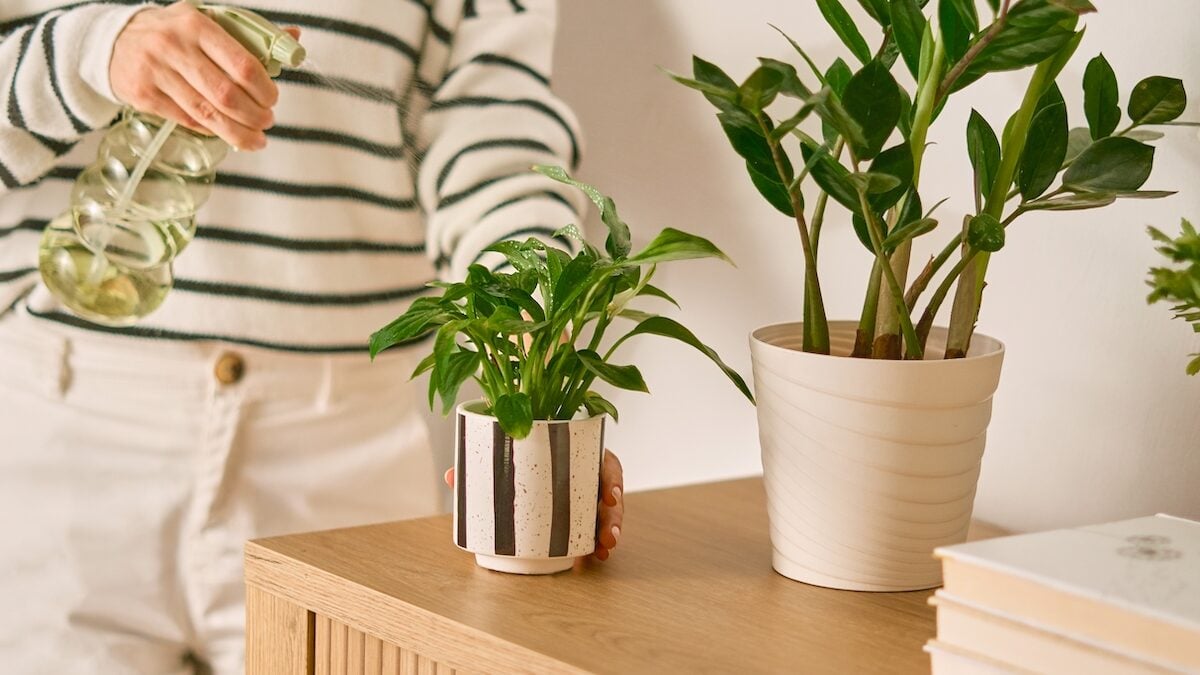
Foggy windows, musty smells, small black spots that settle in… When the air cools and the outside becomes colder than our rooms, condensation appears on windows, walls and ceilings. And mold loves these conditions. Additionally, pollutant levels indoors are often 2 to 5 times higher than outdoors, with VOCs like formaldehyde, benzene or xylene. But some houseplants can help rebalance humidity through foliar absorption, and they clean the air of unwanted compounds.
Plants that absorb moisture and inhibit mold
“The good news is that there are ways to control this and prevent condensation from forming in the first place“, indicates Chris Bonnett, of Gardening Express, quoted by the Daily Mail. “If your windows are particularly foggy, that means lowering the humidity level in the home and plants can help“, he adds. “Some plants are a great natural solution to help balance humidity in the home and they look pretty too“, he continues.
Connor Towning, expert at Beards and Daisies, points out that some plants have the ability “to absorb moisture“air, a phenomenon where water captured by the leaves goes down to the roots.”This can help lower indoor humidity, one of the main triggers of mold growth“, he explains. “To get the most out of your plants, place them in areas prone to humidity, such as bathrooms, kitchens or laundry rooms“, he explains.
The 7 anti-mold and depolluting plants
Connor Towning gives the 7 perfect plants to place in your home to reduce the impact of humidity:
- Spathiphyllum or moon flower: it relies on its foliage to regulate the air. “Spathiphyllums help keep indoor air clean and reduce mold by absorbing moisture“. They filter toxins such as benzene and formaldehyde, and should be kept out of reach of animals;
- The Hedera helix or English ivy: it also acts on suspended spores. “English ivy is excellent for reducing airborne mold and improving air quality“. It can help with mild respiratory sensitivity, but “its sap can irritate human skin” ;
- The Boston fern: it appreciates humid rooms and participates in filtration. “Boston ferns thrive in damp areas, making them very effective at keeping mold at bay” ;
-
Chlorophytum comosum or spider plant:
it is perfect in an airy bathroom. “They remove pollutants and are very easy to maintain. It is a safe choice for homes with pets” ; - The areca palm or Dypsis lutescens: it helps balance humidity, tolerates bright indirect light well and is suitable for interiors with animals;
-
Sansevieria or mother-in-law’s language:
“It absorbs moisture through its leaves which then circulates to the roots“.”It grows best in bright light but also develops very well in low light. She likes warm temperatures” ; - Asplenium nidus Crispy Wave: it is the perfect candidate for a bright bathroom without direct sun. “It is a powerful natural air purifier, filtering toxins and pollutants while thriving in indirect light“, said a representative of Plant and Flowers Foundation Holland. “Its uniquely curved fronds are not only beautiful, they help balance humidity and promote a fresher, healthier atmosphere“, he explains. “Perfect for bathrooms or shaded corners, it’s an easy-care plant that combines sculptural style with real air-purifying benefits“, concludes the expert.
Humidity, VOC, ventilation what works with plants
Plants use photosynthesis, retain some of the compounds and particles via their stomata, then rely on micro-organisms associated with leaves and roots to transform certain pollutants. They can help with common VOCs like formaldehyde, benzene or xylene. And their presence often improves perceived well-being. But they don’t solve everything on their own.
The capacity to capture CO2 remains limited. Researchers have shown that it would take about 57 square meters of leaf surface to absorb the CO2 emitted by a single person. Morality, we activate several levers. Ventilate for at least half an hour every day, aim for a relative humidity of 40 to 50% in winter, control sources of domestic pollutants, and place plants in rooms subject to condensation.
Mold, including black mold, can cause respiratory problems, allergies or serious infections. The objective is to act at the source and support indoor air with species that like humid rooms, without forgetting simple and regular maintenance.