
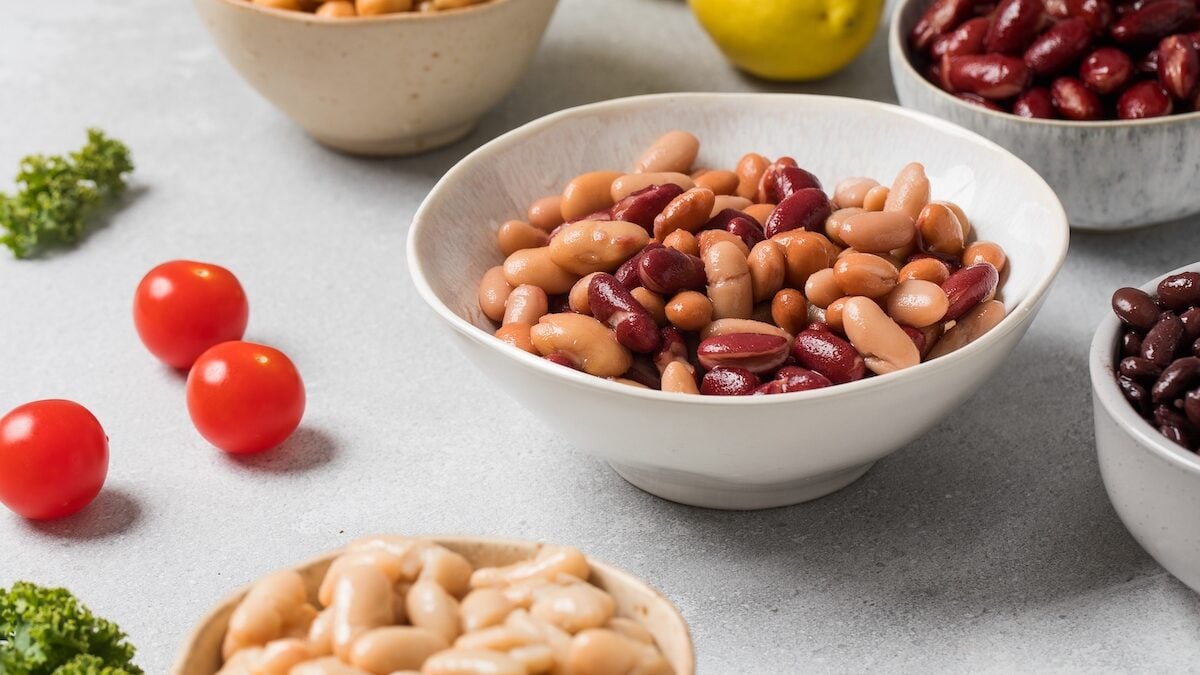
For many French people, filling the plate with fiber and protein still means wholemeal bread and red meat. However, in a simple jar of dried beans hides a discreet, inexpensive and very nourishing ally for your health. Dietitians even point to certain varieties of beans as essential for long-term balance. It remains to be seen which ones deserve a permanent place in your cupboards.
Why dried beans rich in fiber and protein are so valuable
On average, 100g of cooked dried beans provides almost 9.6g of protein and 11.6g of fiber, and half a cup of beans provides about 8g of fiber, a significant portion of the daily requirement. “Fiber is crucial for gut health“, explains Shelly Wegman, dietitian, interviewed by Today. She points out that sufficient intake also helps maintain stable cholesterol and blood sugar levels, lower blood pressure and reduce the risk of breast cancer in women.
In terms of protein, 125 g of dried beans can provide as much as a steak, while remaining low in saturated fat. “Pinto beans and black beans are good sources of fiber, protein and carbohydrates“, describes Grace Derocha, dietitian. Shelly Wegman adds that “anthocyanins in beans, a type of antioxidant compound, may help ‘increase insulin sensitivity,’ helping the body use glucose properly and keep ‘your blood sugar closer to normal’‘”.
Black, red, white, pinto beans: the varieties to choose
Black beans stand out slightly: 100 g dried provide approximately 21.1 g of protein and 15.5 g of fiber. Per half cup cooked, they provide 7 g of protein and “8 grams of fiber for half a cup, almost 30% of your daily value“, explains Grace Derocha. She emphasizes that “black beans have a ‘slight advantage’ when it comes to protein“. Their dark color reflects a richness in anthocyanins, saponins and flavonoids, interesting for the heart and blood sugar levels.
White beans (lingots, cannellini) approach 21 g of protein and 18 g of fiber per 100 g cooked, with a glycemic index of around 40–45, useful in cases of overweight or diabetes. Magnesium, phosphorus, iron and vitamins B1, B6, B9 complete the picture.
Pinto or coconut beans have a similar profile, but stand out for their high folate content and approximately 20% of vitamin B6 requirements per serving; their creamier texture is often better tolerated by sensitive intestines.
Choose and consume your dried beans wisely
Experts recommend a serving of around 50 to 70 g of dried beans rich in fiber and protein before cooking, or 120 to 150 g cooked, once or twice a week at least. Black and white beans, with a lower glycemic index, are well suited to people with prediabetes or diabetes, while very well cooked pinto or white beans, introduced gradually, are often better experienced by fragile intestines.
For form, dried beans remain the reference: “Dried beans offer truly phenomenal nutritional value for money thanks to their protein and fiber content, and they are very affordable“, insists Shelly Wegman. She points out that canned beans remain a “excellent alternative“, as long as you choose versions without added salt or rinse them well, which can remove about 25% of the sodium.
It’s up to everyone to create their favorite mix!