
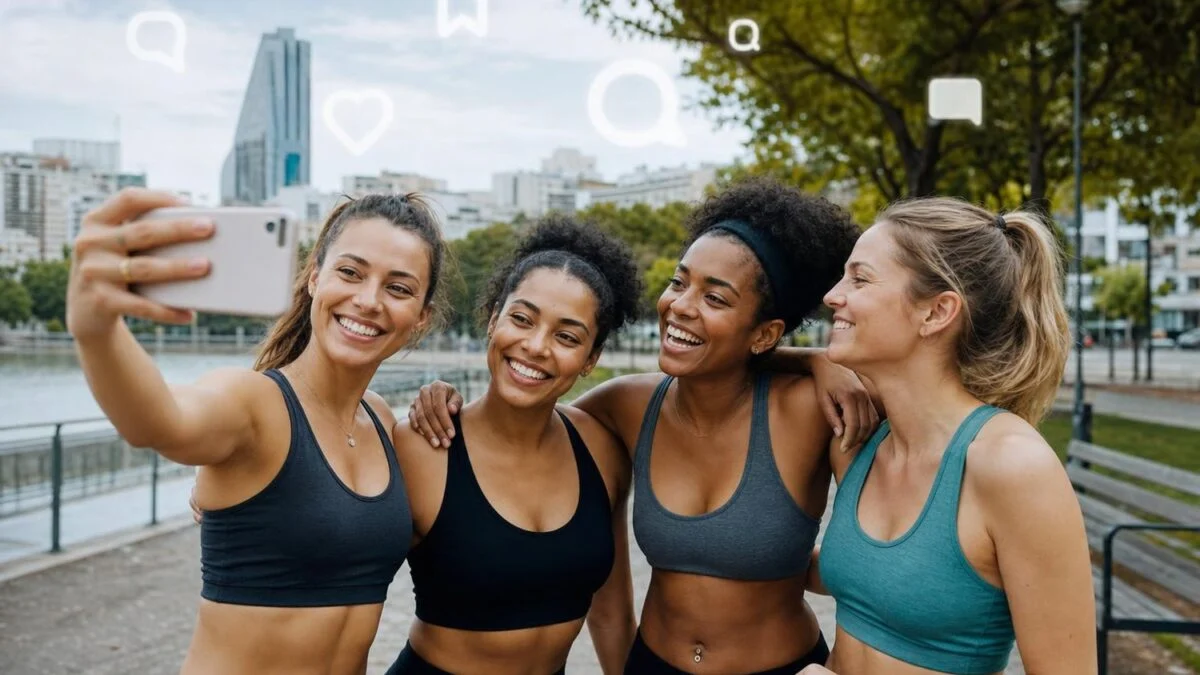
On TikTok and Instagram, running videos parade at full speed: insane challenges, times proudly displayed, bodies in leggings framed to the millimeter. Behind these smooth images, the subject is far from trivial. According to a study published in 2020 in the Journal of Eating Disordersthe prevalence of eating disorders among female athletes ranges from 6 to 45%, with even higher rates in endurance sports like running. When a viral video talks about race, it also talks, often without saying it, about bodies, health and privilege.
Caroline, known under the nickname “sincejecours”, the American Allie Ostrander, the creator Kate Glavan and the coach Kelly Roberts have all exploded the view counters with running content. But each quickly moved the discussion: the first questions the access reserved for influencers, the three others talk about their fractures, their eating disorders, their therapy. They show that the
running influencers no longer content with making people want to run, they force the community to look at what sport really does to the body and mind.
When running influencers shake up the narrative of jogging
According to the site Dans la Tête d’un Coureur, around 14 million French people run at least twice a week and the running market was already worth nearly 850 million euros before Covid, or around twice that of football. In this landscape, running content creators have become the ideal ambassadors: they speak like their subscribers, recount their ailments, their doubts, their joys as beginners. This exposure gives them bibs, contracts, sometimes very visible media operations, while making them prime targets of jealousy and harassment.
Olivia Luppino, for Women’s Healthdescribes an ecosystem saturated with SkinnyTok, advertisements for weight loss drugs and content obsessed with being thin. In this environment, so-called “lean” sports like running are often associated with the idea that one should shrink in order to perform. The voices of Allie Ostrander, Kate Glavan and Kelly Roberts stand out, because they tell the exact opposite of what the algorithm puts forward.
From Caroline “sincejecours” to Kelly Roberts: virality, privileges and eating disorders
Caroline posted a video where she runs singing Celine Dion and explains that if we help her get tickets for the Paris concert, she will run the Hossegor Paris route, around 800 km. A few days later, RTL offered him the tickets, on the condition that he come and collect them from the Neuilly studios straight away. The journey will be spread over three weeks, with approximately 38 km per day, nights in a hotel, friends as backup, alternating walking and running. Blogger Marta sums up the discomfort of many anonymous runners: “But traveling 800 km to see Celine Dion, isn’t that excessive? Should we really encourage these kinds of challenges? And above all, isn’t it a little frustrating for us average runners to see that you just need to be an influencer to get what you want?“.
On the other side of the Atlantic, virality is sometimes used to say stop. Allie Ostrander recounts how her dietary restrictions to stay light ended up leading to stress fractures, up to five bone injuries in one year. Today, in front of more than 200,000 subscribers, she repeats: “I can’t change my past, but I hope I can change someone else’s future“.

Kate Glavan remembers her doctor’s verdict at age 17: “I had the bone density of an 80 year old woman“. Kelly Roberts, compulsive ex-marathoner revealed by the hashtag #hotguysofthenychalf, now warns: “Running is not therapy, but running is therapeutic; the two should not be confused“.
What these women reveal about current running culture
These stories say that being visible offers real privileges, from free bibs to concert tickets, but also a responsibility. In its podcasts, Dans la Tête d’un Coureur recalls that running influencers concentrate some of the online harassment, between sexism, fatphobia and accusations of “stealing” sponsors. In France, profiles like Margaux Lifestyle, a size 42 runner, receive torrents of insults for daring to run and show themselves in shorts, whereas Allie, Kate or Kelly are attacked for having gained weight while taking care of themselves.
This intersection between the cult of performance, the running business and the omnipresence of thin images creates a breeding ground for eating disorders and bigorexia, this addiction to sport that doctors are already observing in adolescents.
The running influencers who talk about their injuries, their sessions with the psychiatrist, their full plates offer another compass: a body that is used to live, not just to produce content or to stick to a “template” of an ideal runner.