
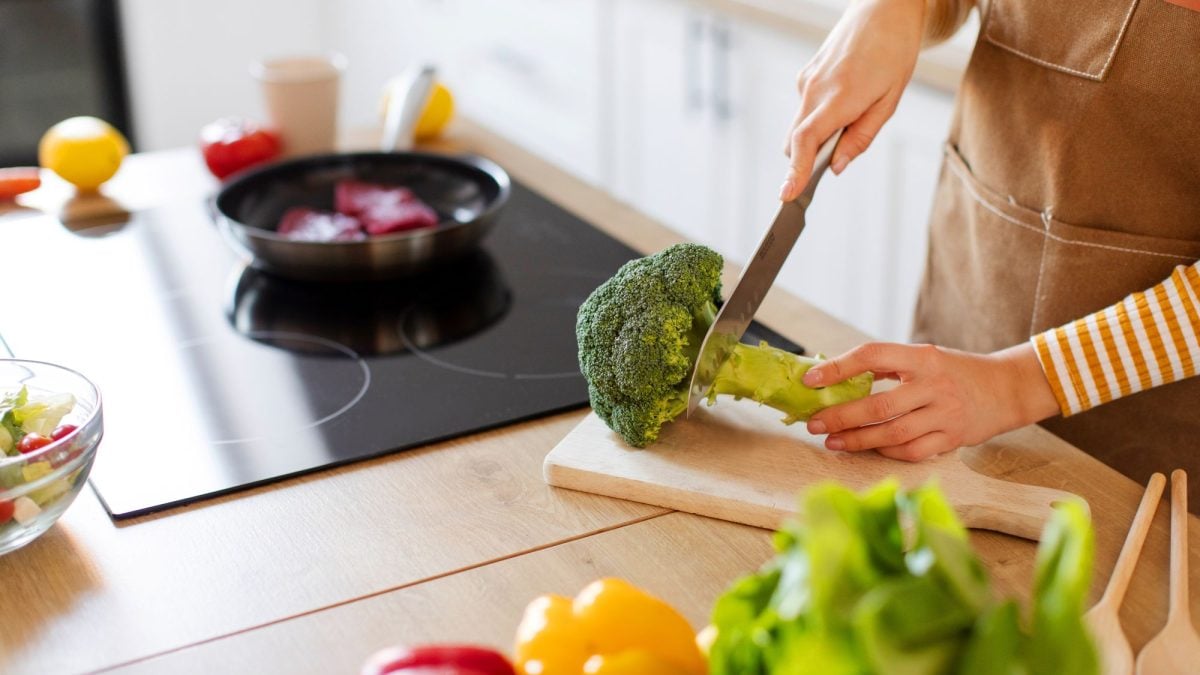
You have carefully selected your fruits and vegetables, washed them, cut them, ready to boost your vitamin intake… However, all these good gestures could be in vain. The reason? A small mistake, seemingly harmless, that almost all of us make mechanically, risks reducing the nutritional benefits of these foods to nothing.
Preparing food too early, a mistake that destroys vitamins
For the sake of organization, we often have the reflex to prepare our fruits and vegetables in advance. But be careful: cutting them too early, well before consuming them, could compromise their nutritional value. A seemingly innocuous gesture, but not without consequences, as Alexandra Murcier, dietician-nutritionist, points out.
“This is when we lose some of the nutrients“, she warns. And not all vitamins are in the same boat: some are particularly sensitive to air, light… and the passage of time.
Some vitamins are very fragile
Among the most sensitive, vitamin C comes first. Extremely vulnerable to light, air and heat, it deteriorates quickly as soon as foods containing it are cut or heated. Result: to get maximum benefits, it is better to eat them raw, and at the last minute.
“Foods rich in vitamin C should be stored away from light, and if possible eaten raw.confirms Alexandra Murcier, dietitian-nutritionist. This concerns in particular peppers, parsley – to be added at the end of cooking only – or even citrus fruits, to be enjoyed just after cutting them. “So we forget the fruit salads prepared in advance”she adds.
Another particularly unstable vitamin: B9. Present in large quantities in green vegetables such as spinach, broccoli or cabbage, it does not hold up well to waiting. “Preparing them in advance or letting them rest once cut means taking the risk of considerably reducing their intake.warns our expert.
Cooked or raw? It depends on the vitamin… and the olive oil
But be careful: certain nutrients, on the other hand, reveal their full potential once food is cooked — provided you prepare it well. This is the case with tomatoes.
“Tomatoes are rich in lycopene, a powerful antioxidant. But for it to be well absorbed by our body, it must be accompanied by a fatty substance. This is why a raw tomato does not provide as much lycopene as a tomato cooked with olive oil.explains Alexandra Murcier.
Same observation for vitamin A, very present in carrots. “It oxidizes quickly in air and light, but it is also fat-soluble, so it is better assimilated if you add a drizzle of oil to your dish.she specifies.
Finally, be wary of the lawyer. Although it is rich in vitamin E, it is not resistant to oxidation. “Its vitamin E oxidizes quickly. It’s best to avoid cutting it in advance, even to save time. It is prepared at the last moment, just before being eaten.”concludes the dietician.