
Do you think you’re doing your mushrooms good by rinsing them for a long time and letting them “cook gently” in the pan? This very common reflex actually transforms this superfood into a bland vegetable, emptied of some of its vitamins and antioxidants. While button, shiitake or oyster mushrooms could be real health allies, a simple mistake in cooking mushrooms is enough to ruin everything.
Mushrooms are 85-92% water, a bit like sponges. When we manage them poorly, they become engorged with liquid, release abundant juice when cooked and their water-soluble nutrients pass into this water. Juice that often ends up… in the sink. This is where the error begins.
Why mushrooms are a nutritional treasure not to be squandered
Fiber, proteins, B group vitamins (B1, B2, B3), vitamin D, selenium, potassium, zinc, polyphenols, beta-glucans: mushrooms concentrate many compounds of interest for the heart, immunity or satiety. British entrepreneur Elliot Webb sums up their interest well: “Mushrooms are a great source of plant-based protein and umami flavor. Mushrooms require very little water and land to grow, making them one of the most eco-friendly food options. Using every part of the mushroom reduces food waste and maximizes their potential” he told GloucestershireLive.
Since these nutrients are partly water soluble, anything that increases water imbibition and then drainage works against you. Studies show that dry or very quick cleaning retains up to 30% more B vitamins and minerals compared to prolonged soaking. Same issue for antioxidants: steaming can preserve nearly 80%, compared to only 30 to 40% when boiling in lots of water.
The hidden mistake: washing the mushrooms under water then boiling them in the pan
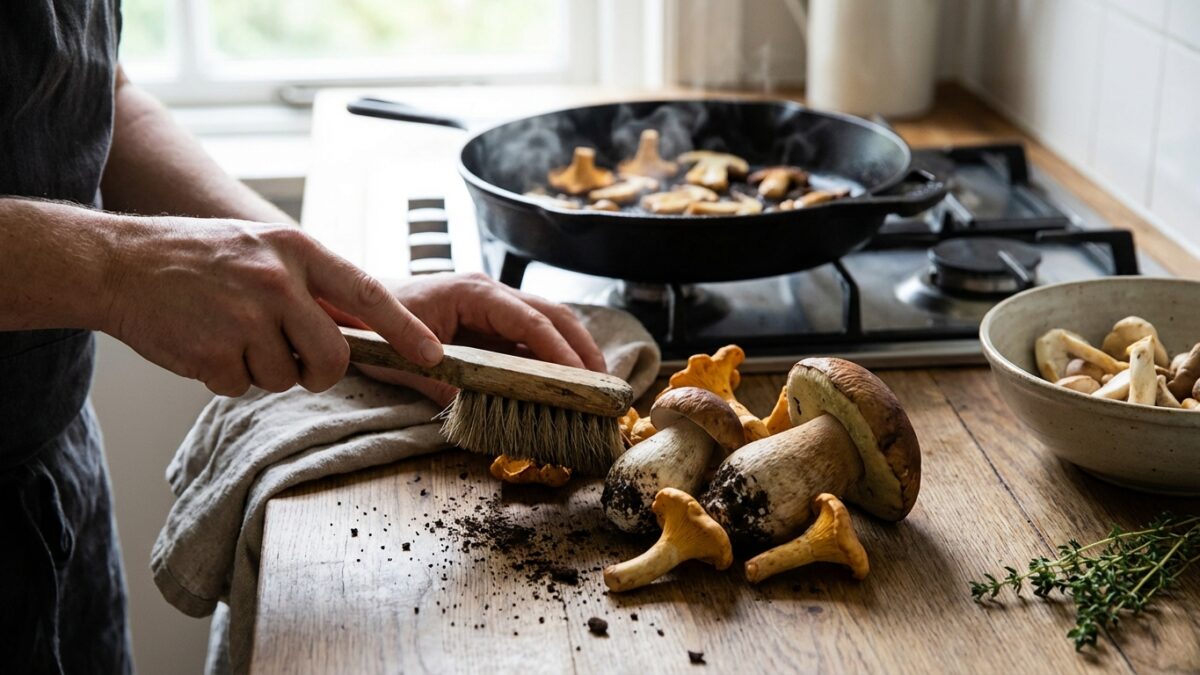
The classic scenario is well known: we start by washing the mushrooms under water, or even letting them soak in a salad bowl. Elliot Webb warns: “Mushrooms are very absorbent and take on too much moisture when washed under running water. Instead, lightly brush off any dirt with a dry cloth or soft brush to preserve their texture“. Once saturated with water, they release this liquid during cooking, taking with it B group vitamins and minerals.
Another reflex that makes everything worse: lukewarm pan, filled to the brim, salt added from the start. The temperature drops, the mushrooms “release” their water and end up simmering in a grayish bath. “For the best texture, the mushrooms need room to breathe in the pan. If they are too close together, they will release moisture and simmer rather than caramelize“. Result, rubbery texture, diluted taste and nutrients gone in a juice that is often thrown away.
The right actions for cooking that respects their nutrients
To limit breakage, it all starts with cleaning: use dry brushing or a slightly damp cloth for button mushrooms, oyster mushrooms or shiitake mushrooms. A very quick rinse under a stream of water remains possible for the more earthy ones, provided that you then dry them well in a cloth. No need to peel them: some of the aromas and protective compounds are found in the skin. The stems can be cut finely and added to sauces or broths to avoid waste and retain maximum nutrients from the mushrooms.
When it comes to cooking, the winning combination remains simple: hot pan, medium-high heat, small quantity of mushrooms in a single layer, quality fat, salt only at the end of cooking. Short steam also works very well to retain vitamins and antioxidants, much better than long cooking in water or deep frying. By adjusting these few steps, your pans will finally keep their aroma, their firmness and the best your mushrooms have to offer.