
For decades, Queen Elizabeth II’s fresh skin and energy have intrigued Britons as much as her colorful hats. Behind her endless work days, a detail often comes up in the stories of those who shared her table: an ultra simple lunch, only two main ingredients, which she would have asked for again and again.
Former royal chefs say that at lunchtime, the sovereign abandoned dishes rich in pasta or bread for one
fish-vegetable duo almost immutable.
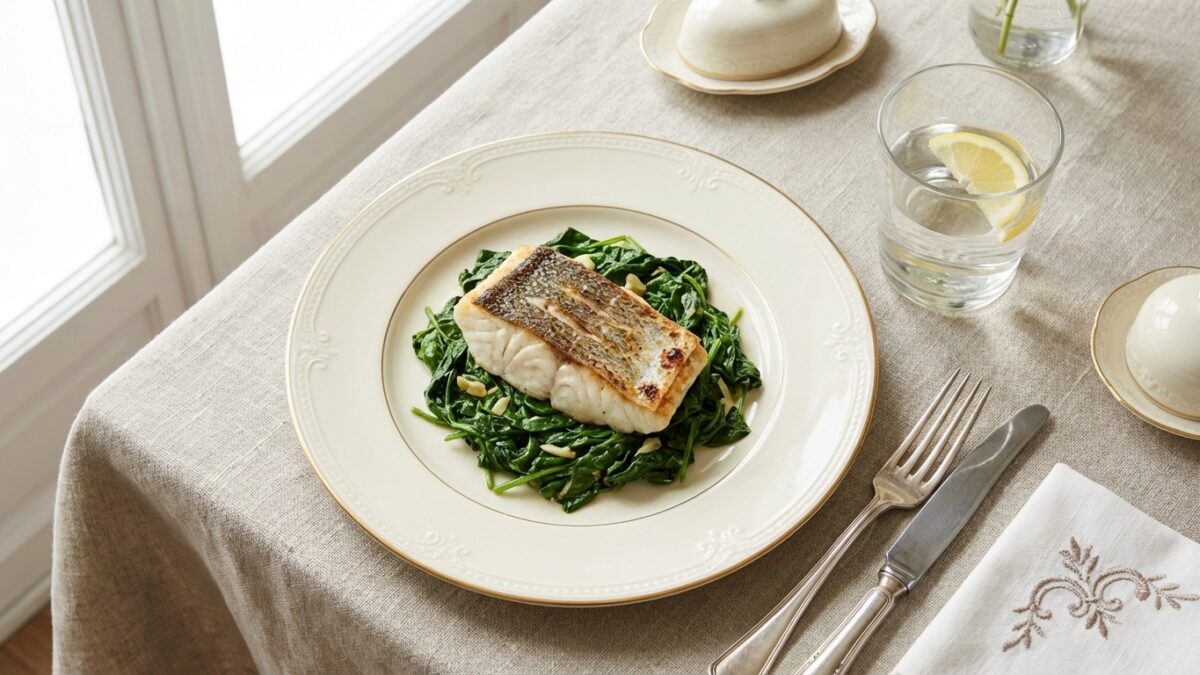
Queen Elizabeth’s famous two-ingredient lunch? A plate of grilled Dover sole placed on a bed of melted spinach, sometimes replaced by zucchini, a ritual often associated with her slim figure and luminous complexion over the years.
Queen Elizabeth’s two-ingredient lunch, a very disciplined ritual
This simplicity suited his personality. “But the Queen was never an epicurean. She always ate to live rather than living to eat. Prince Philip was the epicurean. He always wanted to try new dishes and got excited about new ingredients, whereas the Queen, if we had a new recipe, she had to look at the whole recipe before she said, ‘Yeah okay, let’s try it.’ But for the most part, she stuck to the same dishes week after week.”said Darren McGrady, former royal chef, quoted by Gloucestershire Live.
On the menu, therefore, grilled Dover sole, a lean flatfish but rich in protein, vitamin D and vitamin B12, served on spinach just wilted from the pan or zucchini. Darren McGrady also confided on his site that
“Queen Elizabeth enjoyed new potatoes and spinach with her fish.” The backbone of his lunch, however, remained this fish-green leaf duo, light but nourishing, easy to reproduce day after day.
Dover sole and spinach, a duo rich in omega-3 and vitamins
Dover sole is considered one of the most calorically interesting flatfish, with limited fat but essential omega-3 fatty acids. Work from Cornell University and the Sea Grant program in New York shows that these fats contribute to cardiovascular health by helping to reduce blood pressure, heart rate and risk of arrhythmias. The GISSI prevention trial also showed that regular consumption of omega-3 reduced the risk of recurrent heart attacks or strokes in adults.
As for vegetables, spinach is ranked 24th in the list of the 100 healthiest foods established by the BBC, for its richness in magnesium, folate, vitamin A, beta-carotene, zeaxanthin and vitamin K, useful for bones and coagulation. Research from Pennsylvania State University indicates that fresh leaves can lose up to 75 percent of their vitamin C within a week, while freezing early preserves these nutrients much better.
“Like me, you’ve probably always thought that fresh food is always the best option. Don’t be a snob when it comes to frozen or canned foods which can often be saviors.” warned Tim Spector, professor at King’s College London. “An example here is frozen spinach, and actually the freezing process and the way it’s packaged means that those nutrients in the spinach are perfectly preserved, so you don’t lose anything by buying the product fresh.”
Adapt Queen Elizabeth’s two-ingredient breakfast at home
Reproducing this lunch at home is very simple: a fillet of Dover sole or, failing that, another lean white fish, quickly grilled with a little neutral oil, placed on a generous portion of pan-fried spinach, fresh or frozen. They also slip easily into pastas, curries, omelettes or smoothies, and a simple cube of frozen spinach can transform a frittata or quiche into a very vitamin-packed dish.
This duo obviously does not sum up, on its own, the longevity and youthful appearance of Queen Elizabeth II, but it shows a habit: a regular lunch, rich in proteins, green leaves and moderate in calories. For a French reader, integrating a meal based on white fish and spinach several times a week, in a homemade version or with plain frozen products, is a continuation of simple, everyday cooking, which the sovereign seemed to appreciate as much as her crown.