
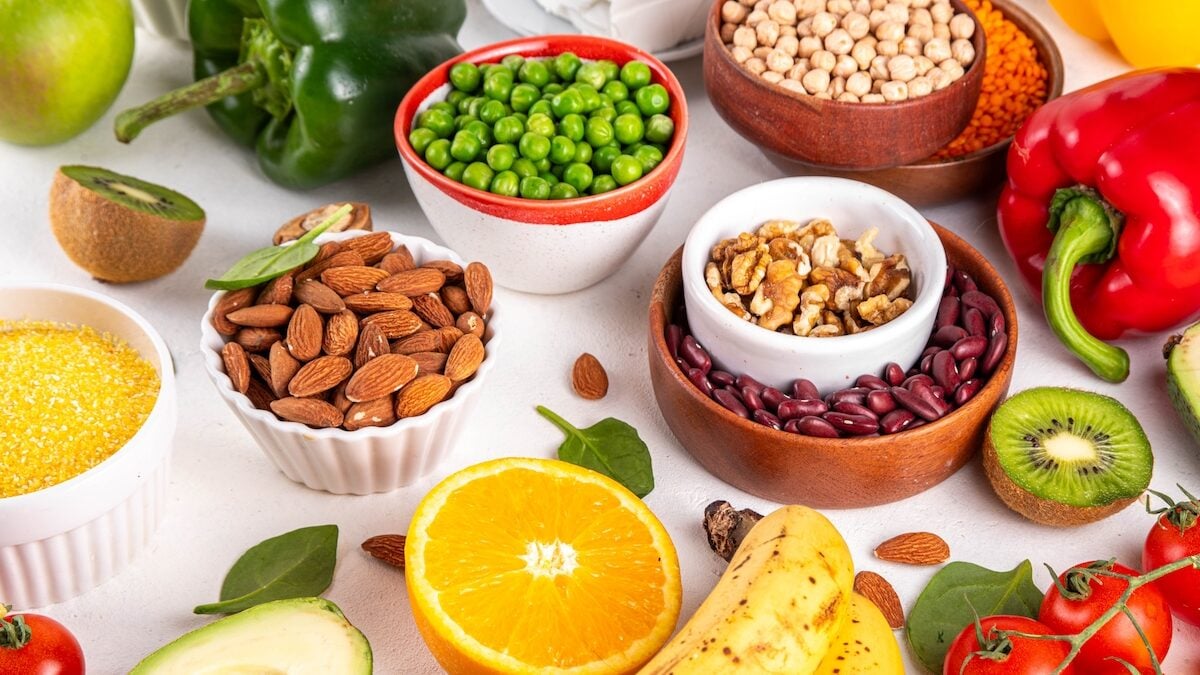
The portfolio diet is not yet another restrictive diet: it does not exclude food, on the contrary, it adds! Their secrets? They are all good for cholesterol: 45 g of nuts per day, 50 g of vegetable proteins, 20 g of soluble fibers present in oats, barley or certain fruits, and 2 g of plant sterols, these compounds which limit the absorption of cholesterol by the intestine. Foods rich in mono-insaturated fats, such as avocado or rapeseed oils, complete the table.
Free fall cholesterol
And it works! A meta-analysis of 7 clinical trials on 439 patients with hyperlipidemia has shown that the adoption of the Portfolio diet, in addition to the standard regime recommended by the National Cholesterol Education Program (NCPE), made it possible to reduce LDL cholesterol (“bad cholesterol”) by around 17 %. The profits do not stop there: drop in total cholesterol, reduction of triglycerides, blood pressure as well as C-reactive protein, an inflammatory marker. As a result, the risk of coronary coronary disease at 10 years was lowered by 13 % compared to the naked diet alone.
For researchers, these data suggest that the portfolio diet could “Be a useful complement to statin treatment or a statine-ezetimibe combination to achieve lipid objectives “assures the researchers. Clearly, food, when it is finely oriented, can act by real therapeutic adjuvant.
The portfolio diet in practice
The Portfolio regime was developed in the early 2000s by Professor Jenkins, a nutrition specialist at the University of Toronto, and his team. Their goal was to treat hypercholesterolemia by relying on the benefits of fibers and foods rich in phytosterols, while judiciously choosing food, including lean meats. It is not always the case with other diets. in practice, it is a question of favoring foods rich in fiber, such as fruits, vegetables and complete cereals, to integrate legumes such as chickpeas, lentils and dry beans, and to replace red meats with fish and white meats.
Cardiovascular protection confirmed in the long term
The effects do not only concern organic markers but also result in a tangible reduction in the risk of cardiovascular disease. A large North American study published in the journal Traffic and coordinated by the nutritionist Dr. Andrea Glenn followed 166,270 women and 43,970 men for almost 30 years: participants who best respected the principles of the portfolio diet presented a 14 % lower risk of developing coronary coronary disease or stroke. “”Thanks to this research, we found that the portfolio diet score was constantly associated with a lower risk of heart disease and stroke, which highlights an opportunity for people to reduce their risk by consuming more of these foods “underlines the researcher.
And unlike a received idea, it is not necessary to adopt a completely vegetarian diet to enjoy its benefits. “”You also don’t need to follow it as a strict vegan or vegetarian diet to see the advantages, but the more you eat food from the portfolio diet, the greater your protection against heart disease is large“She sums up.