
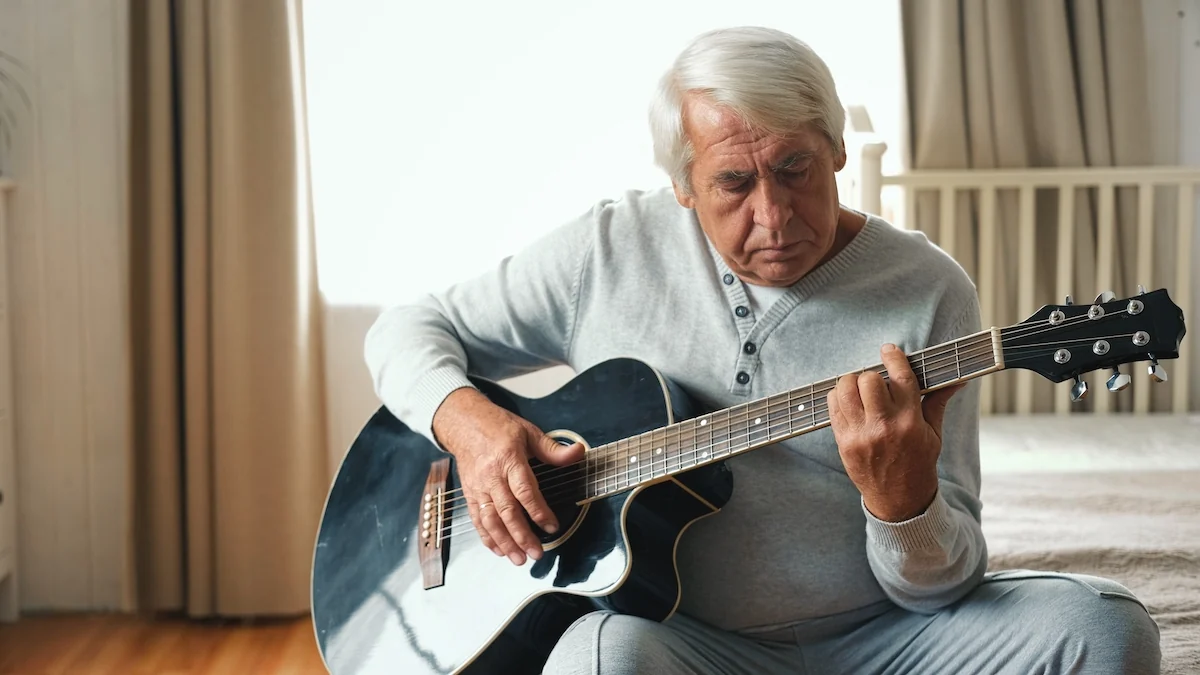
After age 40, the brain loses nearly 5% of its volume per decade, and this atrophy accelerates around age 67, according to work reported by the magazine National Geographic. This figure echoes a very concrete concern: maintaining a good memory and autonomy for as long as possible. Recent research suggests that an everyday hobby could help slow down brain aging.
Learn a musical instrument, a complete workout for the brain
This hobby is learning a musical instrument, even after 60 or 70 years. Steven Allder, neurologist at Re, quoted by the British daily The Independentexplains that this activity forces the brain to read notes, coordinate the hands, listen carefully to sounds and remember melodies, a bit like a mental sport session.
For Steven Allder, playing an instrument involves much more than just your fingers. The motor cortex controls gestures, the auditory cortex analyzes sound, the hippocampus manages memory and the cerebellum adjusts the tempo. The prefrontal cortex supports executive functions like planning. The emotional centers, amygdala and limbic system, are also activated. This overall gymnastics improves attention, listening and understanding of speech in noise.
This activation nourishes neuroplasticity, the brain’s ability to reorganize itself. A Kyoto University study followed adults who played an instrument for four years. MRI scans showed that those who continued to practice kept a stable volume in the putamen and cerebellum, with better preserved memory than in those who stopped. The authors see this as a gain in cognitive reserve.
Aging, memory and risk of dementia: what the science says
With age, the hippocampus and prefrontal cortex shrink quickly, which weakens memory and attention. An observational study referenced on PubMedamong around 200 people over the age of 70, showed that those who had already played an instrument saw their cognitive test scores, including the MMSE, evolve more favorably over twelve months than those who had never played one.
Other works, grouped in a meta-analysis cohorts, found an inverse association between instrumental practice and risk of dementia, including Alzheimer’s disease.
Steven Allder points out that no activity guarantees prevention, but describes a possible mechanism: “Cognitive stimulation through music builds what we call ‘cognitive reserve’, which is the brain’s ability to resist age-related decline. By strengthening neural networks and promoting neuroplasticity, musical activity helps the brain compensate if dementia-related lesions appear“.
After 60, how to benefit from this protective effect without putting pressure on yourself
Playing an instrument also reduces stress by lowering cortisol, which can calm anxiety and tension.
A study referenced on PubMed in older adults linked persistently elevated cortisol to poorer verbal memory performance.
It is therefore better to have short, regular sessions than a long, exhausting practice.