
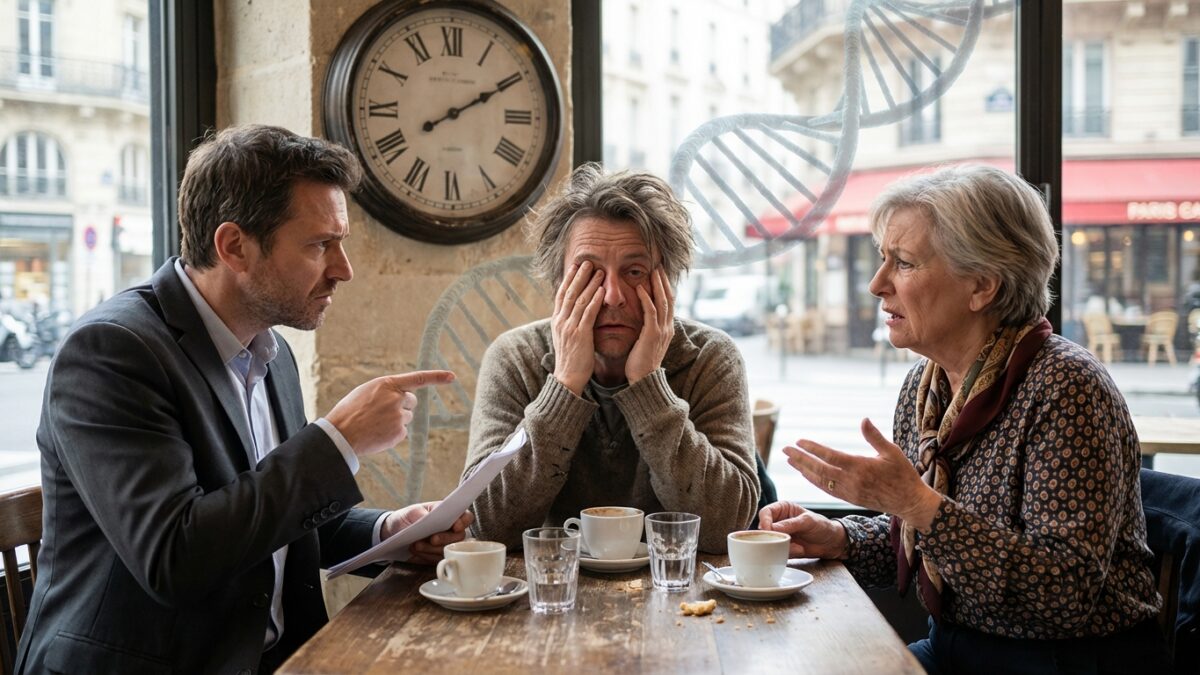
That colleague who criticizes everything, that aunt who only calls you to complain… We all have one or more difficult people which seem to drain our energy. A team of American sociologists wondered if these relationships don’t also tire our bodies, well beyond simple bad mood.
Their study, published in the journal Proceedings of the National Academy of Sciencesis interested in that knowledge “that creates problems or makes life more difficult.” Using biological markers, researchers describe a clear link between many of these “energy vampires”, the
biological aging accelerated and more fragile health.
Difficult people: who are these “hasslers” who wear us down on a daily basis?
The authors speak of negative ties marked by criticism, tension or a feeling of obligation. Nearly 30% of those questioned declared at least one such person in their network – which researchers call “hasslers” (“harassers” but who are more akin to “energy vampires”). Many cited parents or children, but also colleagues, roommates or neighbors, much more often than real friends. Surprisingly, “spouses of this type” were not clearly associated with accelerated aging.
Not everyone is exposed in the same way. Women, daily smokers, people in poorer health, and those with more difficult childhood events reported more energy vampires. “Women tend to be disproportionately affected, both positively and negatively, by what happens in relationships and how they relate to others“, explained Brea Perry, sociologist at Indiana University, to the Washington Post. “So it didn’t surprise us that much that women might have more problem-causing people in their lives, in part because they’re probably more likely to see the problems that others are having, feel them, and sort of take them on as stress.,” she added.
Biological aging: what the study reveals about your body’s rhythm
The team analyzed data from more than 2,300 adults, ages 18 to 104, in Indiana. Participants described, over the past six months, how often certain people “drained” them, caused problems, or made their lives more difficult. They also gave a saliva sample, used to measure state-of-the-art epigenetic clocks (GrimAge2 and DunedinPACE), which estimate the body’s age based on chemical changes in DNA.
The results are precise: “Each additional hassler is associated with approximately 1.5% faster biological aging and approximately nine additional months of biological age in individuals of the same chronological age“write the researchers.”These findings suggest that hasslers in a person’s social environment may constitute an overlooked but consequential biological risk factor.“. The effect would represent approximately 13 to 17% of the difference in aging observed between smokers and non-smokers.
People who “hoard hasslers” also report more depression, anxiety, a higher body mass index and signs of inflammation. “We don’t know if hasslers actually make people age” warned Byungkyu Lee, sociologist at New York University. “What we observe here is a form of association between having hasslers and the rate of aging.”.
How to protect yourself from these difficult people without cutting yourself off from the world
“Even small effects in terms of biological aging can add up” recalled Brea Perry. Many hasslers being relatives or colleagues, fleeing is not always possible. “I think, for me, setting boundaries is important,” she said again. “Once you recognize that someone who is a hassler has these negative biological consequences for you, set limits on the effort you invest in this relationship.”. In other words, reduce the chronic stress relationship without breaking everything.
Researchers also emphasize the importance of positive connections: loneliness is associated with approximately 871,000 deaths per year worldwide. “It’s just very important to have relationships,” recalls Debra Umberson, professor of sociology at the University of Texas at Austin. “I wouldn’t want to neglect this aspect..” To reconcile health and social life, several simple ideas emerge from this work:
- Identify those around you
toxic relationships which systematically leave a feeling of exhaustion; - Limit the time spent with these people when possible, especially outside the nuclear family;
- Invest more energy in truly supportive connections, which soothe rather than tire;
- Seek help (doctor, psychologist, mediation at work) if a relationship becomes a constant source of distress.