
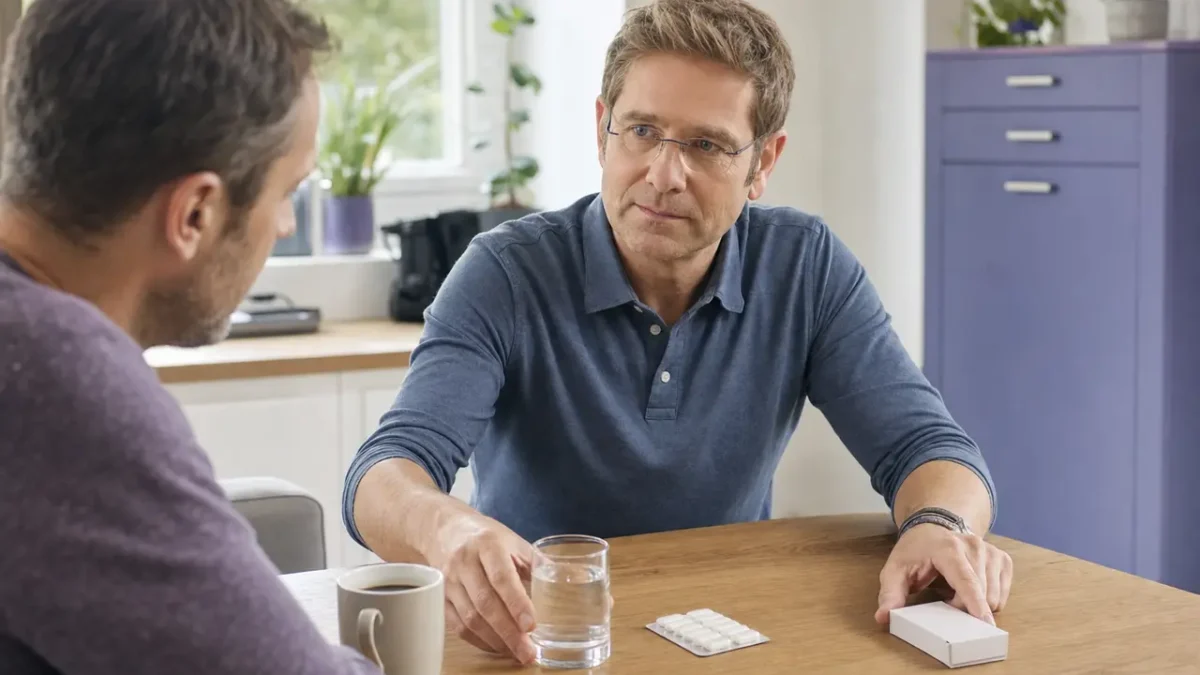
You stopped this morning, then the desire arises from the first coffee, during the break or after an annoyance. It’s not a failure: it’s often the moment when habit and lack mix. For this first day of No Tobacco Month 2026, the objective is not to “hold on” only mentally, but to know what to do when the urge arises.
Public Health France reminds that the system Tobacco free month
offers free and personalized support. Health Insurance also recommends identifying situations that lead to smoking and planning an alternative before the urge arises. Here are the three reflexes to adopt.
1. Distinguish habit from true lack
The first cigarette of the day, the one during the break or the one after a meal do not always respond to the same mechanism. Sometimes the body craves nicotine. Sometimes, it is above all an automatism: a place, a person, an emotion or a gesture long associated with cigarettes.
“When faced with a craving for a cigarette, first ask yourself: what just triggered it? Coffee, stress, boredom or physical lack do not call for exactly the same response” advises Dr. Gérald Kierzek.
Concretely, for a few days, note the risky moments: morning coffee, journey, break with colleagues, fatigue, annoyance. This observation helps to manage withdrawal during the first days without smoking without attributing everything to weakness of will.
If the urge always appears in the same situation, it is often an automatism that needs to be broken. If it is accompanied by irritability, anxiety, difficulty concentrating or a persistent desire to smoke, it may also be a nicotine deficiency that needs better support.
2. Plan an alternative before the urge arises
A craving for a cigarette is often brief but intense. Waiting until it is at its maximum to improvise makes stopping more difficult. Health Insurance advises preparing simple strategies in advance: change the air, walk, drink water, breathe, occupy your hands or call someone.
“Don’t negotiate with desire for ten minutes: change scenes. Get up, go out for a walk, drink a glass of water, call a loved one. You have to interrupt the automatic sequence” underlines Dr Gérald Kierzek.
The good plan is very concrete: if coffee triggers cigarettes, take it elsewhere or temporarily replace it with another drink. If taking a break at work is the trap, go out with a non-smoking colleague or walk for a few minutes. If it’s stress, plan for slow breathing, a message to send or a short task that keeps your hands busy.
The goal is not to eliminate all desires from day one, but to multiply “small victories” in the face of the most predictable situations. To better recognize the symptoms of smoking cessation, it is useful to identify what is a gesture, emotion or physical lack.
3. Adjust aid rather than concluding in failure
Nicotine replacements can help reduce cravings and withdrawal symptoms. They exist in particular in the form of a patch, gum, lozenge, tablet, spray or inhaler. The High Authority for Health points out that these nicotine replacement treatments are first-line medicinal treatments when pharmacological treatment is necessary. But
the choice and dosage must be adapted to the dependence and symptoms.
“If the cravings remain very strong despite your efforts, do not conclude that you are incapable of stopping: have your support and the dosage of your substitutes checked” recommends Dr. Gérald Kierzek.
A patch releases nicotine gradually. An oral form, such as a gum or a lozenge, can respond to a specific desire. The HAS indicates that the combination of a transdermal patch with a rapid administration form may be more effective than a single form, but this does not mean that doses should be increased alone. To understand the benefit of combining nicotine patches, gums or lozenges, it is better to seek advice from a pharmacist, doctor or tobacco specialist.
Conversely, certain signs should cause the treatment to be reassessed: headaches, nausea, pasty mouth, diarrhea, insomnia, palpitations or malaise may suggest too high a dosage, even if they are not specific. In the event of persistent palpitations, significant discomfort, chest pain or worrying symptoms, seek medical advice quickly or call the emergency room.
“The right reflex is not to add substitutes at random, but to describe your symptoms to a professional to find the right balance” insists Dr Gérald Kierzek.
Finally, don’t be alone. 39 89 allows you to speak with a tobacco specialist, Monday to Saturday from 8 a.m. to 8 p.m., and Tabac info service also offers an application and advice in case of craving or relapse. Quitting smoking requires preparation, adjustment and support: it is not a test of pure willpower.