
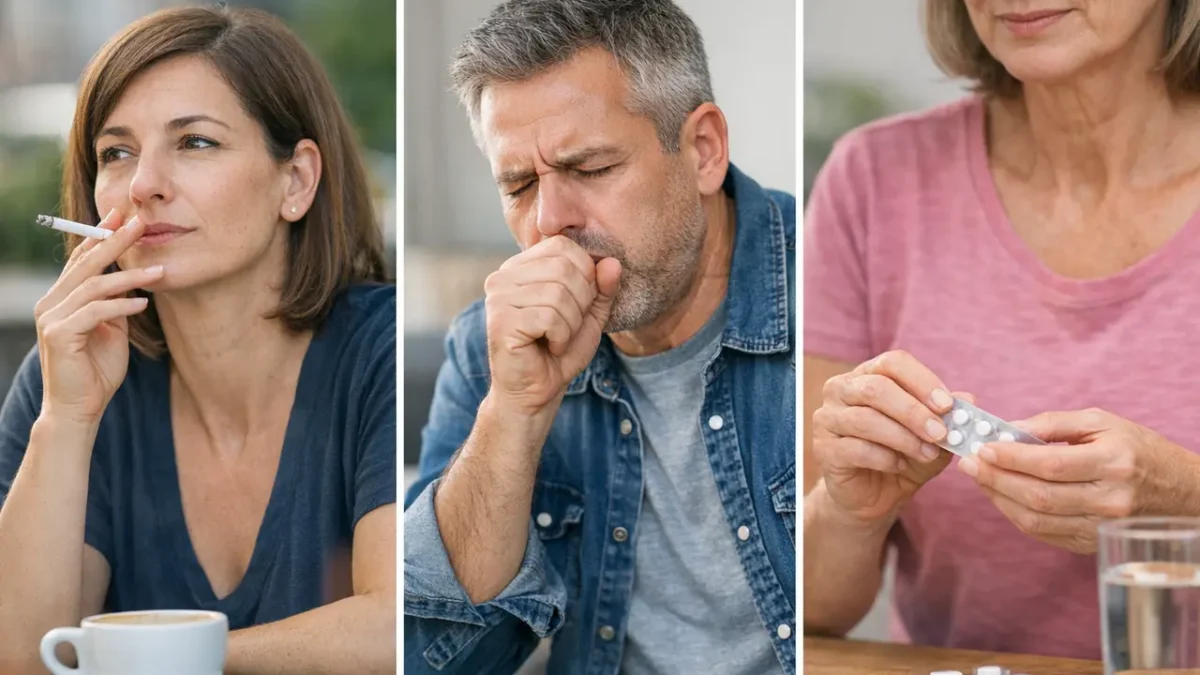
Are you stopping smoking and wondering if an “every now and then” cigarette, a new cough or prolonged patches should worry you? In the show “It’s going to be much better” on RTL, broadcast on November 3, 2026, Dr. Jimmy Mohamed, doctor and presenter, responds clearly: these three preconceived ideas can complicate weaning.
One or two cigarettes a day does not make smoking safe
First common trap: thinking that very low consumption does not really justify stopping. Dr Jimmy Mohamed combats this idea by recalling that tobacco acts both on the arteries and on the risk of cancer. Its message of prevention should be remembered without dramatization: very low consumption is not a risk-free zone.
On the cardiovascular level, the data points in the same direction. A cohort meta-analysis published in the BMJ by Hackshaw et al. in 2018 concludes that there is no safe threshold for coronary heart disease and stroke in light smokers. These are observational studies: they show an association with risk, not an individual causality that is predictable for each person. But they support the objective of aim for complete stop rather than a simple sustainable reduction.
The doctor also emphasizes a point often forgotten: for lung cancer, the quantity smoked counts, but exposure time matters a lot her too. Smoking little for many years is therefore not equivalent to not smoking. To go further on this sometimes trivialized little smoking, True Medical reminds us that even one or two cigarettes a day are not harmless.
A cough after stopping can be transient, but not to be trivialized
Second misconception: coughing after stopping would necessarily be a bad sign. Dr Jimmy Mohamed explains on the contrary that this can happen at the start of withdrawal. He uses a simple image: in the bronchi, cilia participate in the evacuation of waste, a bit like a treadmill. Tobacco alters this mechanism; after stopping, its resumption can promote the evacuation of secretions and cause coughing.
However, this cough is not systematic. And above all,
this cough should get better. Tabac info service also indicates that a cough or phlegm may appear temporarily during withdrawal, linked to the recovery of the respiratory tract, but that a persistent cough must be evaluated. In a person who smokes or has smoked, the response from Tabac info service on withdrawal therefore reflects this nuance.
Dr. Jimmy Mohamed’s other alert concerns smokers who respond “it’s normal, I smoke” when asked if they cough. No : coughing because you smoke is not “normal”. A chronic cough can suggest chronic bronchitis or COPD, but only a professional can evaluate it, in particular with appropriate examinations. In practice, a persistent cough in a smoker or former smoker should be consulted, especially if it is accompanied by shortness of breath, chest pain, bloody sputum, fever or a change in general condition.
Patches and gums: the priority is to avoid tobacco smoke
Third misconception: you should stop nicotine very quickly during withdrawal. Here again, Dr Jimmy Mohamed distinguishes two things. Nicotine maintains addiction, but cigarette smoke also exposes people to many toxic products that he cites in his column, such as tar, carbon monoxide, ammonia or certain heavy metals. For him, the priority remains to avoid tobacco smoke.
Medicinal nicotine substitutes, such as patches, gums or lozenges, provide controlled nicotine and avoid combustion products. The recommendation of the High Authority of Health on stopping smoking published in 2014 places them among the treatments used to help quit smoking. This does not mean that nicotine has no effect or that everyone must self-manage: dosage, duration and gradual reduction are discussed according to dependence and context. The practical point is above all to
do not interrupt substitutes in haste if this weakens abstinence.
Medical or pharmaceutical advice is particularly useful in these situations:
- Be pregnant, breastfeeding or a teenager;
- Have cardiovascular disease, asthma, COPD or other chronic respiratory disease;
- Have a history of cancer, psychiatric disorders or another addictive disorder;
- Take several treatments or have adverse effects with substitutes;
- Feeling significant difficulty maintaining quit smoking.
Weaning is not a test of pure willpower: tobacco dependence is common and help exists. A doctor, pharmacist, midwife or Tabac info service can help adjust the support without feeling guilty. To complete this, True Medical also deciphers preconceived ideas about nicotine substitutes.