
You come home in the evening, exhausted, your head still full of notifications… and your living room looks more like a giant to-do list than a refuge. Many feel this gap between the desire to breathe and an interior that stimulates instead of soothes. Behind this daily discomfort, a subject emerges: the link between interior decoration and mental health.
Specialists in deco-therapy and neuro-architecture point out that we spend almost 80% of our time indoors. Our home then becomes a potential “safe place”, a place where the brain can finally let down its guard. And the good news is that professionals show that it only takes a few simple actions, without work or a big budget. It all comes down to a few well-chosen details.
Interior design and mental health: how your brain perceives your interior
The brain constantly scans what surrounds you: light, colors, order, noises. A dark, cluttered, very noisy room maintains tension and mental load. Conversely, natural light regulates sleep-wake cycles, supports morale and energy. Hence the interest in clearing the windows, choosing light curtains, adding mirrors, or even a light therapy lamp in winter to compensate for the lack of daylight.
Colors also modify the interior rhythm. Neutral tones, pastels, greens and blues inspired by nature soothe almost instantly, while reds and oranges energize. Studies even show that green improves concentration. Contact with wood, linen, wool, rattan, like the presence of plants, reduces stress: work from the University of Surrey indicates that the simple sight of natural elements already improves morale.
Seven decorative gestures, without work, to transform your home into a safe place
First reflex: let the light in. Opening the curtains, lightening the window sill, placing a mirror facing the light, increasing the number of small lamps with warm light, and if necessary a light therapy lamp, is enough to change the atmosphere. Second gesture, review the palette via household linen: cushion covers, throws, rugs, bed sets in soft shades, with a few touches of ocher or coral in the kitchen or office for energy. Third option, focus on natural materials and a few easy-care plants that recreate a reassuring link with nature. Fourth key, declutter: three piles “to keep, to give, to throw away”, closed and accessible storage, and the space becomes more breathable… like the mind.
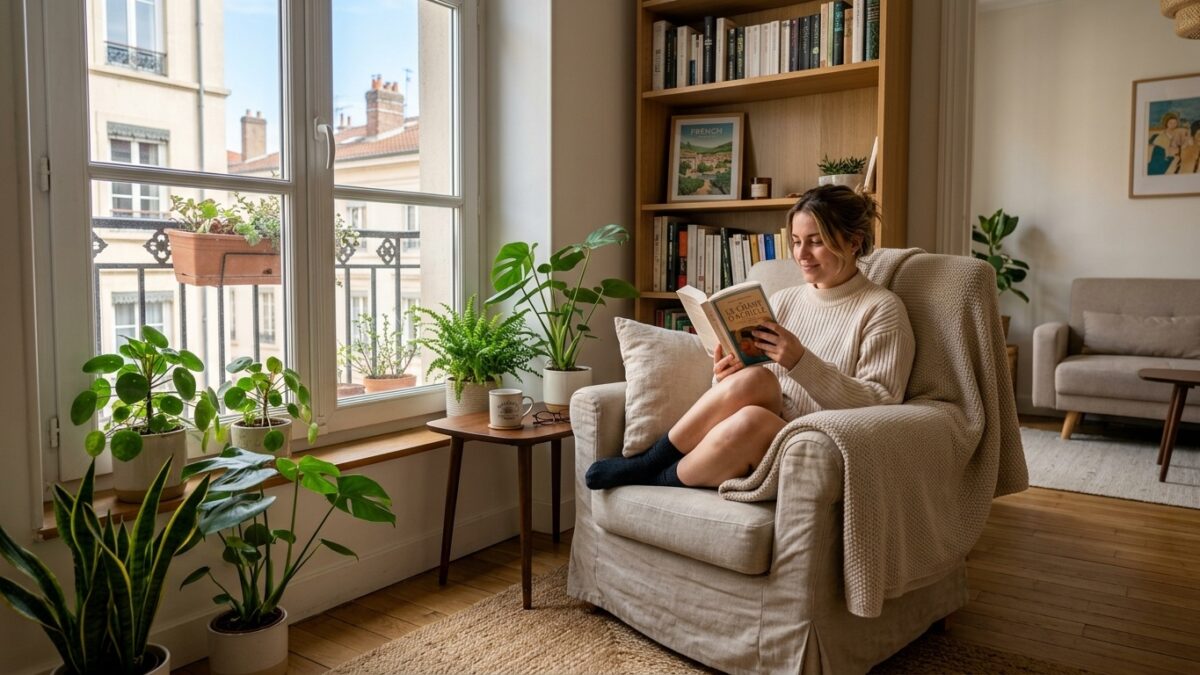
Next come the bubbles of calm. An armchair near a window with a soft lamp, a cushion rug in the bedroom for three minutes of stretching, a tea corner in the kitchen, ideally placed so as to see the door without being in the direct axis, increase the feeling of security. Another strong gesture: surround these corners with objects that tell your story, photos, travel memories, favorite books. Finally, think multisensory: soft playlist or nature sounds, smell of lavender or sandalwood, soft blankets under your fingers. Repeating these same sounds, smells and textures during each moment of pause anchors a calming emotional ritual.
Installing these changes without pressure…and knowing when to ask for help
No need to redo everything: choosing a window to clear this weekend, sorting a single drawer, adding a plant, changing a cushion cover or creating a relaxing playlist, this already sends the brain a message of security and control. Authors of deco-therapy, like Franck Dupuy with My house takes care of medescribe the house as a valuable support for mental balance. This support never replaces medical or psychological follow-up: if anxiety, sadness or sleep problems persist, a health professional remains the right address. In the meantime, transforming your interior into an accessible and gentle safe place can lighten the weight of the mental burden every day.