
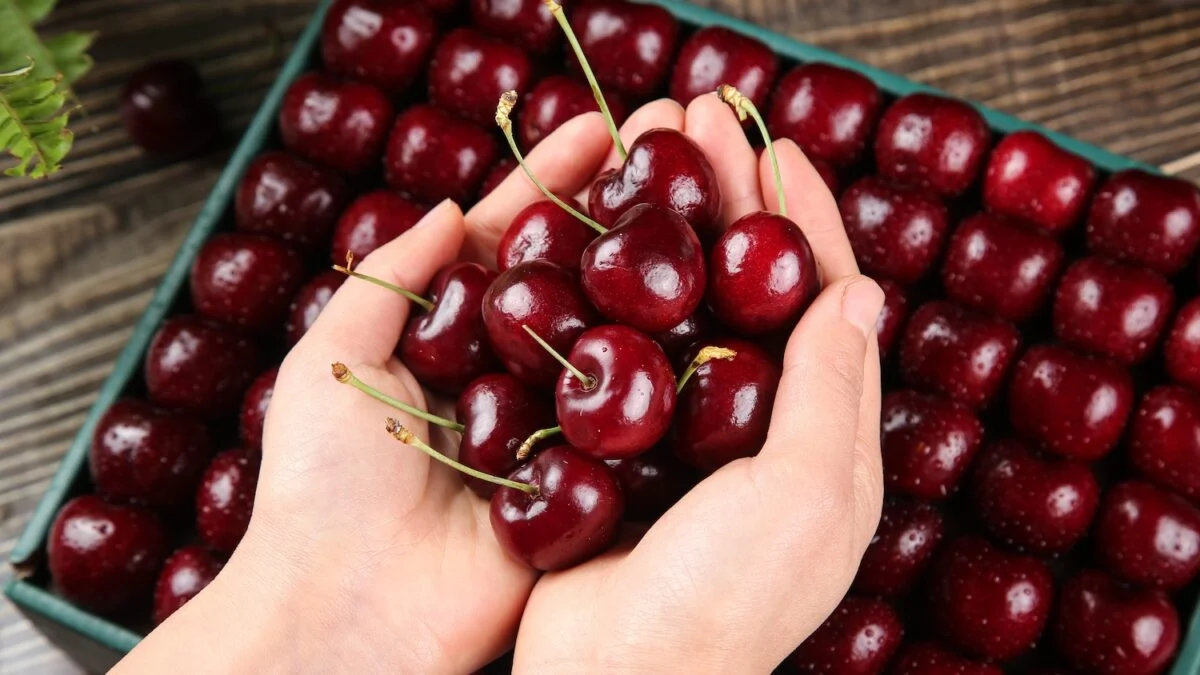
Could a bowl of fruit on the kitchen table hold clues to one of the most feared breast cancers? Texan researchers were interested in a summer fruit known for its dark red flesh, to see if it could influence the development of a very aggressive form of the disease in mice.
This fruit is the sweet black cherriesrich in anthocyanins. At Texas A&M University, mice with
triple negative breast cancer received a concentrated extract of these compounds: tumor growth slowed down. “Triple negative breast cancer is considered ‘the worst’ because it is more aggressive, higher grade, and has a higher mitotic index, meaning the cancer cells divide rapidly,” said Dr. Giuliana Noratto, as quoted by Texas A&M.
Triple negative breast cancer difficult to treat
Triple negative breast cancer represents approximately 10 to 15% of breast cancers, without hormonal receptors (estrogen or progesterone) or HER2, which deprives patients of many targeted therapies. Affecting more often young patients, it is often accompanied by rapid growth, a high risk of metastases and more frequent relapses in the first three years after diagnosis, even after surgery and chemotherapy.
The team was therefore interested in the ability of these tumors to spread in the body, beyond their size.
Instead of focusing solely on tumor size, the researchers designed the study to assess both tumor growth and metastatic spread, which is the leading cause of cancer-related deaths. “This is important because cancer lethality is mainly due to metastases.”said Giuliana Noratto, associate researcher at AgriLife Research. “A large primary tumor that does not metastasize may be easier to treat, or even curable if removed.”.
Scientists were investigating whether cherry anthocyanins could slow down this process in mice.
How Cherries Were Tested in the Mouse Study
The researchers implanted cancer cells into the mammary glands of female mice, a very aggressive mouse model. Four groups were followed: a control group, a group receiving an extract rich in anthocyanins from sweet black cherry before implantation of the tumors, a group treated with doxorubicin chemotherapy alone, and a last group combining doxorubicin and anthocyanins.
In mice pretreated with anthocyanins, tumor growth was delayed, with volumes on average up to 28% smaller than in the control group at mid-follow-up. Anthocyanins alone or combined with doxorubicin also helped maintain weight gain, where chemotherapy alone sometimes led to weight loss. When anthocyanins were combined with chemotherapy, tumor growth slowed earlier. Pulmonary metastases were also fewer and less extensive in the group that received the cherry extract. This treatment also decreased the risk of metastases to other organs, including the liver, heart, kidneys and spleen, although the number and size of the tumors varied between animals.
Modified genes, but no proof of effectiveness in humans
In addition to these physical changes, researchers looked at gene expression in tumors, meaning which genes are turned on or off in cancer cells, and this helps determine which specific cellular processes are affected by sweet black cherry anthocyanins, according to Noratto. They thus observed a drop in activity of genes associated with metastases and resistance to therapies.
Cherry extract could therefore complement chemotherapy in this animal model, but these data remain preclinical: the doses are high and there is no proof of the same effectiveness in humans. As veterinary pathologist Lauren Stranahan puts it, “What we now understand about cancer is that no single treatment will be effective against cancer“.
Although these results offer encouraging prospects, it is essential to conduct additional studies to deepen our understanding of the impact of anthocyanins on tumor behavior. This includes evaluating their safety, absorption, and potential as an adjunct to current cancer treatments.