
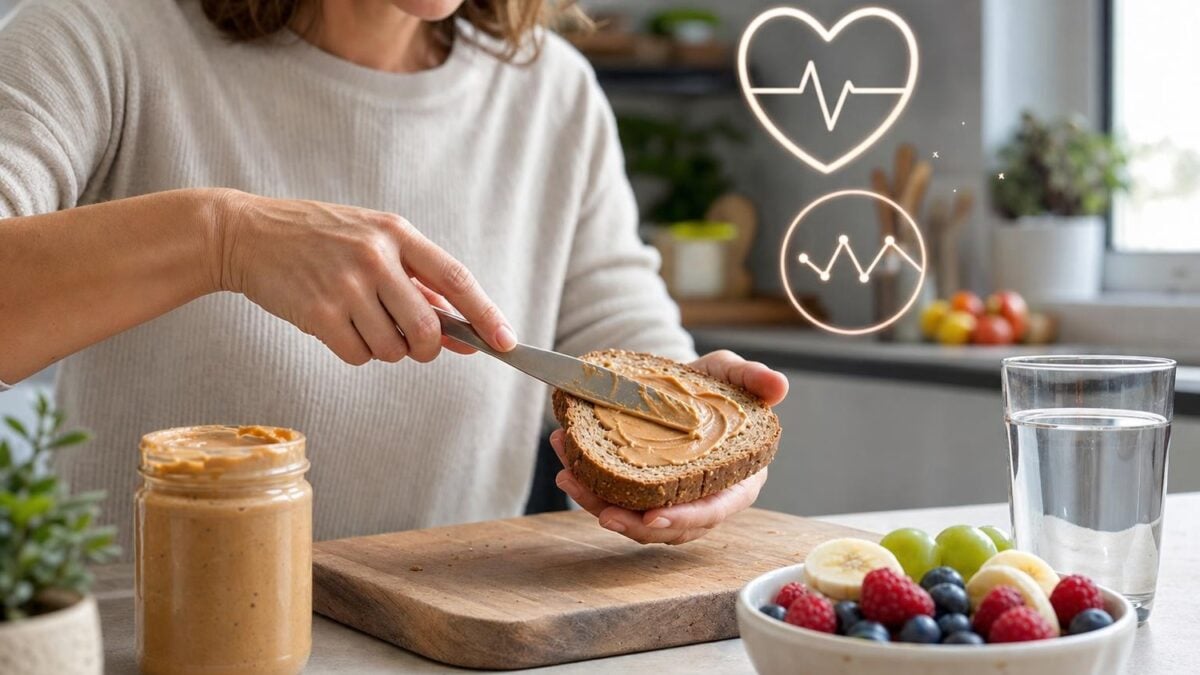
What if two tablespoons of a common food were enough to reduce several risks of chronic disease? This is the promise discussed around the
peanut butterwhich chemist Dr Dan Gubler highlights on TikTok by saying: “Can peanut butter improve brain health? Yes. Reduce your risk of cancer? Yes.”
In his series “Yes or No”, this specialist in natural molecules explains that this peanut paste could also support the heart, liver, kidneys, immunity and blood sugar levels. His recommendation remains very simple: “One to two tablespoons per day.” Enough to raise as many hopes as questions.
Cancer, diabetes, heart: what do studies say about peanut butter?
The large cohort studies carried out in the United States are in line with researcher Walter C. Willett, of the Harvard School of Public Health. According to him :
“Over the years, many studies have shown that people who regularly include nuts or peanut butter in their diet are less likely to develop heart disease or type 2 diabetes than those who rarely eat nuts.”
Clinical trials complement these observations: peanut butter improved the lipid profile of volunteers followed for six months. Its fat and protein content also slows the absorption of carbohydrates and cushions blood sugar spikes.
The benefits of peanut butter: fats, fiber and antioxidants
A standard serving, or about two tablespoons, provides, according to Walter C. Willett, nearly 12.3 grams of unsaturated fat, representing around 80% of lipids, but also fiber, vitamins and about 200 milligrams of potassium, plus other useful micronutrients.
This nutritional density helps with satiety, which explains why studies do not find an obstacle to weight loss in regular consumers.
These spoonfuls also provide protective compounds.
“Peanuts provide several antioxidants, including vitamin E, coumaric acid, resveratrol and p-coumarin. These may help protect against heart disease and cancer,” observes dietitian nutritionist Lisa Andrews.
By limiting oxidative stress, these molecules reduce cell damage, a phenomenon involved in aging and many chronic diseases. Peanut butter also provides fiber, while the majority of adults consume too little to properly support microbiota and digestion.
How to incorporate these 2 spoons of peanut butter without excess
To take advantage of benefits of peanut butternutritionists advise choosing a jar with a short list of ingredients: peanuts, plus possibly a little salt. Dr. Dan Gubler points out that an expensive brand does not provide any benefit and that the natural fat of the peanut is not a problem at this dose.
Peanut allergy remains a real contraindication, even at low doses. For others, these spoons should rather replace fatty or very sugary snacks.