
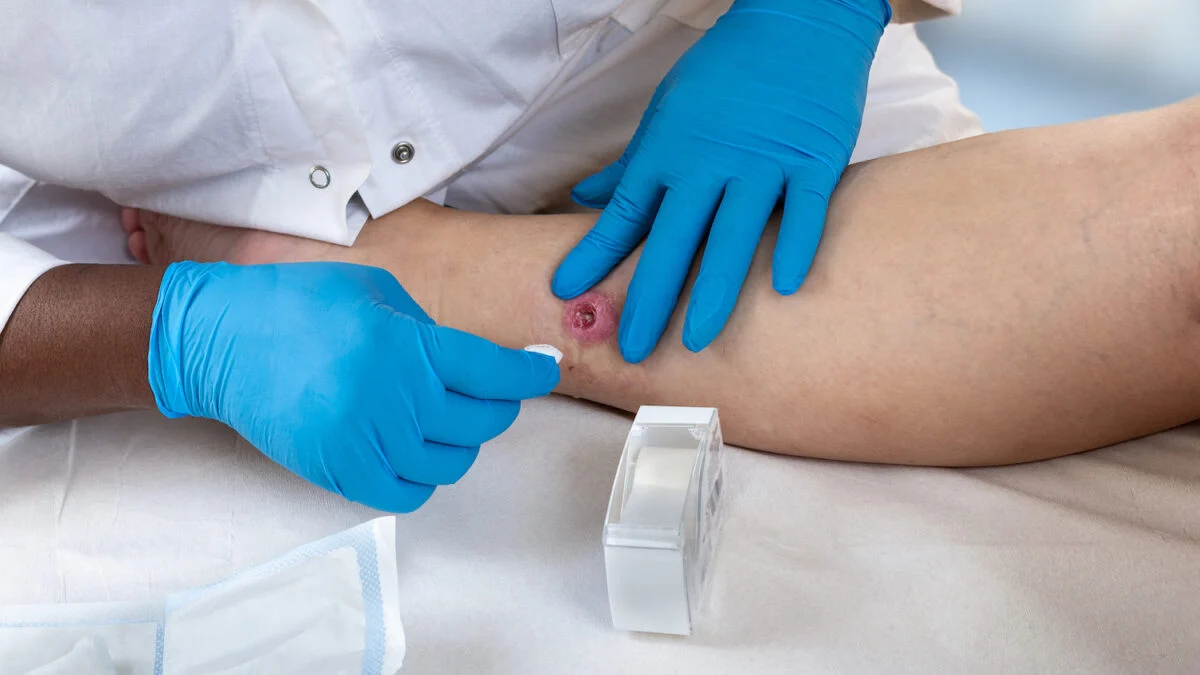
While several hundred patients could soon participate in international clinical trials testing new biotherapies, the Nantes teams are also developing comprehensive care aimed at living better with this particularly debilitating inflammatory disease.
An invisible illness that profoundly disrupts everyday life
For many patients, the first symptoms appear at an age when life is being built: studies, first jobs, family projects. Then painful nodules, inflammatory abscesses and sometimes constant discharge appear. Little by little, the most ordinary actions become difficult. Walking, sitting, doing physical activity or simply wearing certain clothes can become an ordeal.
Verneuil’s disease, also called hidradenitis suppurativa, is a chronic inflammatory condition that primarily affects the fold areas of the body, including the armpits, groin, inframammary regions or intergluteal fold. More common in women, it is favored by certain risk factors such as smoking and obesity.
Despite its considerable impact, this disease remains insufficiently known. The result: patients often have to wait years to get a diagnosis. In France, diagnostic wandering reaches an average of seven years. Seven years during which the symptoms progress, the pain sets in and the feeling of incomprehension grows.
At the Nantes University Hospital, between fifteen and twenty patients are monitored each week for this pathology. Medical teams observe the physical but also psychological repercussions of the disease on a daily basis. Because beyond the visible lesions, it is often the entire quality of life that is altered: social life, professional activity, self-esteem or emotional relationships.
Faced with this reality, care cannot be limited to treating symptoms. It must be part of a global approach, attentive to all dimensions of the disease.
When current treatments are no longer enough: the hope of new biotherapies
In recent years, several biotherapies have made it possible to improve the management of Verneuil’s disease. Adalimumab, secukinumab and even bimekizumab target certain molecules involved in inflammation and have marked an important step in the treatment of moderate to severe forms. But their limits are now well identified.
According to the Nantes University Hospital, these treatments show moderate effectiveness in approximately one in two patients. Additionally, a gradual decrease in effectiveness was observed over time in some patients treated with adalimumab. This situation explains the intense research activity currently carried out in this area.
Two international clinical trials are now open at the Nantes University Hospital. In total, nearly 350 patients should be included in these studies intended to evaluate two new therapeutic approaches: SAR445399 and LAD191. These experimental treatments, administered by subcutaneous injections, aim to reduce the inflammation responsible for the lesions while improving pain, one of the most debilitating symptoms of the disease.
The recruited participants present severe forms of Verneuil disease, for which therapeutic options still remain limited. The results of these trials are not expected before 2028. A deadline which reminds us of the necessary caution in terms of clinical research. Before becoming an accessible treatment, any new therapy must demonstrate both its effectiveness and safety in rigorous studies.
But for patients facing repeated attacks despite existing treatments, this work represents an important perspective.
Learning to live with illness: another form of care
Therapeutic research is essential. However, for people suffering from Verneuil’s disease, daily life also takes place outside of hospital consultations: How to anticipate flare-ups? What factors can favor them? How to adapt your lifestyle habits? How to talk about the illness to your loved ones or your professional circle?
It is to answer these questions that the Nantes University Hospital teams have developed Eduderm, a therapeutic education program which brings together the different players in the care pathway: attending physicians, private nurses, pharmacists and hospital specialists.
The objective is to help patients become fully involved in their care and to better understand the mechanisms of the disease.
“Therapeutic education allows patients to better understand their illness, the aggravating factors and to promote exchanges between patients. This disease progresses through painful crises; it is important to understand the mechanisms to limit them and thus improve the quality of life of patients.”explains Dr Marie Le Moigne, dermatologist at Nantes University Hospital.
This multidisciplinary approach responds to a reality that is often underestimated: in chronic illnesses, quality of life depends as much on the effectiveness of treatments as on the ability to tame the illness on a daily basis.
For people with Verneuil’s disease, current research does not yet offer a cure. They nevertheless demonstrate an important development: a long-ignored disease now mobilizes researchers, dermatologists and caregivers around the same objective. Not only reduce lesions, but also give patients some freedom in their everyday lives.