
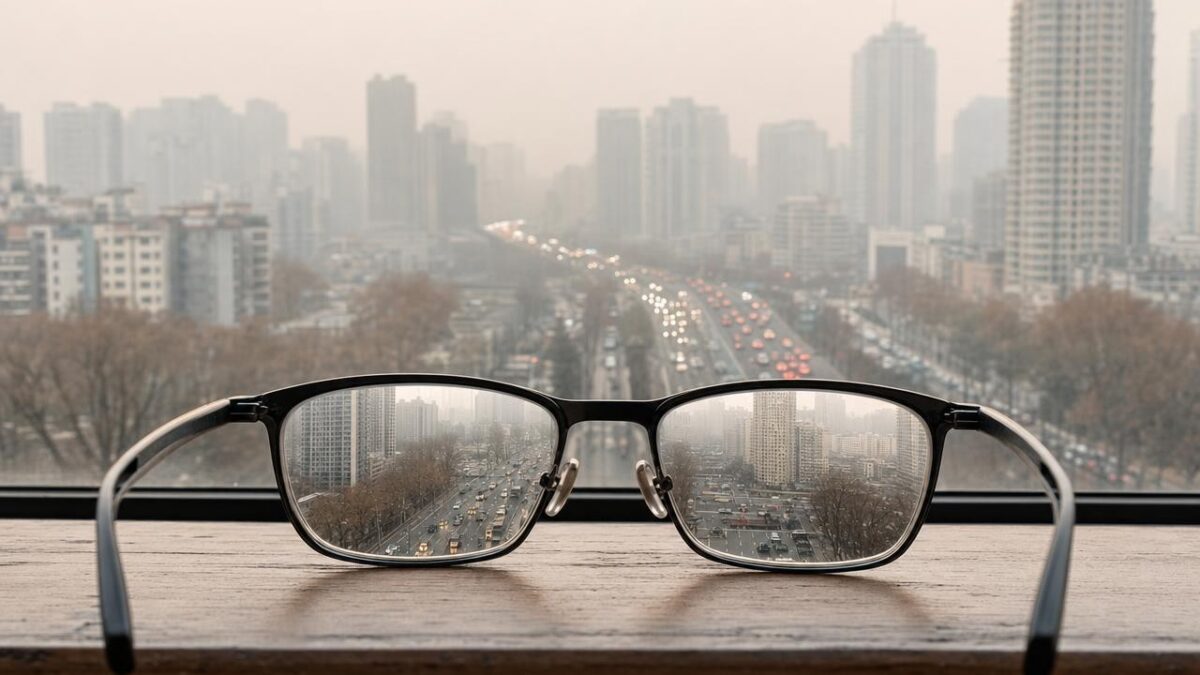
Air pollution is already accused of increasing heart attacks, strokes and asthma attacks. A new synthesis of 41 studies, covering millions of people living in cities, adds a fragile organ to the list: our eyes. Presented in London at a major ophthalmology conference, it suggests that breathing air laden with particles could also accelerate certain forms of vision loss.
At the 44th Congress of the European Society of Cataract and Refractive Surgeons (ESCRS), Dr Ahmed Alnabihi, from King Khaled Eye Specialist Hospital in Riyadh, unveiled a systematic review and meta-analysis linking
air pollution and two common diseases:
glaucoma and the
cataract. “We’ve known for years that air pollution damages the lungs and heart, but its effects on the eyes have been far less studied and the existing evidence was scattered and inconclusive.“, explained Dr. Ahmed Alnabihi.
Glaucoma, cataract: what the large ESCRS meta-analysis shows
The researchers compiled 41 observational studies conducted in East Asia and the United Kingdom, comparing different levels of fine particulate matter, nitrogen dioxide, ozone, sulfur dioxide or carbon monoxide to diagnoses of glaucoma, cataracts and age-related macular degeneration. In the most polluted areas, residents were up to 70% more likely to develop glaucoma than those living in the least exposed areas.
For each significant increase in exposure to fine PM2.5 particles, the risk of glaucoma increased by approximately 8%, and that of cataract by approximately 4%. Cataract is the leading cause of visual impairment, with nearly 94 million people affected, and glaucoma affects 7.7 million patients, according to the ESCRS.
How air pollution and PM2.5 particles attack the eye
The clearest signal concerns fine particles
PM2.5this dust mainly from road traffic, smoke and industrial activities, small enough to penetrate deeply into the body. Dr Ahmed Alnabihi evokes a toxic duo, inflammation and oxidative stress, likely in the long run to damage the optic nerve involved in glaucoma, or to opacify the lens causing cataracts.
Another particularity: the eye is in direct contact with the air, via the tear film, the conjunctiva and the cornea, without a protective barrier. For Dr Ahmed Alnabihi, classifying glaucoma and cataracts only as age-related diseases is therefore not enough; environmental factors could accelerate their appearance. The authors specify that their data remains from observational studies: they highlight an association, without formally demonstrating that pollution causes these diseases.
What this data changes for your view and for public policies
For everyone, these results encourage above all to limit exposure during peaks of air pollution : follow quality indices, avoid intense exercise near traffic and favor green spaces when possible.
“These findings strengthen the case for stricter air quality standards and pollution reduction measures such as creating green spaces and reducing urban traffic. All major policies to combat air pollution have been justified primarily by considerations of cardiovascular and pulmonary health. Our study adds a new organ system to this debate. Policymakers who must justify investments in reducing emissions now have an additional, evidence-based reason to do so, and this reason touches on our vision – a feeling that people are particularly afraid of losing” says Dr. Alnabihi.
Regular follow-up with the ophthalmologist, especially after the age of 40 or in the event of risk factors, remains essential. As Dr. Filomena Ribeiro summarizes: “This research adds eye health to the growing list of reasons to care about air quality“.