
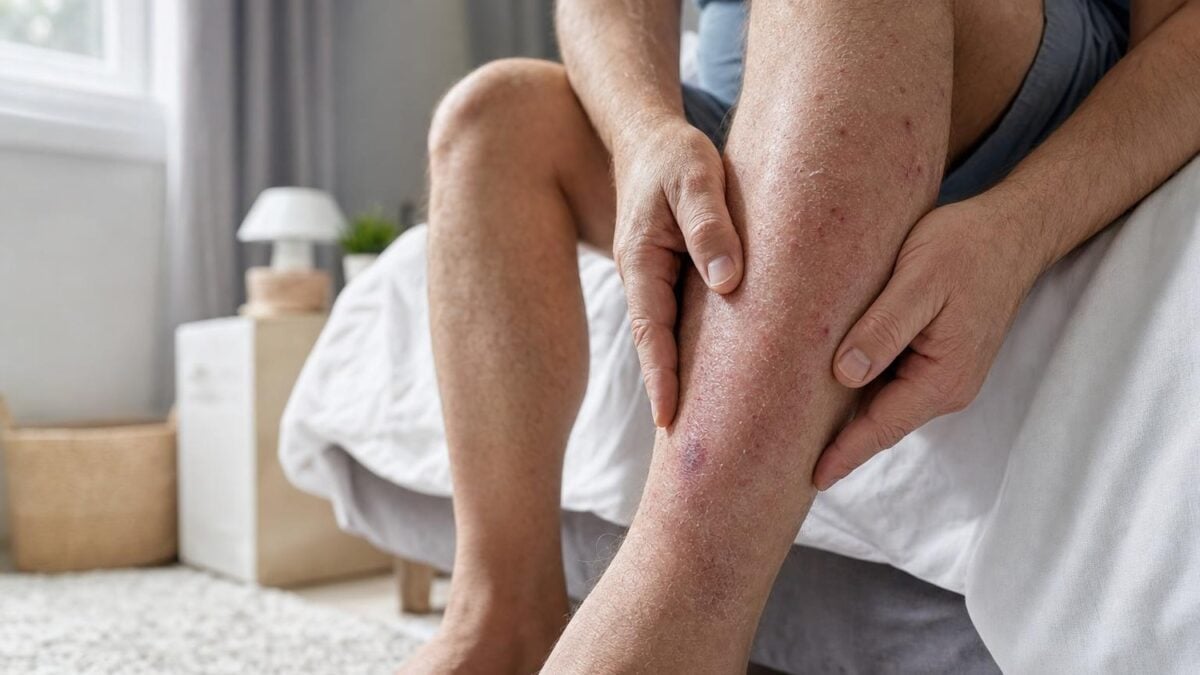
Tight skin, itching, heavy legs… Behind these banal signals can hide a
vitamin D deficiency. This fat-soluble vitamin is involved in many tissues, including the skin and muscles of the lower limbs. When reserves fall, the body no longer functions quite normally and certain changes become visible on the skin and legs.
Doctors describe non-specific symptoms, but several skin or muscle signals can alert:
Wounds that heal poorly, persistent skin discomfort, changes in skin color, painful or heavy legs, unusual sweating.
This article details five profiles of signs observed on the skin and legs. In the event of persistent discomfort, the right reflex is to speak to a healthcare professional.
5 signs of vitamin D deficiency on the skin and legs
A
healing hanging around after a blow to the shin or a scraped knee are common signals. Small cuts, bruises or scratches take several days to heal, remain red, tender, or even become easily infected.
The skin can also become very dryrough with itching almost permanent, and a duller or pale complexion than usual despite usual care.
On the leg side, vitamin D deficiency sometimes results in diffuse pain in the calves or thighs, a feeling of heaviness and difficulty climbing stairs or getting up from a chair.
Some people also describe a profuse sweating of the scalp or face, even at rest or in cool weather.
How vitamin D works on skin, bones and leg muscles
There vitamin D promotes the absorption of calcium and phosphorus in the intestine, which supports strong bones in the legs and pelvis. It is also involved in the functioning of muscle fibers and in the regulation of skin inflammation. American studies estimate that around 5% of the population has a real deficiency and almost 18% has an insufficiency.
Certain categories combine the risks of shortage: people with dark skin, seniors, individuals who rarely go out, wear very covering clothing or live far from the equator, but also people who are significantly overweight or with chronic digestive diseases.
In these profiles, leg pain or very dry skin does not always refer to vitamin D, but this deficiency is one of the possible causes.
What to do if you notice several of these signs on your skin or legs
If several signs persist for several weeks, especially if they are accompanied by unusual fatigue or falls, a medical appointment is necessary.
The doctor examines the skin and gait, looks for other possible causes then can prescribe a blood test of 25-hydroxyvitamin D, the reference marker to confirm a deficiency or a simple insufficiency.
When a deficiency is confirmed, treatment combines outdoor activity with reasonable exposure of the arms and legs, a diet rich in vitamin D (oily fish such as salmon or mackerel, eggs, enriched products) and, if necessary, appropriate supplementation. Doses and duration are decided on a case-by-case basis with a professional, as self-medication in high doses exposes you to equally problematic excesses.