
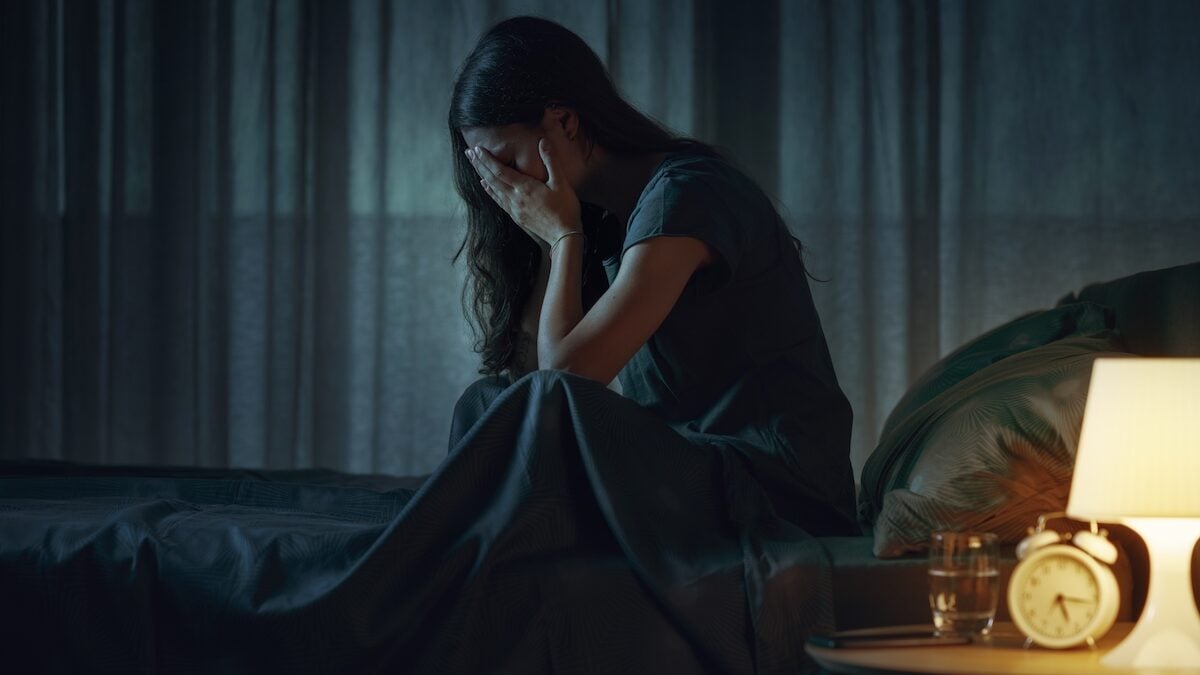
In Norway, Sweden or Finland, the sun stays below the horizon for weeks. However, the inhabitants of these countries continue to work, to go out, to laugh, while many here fear seasonal depression. With a “winter blues” which can start as early as October and last until April, the Nordics have developed very concrete strategies to get through this period.
Winter blues: what the Nordic countries are really experiencing
Finnish psychiatrist Timo Partonen, from Finnish Institute for Health and Welfarereminds us that dark days disrupt our internal clock. With a day that is too short, the body is no longer able to synchronize its rhythms: we sleep longer, without feeling rested, and then fatigue persists all day. Added to this are irritability and a desire to isolate oneself, while the symptoms “rarely improve in solitude“, he insists.
In Sweden, according to the site Sweden in kitone in two people experience seasonal fatigue and one in five suffer from winter depression. The list of signs speaks for itself: drop in energy, loss of interest in activities, difficulty socializing, cravings for sugar and carbohydrates, with an increase of 2 to 5 kilos in winter, describes Timo Partonen. These disorders often correspond to a form of seasonal depression or seasonal affective disorder (SAD) described in the Nordic countries.
Light therapy to stay on track
Researchers, such as Kathryn Roecklein at the University of Pittsburgh, have shown that specialized cells in the eye primarily transform blue light into signals that influence mood and alertness. In people with SAD, these cells respond less well in winter. Hence the massive use of light therapy: in Finland, Christian Benedict recommends a lamp delivering around 10,000 lux for 30 minutes in the morning.
In Sweden, hospital light therapy rooms expose patients to light of between 2,500 and 10,000 lux, much more than the 400 to 500 lux in an office, for an hour every morning for at least two weeks. Timo Partonen even advises combining dawn simulator and light therapy lamp, always before noon, to reset the clock and stimulate serotonin.
The magic of friluftsliv
When it comes to the great outdoors, Norwegians speak of friluftsliv, “life in the great outdoors”. “Friluftsliv does not designate a specific activity. For Norwegians, this term has a broader meaning, it implies a disconnection from everyday stress and belonging to a cultural ‘we’, which connects us to nature as human beings“, explains Bente Lier, quoted in a previous article.
Friluftsliv requires neither mountains nor performance. “You don’t need to go to the middle of the forest, you can go to the park. You don’t need to walk far, or fast; the main thing is to be there. Sit on a rock, listen to the birds, look around and try to ground yourself again“, advises Bente Lier.
Adopt Nordic secrets this winter
On a mental level, psychologist Ida Solhaug, from the University of Tromsø, believes that it is necessary “to kiss“winter rather than endure it. She encourages more leisure activities outside and inside, from a hot bath in an outdoor swimming pool to a dip in the icy water which revitalizes it, before reminding: “Challenge yourself to seek the light in the darkness“. A “Nordic” day can look like this:
- Alarm clock with dawn simulator or light therapy lamp;
-
Daily walk, even short, whatever the weather;
-
Hygge or mysig moment in the evening: blankets, candles, film or book;
- Social meeting like fika, the Swedish coffee break, so as not to isolate yourself.
For many Scandinavians, there is no such thing as bad weather, only poorly chosen clothing, and a host of little rituals to continue searching for light in the depths of winter.