
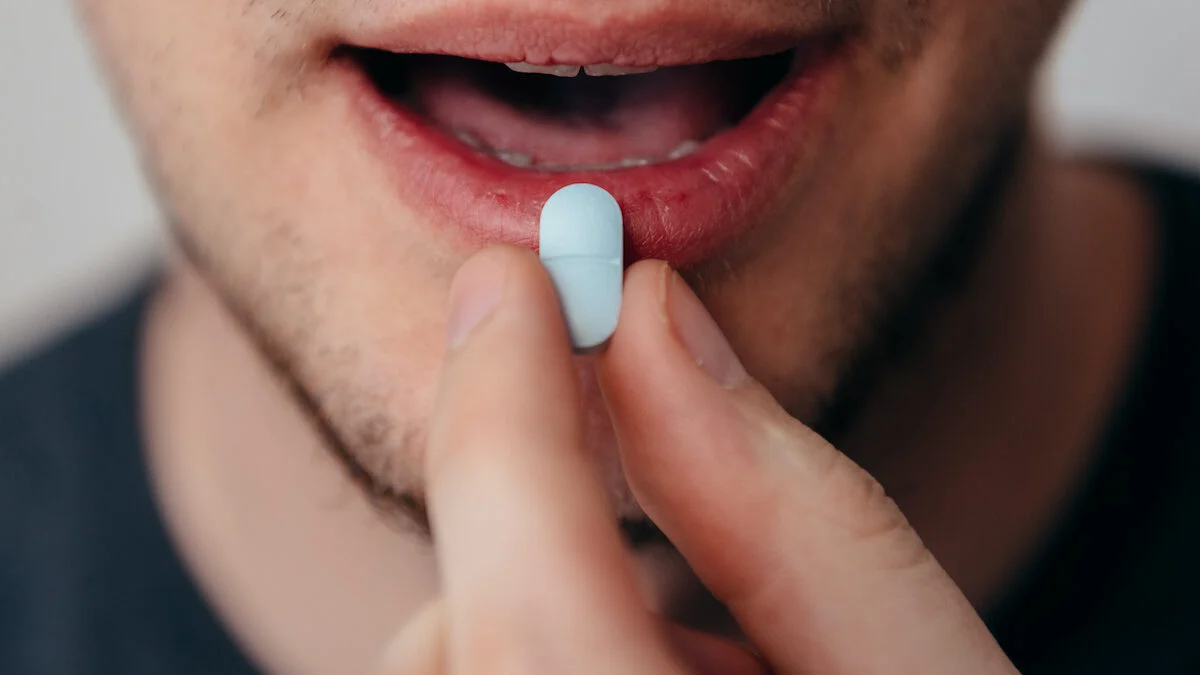
Found in hundreds of medications and used by millions of people every day for pain or fever, paracetamol is considered one of the safest painkillers when taken at recommended doses. However, several recent studies suggest that it could have an unexpected effect: slightly modifying the way we perceive danger and make decisions. Should we be worried?
Paracetamol, also called acetaminophen (Tylenol®, Panadol®…), acts mainly on the central nervous system to relieve pain. But in recent years, researchers have become interested in another aspect of this molecule: its influence on emotions.
According to neuroscientist Baldwin Way of Ohio State University, the drug could alleviate some negative emotions.
“Paracetamol seems to make people feel fewer negative emotions when considering risky activities. They are simply less afraid”
A surprising experience with a virtual balloon
To better understand this phenomenon, the researchers recruited 545 students.
Each participant received, randomly, either 1,000 mg of paracetamol or a placebo, without knowing what they were taking. They then took part in the Balloon Analog Risk Task (BART), a test widely used in psychology to measure risk taking.
The principle is simple: the more participants inflate a virtual balloon, the more fictitious money they earn. But if the balloon bursts, they lose everything.
Result: people who took paracetamol took more risks. They inflated the balloons longer and blew them up more often than those who received the placebo.
For Baldwin Way, the drug would not directly encourage people to adopt dangerous behaviors. Rather, it would reduce the feeling of fear or anxiety usually felt when faced with risk.
The researchers also observed, in certain questionnaires, that volunteers taking paracetamol judged certain daily life situations to be slightly less dangerous.
An effect found in other studies
This study is not isolated. In 2023, a team from the University of Vienna showed that more frequent consumption of painkillers was associated with a decrease in empathy and prosocial behavior.
More recently, a study published in 2026 in the journal Emotion used a virtual reality experience. Participants had to walk on a plank located high up.
Again, those given 1,000 mg of paracetamol moved faster and had a lower heart rate, suggesting a less intense emotional response to danger.
This work complements other research from Baldwin Way showing that paracetamol could also alleviate certain emotional pain, such as social rejection, or even reduce empathic reactions.
Should you stop taking paracetamol?
At this stage, absolutely not, say the researchers.
The effects observed remain modest, mainly concern young adults and have been demonstrated in very controlled experimental situations. No study currently shows that paracetamol directly increases the risk of road accidents or leads to dangerous behavior in everyday life.
The drug remains included on the List of Essential Medicines of the World Health Organization (WHO) and remains one of the most recommended analgesics when used in accordance with prescribed doses.
As Baldwin Way points out, these results especially invite further research.
“We really need to better understand the effects of paracetamol and other over-the-counter medications on the choices and risks we take.”
In the meantime, the recommendations do not change: avoid prolonged self-medication, respect maximum doses and seek advice from a healthcare professional in the event of repeated treatment.
- Recently, researchers, including Baldwin Way of Ohio State University, have studied the impact of acetaminophen on danger perception and decision-making.
- An experiment with 545 students showed that those who took paracetamol took more risks in a virtual balloon inflation test, suggesting a reduction in fear.
- Although the effects are modest and experimental, these results highlight the importance of continuing research into the influence of paracetamol on emotions and decisions.